If you’re asking if adjustable bed bases are worth it, you’re probably feeling the signs already. Maybe your sleep’s not what it used to be. You’re waking up stiff, shifting around at night, or struggling to find a comfortable position that lasts until morning.
Or maybe you’re planning ahead, thinking about how your bed can support you better now and in the years to come.
In this guide, we’ll break down what adjustable bases actually do, how they can improve your sleep, and who benefits most. You’ll also see how they compare to traditional beds, and when it might make sense to make the switch.
What is an adjustable bed base?
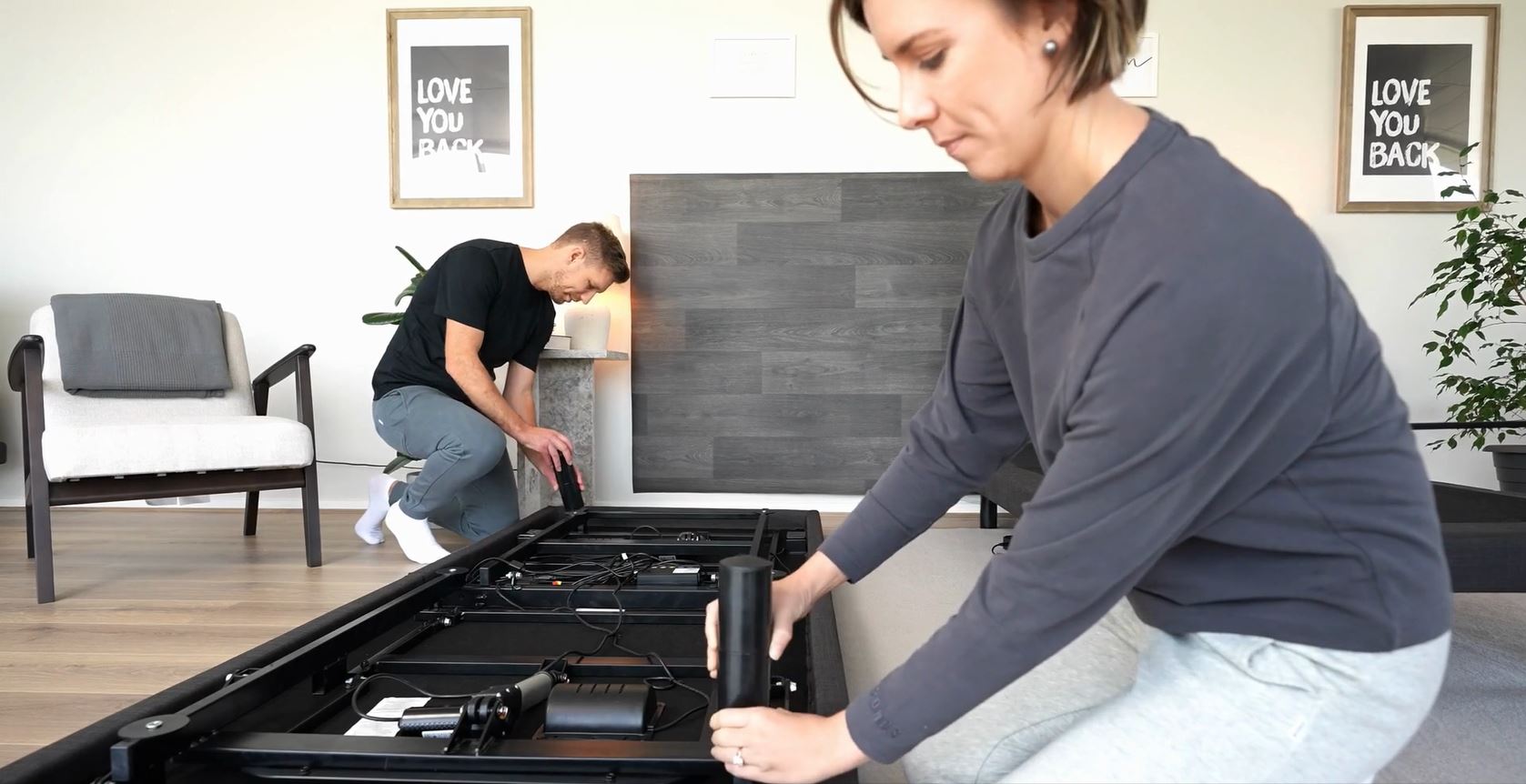
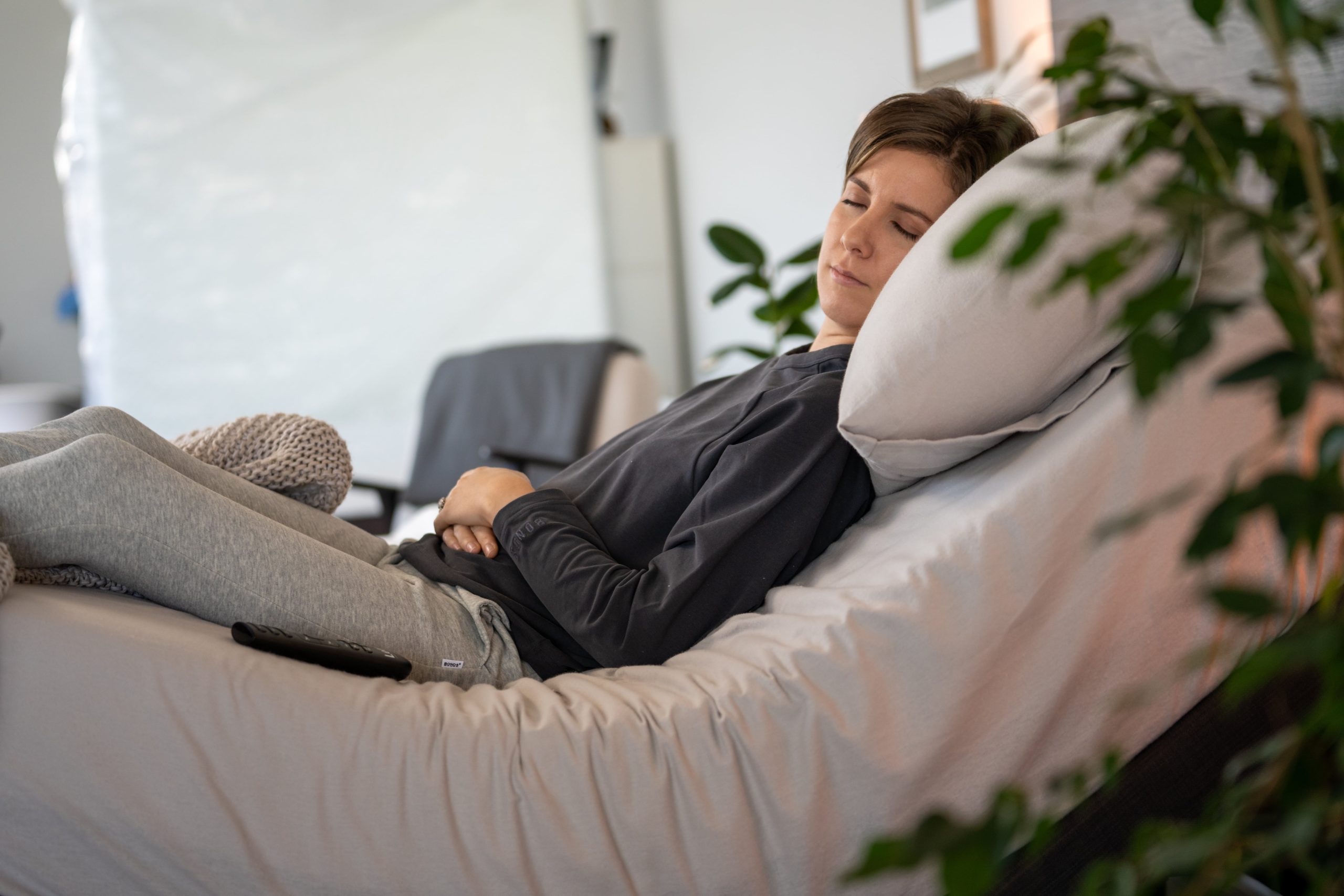
An adjustable bed base is a type of frame that lets you raise or lower different parts of the bed—typically the head and foot—with a remote control. This added flexibility gives you more control over how you sleep, rest or unwind.
Unlike flat bases, adjustable bed frames allow for subtle changes in position that can make a noticeable difference in how supported you feel. They’re often used to ease pressure on joints, encourage improved blood circulation, and help you maintain a more natural and comfortable sleeping position.
Most modern models are designed to work with mattresses that flex with the frame, offering the right balance of comfort and support. This makes them ideal for a wide range of sleeping styles, especially if your needs shift throughout the night.
The benefits of an adjustable base
1. Comfort that fits you
No two people sleep the same way. Some like their legs slightly raised, others need their head lifted just a little to breathe more easily or ease tension.
With an adjustable base, you’re not locked into one flat position all night. You can fine-tune your setup until it feels just right, whether that’s to sleep more soundly or just get comfy watching the news in bed.
It’s all about finding a position that suits your body, not forcing your body to suit the bed.
2. Extra support for back pain
If you deal with back pain, you know how hard it can be to get comfortable, especially when lying flat. Adjustable beds give you options. A slight tilt under your knees can take pressure off your lower back. Raising your head can help your spine relax.
Many people say they wake up feeling less stiff and more supported, simply because they’re not fighting the bed anymore. You can also check out our guide to the best sleeping position for lower back pain if you’re not sure where to start.
3. Easier breathing, fewer sleep disruptions
Sometimes, just lifting your head a little is enough to help you breathe easier. That’s why adjustable beds can be so helpful for people managing sleep apnea, acid reflux or snoring.
You’re not propped up on pillows or shifting around all night. You just press a button and settle into a better position for you and your partner. Pair it with the right mattress for snoring, and it can make a noticeable difference.
4. Better circulation and recovery support
When you raise your legs even slightly, it can help boost blood flow and ease swelling, especially at the end of a long day.
If you’re recovering from surgery or managing medical conditions like arthritis, sciatica or diabetes, having that extra support can make a big difference. And for anyone with limited mobility, an adjustable bed can make getting in and out of bed far less of a struggle.
5. Your bed becomes more useful
Your bed doesn’t just need to be good for sleeping. It should be a place to relax, read, nap or watch TV—and that’s where adjustable bases really shine.
No more stacking pillows behind your back. No more sliding down the mattress halfway through your movie. Just a quick adjustment with the remote control and you’re exactly where you want to be.
Whether your sleeping style includes a midday rest or a long evening wind-down, adjustable beds help you get comfortable and stay that way.
Who are adjustable bases best suited to?
A lot of people assume adjustable beds are just for older adults or those with medical conditions, but that’s not really the case anymore.
If you’ve ever wished your bed could do more than just lie flat, or if you’ve struggled to get comfortable at night, an adjustable bed might actually be a great fit. They’re helpful for all kinds of situations, like:
Retirees who want a bit more ease and comfort when sleeping, resting or reading in bed
Anyone dealing with back pain, joint stiffness or poor circulation
People recovering from surgery or managing ongoing health conditions who need extra support
Couples who have different sleeping styles and want control over their own side
Shift workers or light sleepers who nap during the day or sleep at unusual times
Anyone who reads, watches TV or relaxes in bed and is tired of stacking pillows
Those living with sleep apnea, acid reflux or long-term health issues that affect rest
And even if you’re not dealing with any of that right now, it can still be worth thinking ahead. Adjustable beds are one of those things that can quietly improve your comfort now and continue to support you well into the future.
Are they worth the investment?
It’s easy to think of an adjustable bed as a bit of a luxury, but when you take a step back and look at the bigger picture, it starts to make a lot more sense.
Sleep quality affects so much more than just how you feel in the morning. It influences your energy, your mood, your ability to focus, and even how well your body recovers from day-to-day strain.
And realistically, most of us spend more time in bed than we realise. It’s not just for sleeping—it’s where we read, rest, scroll, recover, and sometimes even eat breakfast. Being able to adjust your position means your bed can support all of those moments, not just the overnight ones.
When you’re finally in a deep sleep, comfort and support become even more important. The stages of sleep each play a role in how your body repairs itself, restores energy and gets ready for the day ahead.
An adjustable base won’t solve every sleep issue, but it can remove a lot of the discomfort that gets in the way of proper rest. For many people, that’s the difference between tossing and turning and finally getting a proper night’s sleep.
Choosing the right setup
If you’re thinking about moving to an adjustable bed, it’s worth looking at your whole sleep setup, not just the base.
The mattress you choose matters just as much. It needs to be flexible enough to move with the base but still supportive enough to keep your body aligned. Some mattresses are simply too firm to bend comfortably, while others might not hold their shape if they’re not made for movement.
Pairing your adjustable base with a compatible mattress helps you get the full benefit, especially if you’re trying to improve your sleep quality or ease ongoing health issues like back pain or joint stiffness.
For many people, the easiest option is to choose a sleep bundle that includes both the base and a mattress designed to work with it. Everything fits together, the setup is simpler, and you’re not left wondering if you made the right match. It’s also a practical way to start sleeping better, without the guesswork.
Making sleep more supportive
Adjustable bed bases are not just for hospitals or health conditions. They’re a thoughtful upgrade for anyone who wants more control, more flexibility or simply more comfort in bed.
Whether you’re dealing with back pain, snoring, acid reflux, or ongoing medical conditions, having the ability to adjust the head and foot of your bed can make it easier to find a comfortable position and stay supported through the night. For many, that leads to fewer aches, better breathing, and a more consistent night’s sleep.
Letto offers a range of adjustable bed frames, mattresses and sleep bundles designed for everyday comfort. All products are delivered across Australia with no-fuss service and transparent pricing.Still not sure where to begin? Reach out to our friendly team for guidance. We’re here to help you find the setup that suits your sleep, your space and your comfort goals.
If you’re searching for the best mattress for posture, you’ve probably reached a point where comfort and proper support matter more than ever. Maybe you’re waking up a little sore. Maybe your back feels tight in the morning. Or maybe you’re simply ready to take better care of your body while you sleep.
Whatever the reason, paying attention to how your mattress supports your posture is one of the smartest things you can do for your long-term comfort and well-being.
In this guide, we’ll walk through why posture matters while you sleep, what a poor mattress can do to your alignment, and what features to look for in one that helps—not hinders—your rest.
Why posture matters while you sleep
We tend to think of posture as something we worry about during the day, standing up straight or sitting with our shoulders back. But those 7 or 8 hours you spend in bed? They count just as much.
While you sleep, your body is meant to rest, reset and recover. If your mattress isn’t supporting you properly, your spine can fall out of alignment, forcing your muscles and joints to work harder than they should. Over time, that can lead to back pain, joint stiffness, and signs of poor posture that carry into the day.
A mattress that encourages proper spinal alignment allows everything to relax the way it should. Your core muscles and joints don’t have to fight against the surface you’re lying on, which helps promote deeper sleep and even supports general posture during waking hours.
How the wrong mattress can impact your posture
Not all posture problems come from an old, sagging mattress. Even one that feels fairly new can cause discomfort if it isn’t the right fit for your sleep style or body.
Here are a few signs your mattress might be affecting your posture:
You feel pressure or numbness in your shoulders or hips
You toss and turn throughout the night, trying to get comfortable
You feel more tired and achy when you wake than when you went to bed
When your mattress lacks support, your spine can sink or twist out of position. That’s where bad posture often begins—quietly, and over time, as your muscles and joints struggle to hold things in place while you sleep.
Over time, this can reduce muscle strength, particularly through the abdominal muscles, which play a key role in supporting the spine even while you rest.
What to look for in a posture-friendly mattress
The best mattress for posture supports your body in a way that feels natural, not forced. It should keep your spine gently aligned, no matter how you sleep. Here’s what to look for when choosing a mattress:
Balanced firmness
You don’t want to sink in too far, but you also don’t want to feel like you’re sleeping on a plank. A medium-firm feel often hits the sweet spot—it keeps your hips and shoulders level while still cushioning pressure points.
This type of surface helps reduce the risk of poor posture developing overnight, especially in areas like the lower back and neck.
Zoned support
Your body isn’t flat, so your mattress shouldn’t treat it like it is. Zoned support means different areas of the mattress are built to support different parts of your body. Firmer where you need lift (like under the lower back), and softer where you need relief (like the shoulders and hips).
This structure supports proper spinal alignment and helps maintain even pressure across the body, which in turn supports your core muscles and improves overall comfort.
Responsiveness
A supportive mattress should adjust with your movements, not fight against them. Whether you sleep on your side, back, or somewhere in between, it should move with you, not leave you stuck or sagging in one spot.
A mattress that responds well helps maintain good posture throughout the night, even as your body naturally shifts positions.
Breathability
This one might not seem posture-related, but temperature plays a role, too. If you’re too hot or uncomfortable, you’re more likely to toss, turn or slip into less supportive positions. A breathable mattress helps keep you comfortable so you stay aligned for longer stretches.
Sleep position plays a big role, too
Even the best mattress won’t fix posture if your sleep position is working against you. The way you lie down affects how your spine rests overnight.
Back sleepers usually need subtle support under the lower back to maintain the spine’s natural curve
Side sleepers often benefit from extra cushioning at the shoulders and hips to avoid twisting or sinking too far
Stomach sleepers tend to put the most strain on the back and neck, especially if their pillow or mattress isn’t suited to the position
Adjusting your sleep style—along with your mattress—can help improve your posture gradually and relieve unnecessary strain on your joints and muscles.
Other ways to support better posture
Your mattress does most of the work, but it’s not the only thing that matters.
A pillow that’s too high or too soft can pull your head out of alignment and strain your neck. Choosing one that suits your sleep position helps keep everything in line from top to bottom.
An adjustable bed base can also help, especially if you want to raise your legs or head slightly for better comfort. A small elevation under the knees or upper body can reduce pressure and help your body settle into a more neutral position.
If you tend to sleep on your stomach, shifting to your side or back—even part of the night—can help relieve tension. It’s a small change that often leads to fewer issues with neck pain and better alignment overall.
Supporting your muscle strength—especially in your core—through gentle stretching or low-impact movement during the day can also help reinforce the alignment you’re aiming for at night.
The best mattress for posture is one that works with your body
Posture isn’t just something you think about during the day. It follows you into the night, and it has a big impact on how you feel when you wake up.
If your mattress is making your body work harder than it needs to, it might be time to find something that gives you better support. A setup that keeps your spine in line and your muscles relaxed can mean less pain, deeper sleep, and a more comfortable way to start the day.
Letto is built around the idea that sleep should feel simple. Our mattress, pillow, and adjustable bed base are designed to work together, so you can rest easy knowing your posture is supported, not compromised.
Explore our mattress range and take the next step toward better posture and better sleep.
It’s the end of the day. You’ve brushed your teeth, turned off the lights, and settled into bed. Then… nothing. Ten minutes pass. Twenty. Forty. You check the clock. Why aren’t you asleep yet?
If that sounds familiar, you’re not alone. The time it takes to drift off is called sleep latency, and it’s a key part of your overall sleep health. It’s also something many of us don’t realise we’re struggling with until we’re tossing and turning night after night.
So, how long should it take to fall asleep? And if it’s taking too long, what can you do about it?
Let’s break it down.
What is sleep latency?
Sleep latency is the amount of time it takes to fall asleep after you first lie down and intend to sleep. It starts the moment you close your eyes with the aim of sleeping and ends when you actually fall asleep.
This timing can reveal a great deal about your overall sleep quality. A sleep latency that’s too short may mean you’re sleep deprived. A sleep latency that’s too long might suggest poor sleep habits, stress, or an uncomfortable sleep setup.
Understanding how sleep works can help explain why this matters. As your body transitions through different stages of sleep, it needs to move smoothly from wakefulness into a restful state. Long delays at the start can throw off the entire sleep cycle, including REM sleep and deep sleep.
What’s a normal sleep latency?
On average, a healthy adult will fall asleep within 10 to 20 minutes of going to bed. If you’re falling asleep as soon as your head hits the pillow, it might feel like a good thing, but it could actually be a sign that you’re not getting enough rest.
If it’s regularly taking you more than 30 minutes to fall asleep, that could point to disrupted sleep hygiene, a lack of wind-down routine, or discomfort in your bedroom environment.
In some cases, prolonged sleep latency could also be linked to a sleep disorder like sleep apnea or a more serious imbalance in your sleep pattern. These are issues that may require further support or even a formal sleep study to be properly investigated.
A few nights of poor sleep can happen to anyone. But if your sleep latency is consistently outside the normal range, it’s worth paying attention to.
What affects how quickly you fall asleep?
There’s no single cause of long sleep latency. Often, it’s a mix of physical, mental, and environmental factors. These might include:
Stress and racing thoughts. Worrying about the day, the news, or your to-do list tomorrow can all keep your brain in “awake” mode.
Inconsistent sleep schedules. Sleeping and waking at different times each day disrupts your circadian rhythm, making it harder to wind down.
Poor sleep hygiene. This includes screen time before bed, caffeine late in the day, or irregular bedtimes. Learn more about sleep hygiene and why it matters if this sounds familiar.
Bedroom temperature or lighting. Too warm, too cold, too bright, or too noisy? These environmental details really do matter.
Underlying health conditions. Issues like chronic pain, restless legs, or even medication side effects can delay the time it takes to fall asleep.
Tips to improve sleep latency naturally
Improving your sleep latency doesn’t require drastic changes. Small, consistent steps can help your body and brain settle more easily at night.
Here are some simple, helpful habits to try:
Stick to a regular bedtime. Going to sleep and waking up at the same time every day helps train your body to fall asleep faster.
Build agood night routine. Gentle stretches, a warm shower, soft lighting, and quiet reading can all help you ease into rest.
Avoid screens before bed. Blue light from phones or tablets can delay your natural melatonin release, making it harder to fall asleep.
Keep your bedroom cool and calm. A comfortable space makes a big difference. That might mean changing your sheets, adjusting your room lighting, or using white noise.
Reduce naps or caffeine in the afternoon. These can interfere with your ability to feel sleepy when bedtime comes around.
Track your total hours. Aim to get the right amount of sleep for your needs — most adults benefit from 7 to 9 hours of sleep each night.
If you’re still unsure where to start, this guide on how to get better sleep is a great resource.
You can also find targeted tips to improve sleep for more ideas to suit your lifestyle and environment.
Should you be worried about sleep latency?
If it’s taking longer than 30 minutes to fall asleep most nights, it’s worth looking at the cause. Occasional restlessness is normal, but when it becomes frequent, it can start to affect the quality and structure of your sleep.
Sleep latency issues can also contribute to fatigue, reduced focus, and less time spent in restorative stages like deep sleep. Over time, this may affect your mood, energy levels, and even physical recovery.
If you’re unsure whether your sleep latency is a one-off issue or part of a larger concern, a professional sleep study can help diagnose hidden problems, including sleep disorders like sleep apnea or fragmented sleep patterns.
The good news is that many of the most common causes of poor sleep latency are manageable with lifestyle and environment changes.
How Letto helps support better sleep latency
At Letto, we know how frustrating it is to lie awake night after night, waiting for sleep to arrive. That’s why we focus on comfort, consistency, and calm — so your body has the right conditions to relax when it matters most.
If you’re working on your routine and want to fall asleep more easily, we’re here to help, with thoughtful comfort and delivery that’s simple from start to finish.
If you’ve ever woken up sweaty in the middle of the night, or pulled the doona up to your ears only to wake up with cold feet, you’re not alone. Temperature plays a huge role in how well we sleep, yet it’s something many of us overlook.
We talk a lot about sleep routines, cutting back on screens, or winding down with a cup of tea (all great things). But your sleeping environment matters just as much. Especially the temperature for sleep.
So, what is the ideal sleeping temperature? And how can you set up your bedroom for a better night’s rest without spending a fortune or turning your home into a science experiment?
In this blog, we’ll walk through it together.
Temperature impacts your sleep more than you think
Your body has a built-in system that helps you wind down in the evening. One part of that system involves a drop in your core body temperature. Basically, your body cools itself down to prepare for sleep.
That drop is a signal that it’s time to rest. But if your indoor temperature is too hot, too cold, or constantly changing, your body has a harder time getting into deep sleep and staying there.
In fact, temperature regulation affects how smoothly you move through the different stages of sleep, including deep and REM sleep. A cooler, stable environment helps you stay asleep longer and reach the deeper, more restorative stages that leave you feeling refreshed.
Find your ideal temperature range
Most sleep researchers agree: somewhere between 16°C and 20°C is ideal for most adults. This is considered the ideal room temperature for rest.
That range supports your body’s natural process of cooling down, without making you uncomfortable. Too warm, and you might feel restless or overheat. Too cold, and your muscles can tense up, or you may wake from discomfort.
But here’s the key: comfort is personal. Some people sleep hot. Others feel the cold more. The goal isn’t to land on a perfect number; it’s to find the range where your body relaxes best.
If you’re not sure, try setting your room to around 18°C and adjust from there over a few nights. Then fine-tune your bedding or clothing to match a comfortable temperature.
A few things we often get wrong
There’s no shortage of advice about sleep, and some of it can be confusing. Let’s clear up a few common beliefs.
Some people say a warm room helps them drift off. And yes, warmth can feel nice at first. But what matters more is whether you stay comfortable all night. A warm room often leads to overheating later, especially if your bedding traps heat and interferes with temperature regulation.
Others swear by a cold room with a heavy doona. That can work, but layering up too much can cause you to overheat under the covers. You might then wake up cold after kicking them off. It’s the temperature swings that cause problems, not just the number on the thermostat.
And finally, some people assume that if they’re tired, the temperature for sleep doesn’t matter. But sleep quality matters just as much as quantity. If you’re waking up feeling groggy or sore, even after a full night’s sleep, temperature could be playing a quiet role in that.
How to actually make your room more comfortable
The good news is you don’t need to renovate your bedroom or buy expensive gadgets. Here are a few simple, affordable ways to stay within the ideal room temperature range and feel the difference.
Adjust your thermostat to 16–20°C, if you have one
Struggling in summer? Try these ideas to sleep in the heat without tossing and turning
If you’d like more ideas, these tips to improve your rest offer practical changes that don’t require a big effort.
Your mattress and bedding matter too
Temperature isn’t just about the air. It’s also about your mattress and bedding. A mattress that traps heat or offers poor support can leave you waking up sore, sweaty, or both.
You don’t need to overthink it. Just choose what feels good, holds up well, and helps you fall asleep peacefully.
Sleep better by making small changes
Your bedroom temperature might not seem like the most exciting topic. But once you get it right, the change can be surprisingly powerful.
It doesn’t take much. A cooler room, better bedding, and a bit of consistency. Together, these small changes help your body do what it’s meant to do — rest deeply, recover well, and wake up ready.
If you’re looking for ways to improve your sleep without the gimmicks, Letto is here to help with calm, comfortable solutions that actually make a difference.
Have you ever felt exhausted during the day, even after what seemed like a full night’s rest? Or noticed your energy dipping more than usual after a few late nights? That lingering tiredness could be a sign of something called sleep debt, and it’s more common than you might think.
Sleep debt doesn’t mean one bad night. It’s what happens when you consistently get less sleep than your body needs. And just like with money, the more it adds up, the harder it becomes to ignore.
In this blog, we’ll take a closer look at what sleep debt is, how it builds up, and what you can do to get back on track.
What exactly is sleep debt?
Sleep debt refers to the gap between how much sleep your body needs and how much it actually gets. For example, if you need eight hours of sleep but only get six, you start the next day with two hours of sleep debt.
Miss a few hours here and there, and your body can usually bounce back. But if that pattern continues for days or weeks, the effects build. This ongoing shortfall can lead to both mental and physical fatigue and make it harder to fall asleep or stay asleep in the future.
To understand why sleep debt matters, it helps to understand how sleep works. Each night, your body cycles through different stages of sleep, including REM sleep and deep sleep. These stages support memory, mood, metabolism, and your immune system. If you’re not sleeping long enough, or your sleep quality is poor, you miss out on the benefits of these deeper stages — even if you think you’ve “slept” all night.
What causes sleep debt?
Sleep debt can come from a range of sources, not just staying up too late. Some of the most common contributors include:
Light, noise, or temperature changes in your bedroom
Certain health conditions or unmanaged sleep disorders
Even small disruptions, like waking up too early or going to bed at inconsistent times, can accumulate into sleep debt over time.
How does sleep debt affect the body and mind?
Short-term sleep debt might just leave you feeling tired, groggy, or unfocused. But as it builds, the effects can become more serious. You may experience:
Ongoing fatigue and reduced energy
Trouble concentrating or remembering things
Mood swings or low motivation
Weakened immune system or more frequent illness
Higher risk of accidents or injury due to slowed reflexes
You might also notice it becomes harder to fall asleep, stay asleep, or wake up feeling refreshed. Your sleep pattern can become disrupted, making recovery feel more difficult than it should.
Sleep debt doesn’t just affect how long you sleep. It also affects your quality of sleep — how well your body moves through the sleep cycles that support brain function, repair, and overall well-being.
Can you repay sleep debt?
Yes — but not in a single weekend. Sleep debt isn’t something you can erase by sleeping in once or twice. It takes time and consistency to catch up, especially if the debt has built up over weeks or months.
Think of it like restoring balance, not paying off a bill. You can recover from sleep debt by:
Getting slightly more sleep than usual over the next several nights
Allowing your body to settle into its natural rhythm again
It’s also worth checking how much rest you’re actually getting. If you’re wondering how much deep sleep you need or what time you should wake, these guides offer helpful starting points.
And if you regularly feel sleepy during the day, even after a full night in bed, that could be a sign your body needs to recover from more than just a single poor night’s rest.
Tips to recover from sleep debt gently
Here are a few ways to support your body as it catches up on rest and begins to improve your sleep over time:
Stick to a regular sleep schedule. Go to bed and wake up at the same time each day.
Create a calming bedtime routine. Avoid screens, dim the lights, and give yourself time to unwind.
Limit naps to 20–30 minutes. Longer naps can disrupt your nighttime sleep.
Make your sleep space comfortable. Check that your mattress, bedding, and pillows support you properly.
Try small adjustments first. Going to bed 15 minutes earlier each night can be easier to manage than a big shift.
And remember, the amount of sleep you need may vary slightly from others. Focus on what helps you feel rested, not just what the clock says.
How Letto can help support better rest
At Letto, we understand that getting back on track with sleep can take time, especially when you’re recovering from sleep debt. That’s why we’ve focused on making rest feel easier, not harder.
Our Letto mattress, breathable bedding, and Letto sleep bundles are all designed to help you rest comfortably, reduce disruptions, and create a space where your body can truly relax.
If you’re ready to get better sleep, we’re here with no-fuss delivery and simple options that make building a restful bedroom easy.