Disclaimer: This article provides general information only and is not intended as medical advice. If you are experiencing persistent acne or skin concerns, please consult a qualified healthcare professional. In Australia, you can speak to your GP, contactHealthdirect on 1800 022 222, or visit your local dermatologist.
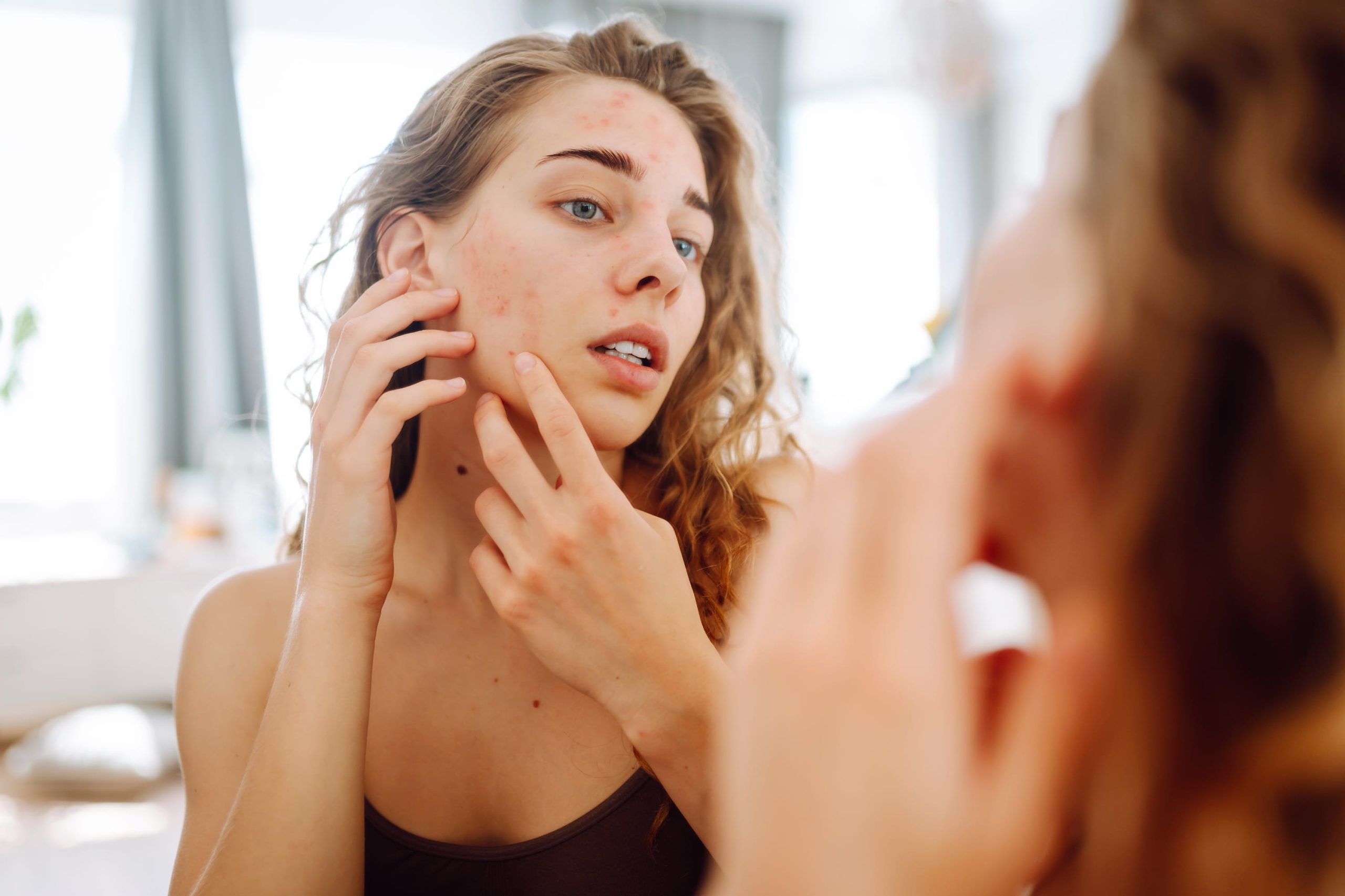
You cleanse, you moisturise, and you try every serum your feed swears by. But if breakouts keep showing up in the same spots, the problem might not be your skincare routine. Instead, it might be the thing you press your face into for eight hours every night. Do the maths: six to eight hours a night, every night, adds up to roughly 2,500 hours a year with your face against fabric. That’s a lot of time for a dirty pillowcase to undo the work your skincare is trying so hard to do.
What’s Actually on Your Pillowcase
During those hours, your skin doesn’t switch off. Oil glands (called sebaceous glands) keep producing sebum, the oily substance that moisturises the skin, but also clogs pores when there’s too much of it. Sweat glands stay active, especially in warmer months or if the bedroom is above the recommended 15–19°C range, and dead skin cells shed naturally. Any skincare products applied before bed transfer partially onto the pillowcase surface.
All of this accumulates, and by the end of a week, a pillowcase holds a cocktail of sebum, sweat, dead cells, product residue, and dust. A study from the University of Manchester found that every pillow tested contained substantial fungal contamination, with between four and sixteen species per pillow, including a mould called Aspergillus fumigatus in all ten samples examined.
The question isn’t whether pillowcases get dirty, because we know that they absolutely do. The question is how much that buildup affects your skin.
Three Ways Your Pillowcase Feeds Breakouts
It hoards your oil
Cotton pillowcases can absorb up to 27 times their weight in water, which means they’re soaking up your skin’s natural oils and whatever products you applied before bed. Night after night, that residue builds up and presses back against your face. Board-certified dermatologist Dr Anna Chacon describes cotton pillowcases as collecting “natural oil and bacteria from your face and hair,” creating what she calls a bacterial breeding ground on the fabric surface.
If you have oily skin, this cycle is even faster. The pillowcase essentially redeposits yesterday’s oil onto today’s freshly cleansed face.
It breeds bacteria
The bacterium most closely linked to acne is calledCutibacterium acnes (sometimes written as C. acnes). It thrives in oily, low-oxygen environments, which is exactly what a clogged pore looks like. While no study has specifically cultured this bacterium on pillowcases, research confirms that textiles in prolonged skin contact develop their own bacterial ecosystem that can transfer acne-causing bacteria back to the user.
Research into “maskne” (acne caused by face masks during the pandemic) documented the same thing: fabric pressed against skin creates a warm, moist, sealed environment that disrupts the skin’s natural balance and triggers breakouts. A pillowcase does something similar for six to eight hours every night.
It drags across your skin
There’s a clinical term for breakouts caused by physical rubbing: acne mechanica. It was first documented in athletes dealing with breakouts from helmets, chinstraps, and pads, but the same principle applies to rough pillowcase fabric pulling across your face for hours. Sydney VanHoose, a board-certified nurse practitioner at Water’s Edge Dermatology, puts it simply: Acne is already an inflammatory condition, and rough fabrics make the inflammation worse.
Side and stomach sleepers cop it the worst. Research on skin-textile friction found up to a 2.5-fold difference in friction between the smoothest and roughest fabrics tested. Over thousands of hours of sleep, that difference adds up.
Fabrics That Work Against Your Skin
Not all pillowcases are created equal. In fact, some actively make breakouts worse.
Standard cotton is the most common pillowcase fabric and one of the most absorbent. It draws oil and moisture from the skin, dries slowly, and creates a warm, damp surface where bacteria thrive. For people with sensitive skin or active breakouts, cotton’s rough fibre structure can also irritate acne-prone skin through friction.
Polyester and synthetic satin blends feel smooth but are poor at regulating temperature. They trap heat and moisture against the face, which encourages sweating and pore congestion. VanHoose notes that while satin feels slippery, synthetic satin is actually more absorbent than it appears and doesn’t deliver the same benefits as natural fibres.
Flannel and fleece are heat-trapping fabrics that make nighttime sweating worse, especially during Australian summers when bedroom temperatures are already high. More sweat means more oil production, more bacterial growth, and more clogged pores.
What to Look for in a Skin-Friendly Pillowcase
Finding the best pillowcase for acne isn’t about spending the most money. It’s about matching fabric properties to what dermatologists actually recommend.
It breathes and wicks away moisture
A pillowcase that moves moisture away from the skin and allows airflow keeps the sleeping surface cool and dry. This matters because trapped heat and dampness create the exact conditions acne-causing bacteria prefer. For side sleepers, especially, a breathable fabric reduces the sweat that builds up where the cheek meets the pillow.
Research from the Alliance for European Flax-Linen & Hemp confirmed that natural fibres like linen provide the best moisture transfer between inner and outer fabric faces, meaning perspiration spreads and evaporates rather than pooling against skin.
It won’t drag across your face
The smoother the pillowcase, the less physical irritation on the skin. This is where silk pillowcases and high-thread-count microfibre earn their reputation. A mulberry silk pillowcase produces minimal friction, letting skin and hair glide rather than drag. Tightly woven microfibre with a sateen finish can reduce friction in a similar way, while being far more practical to care for day-to-day.
It survives frequent hot washing
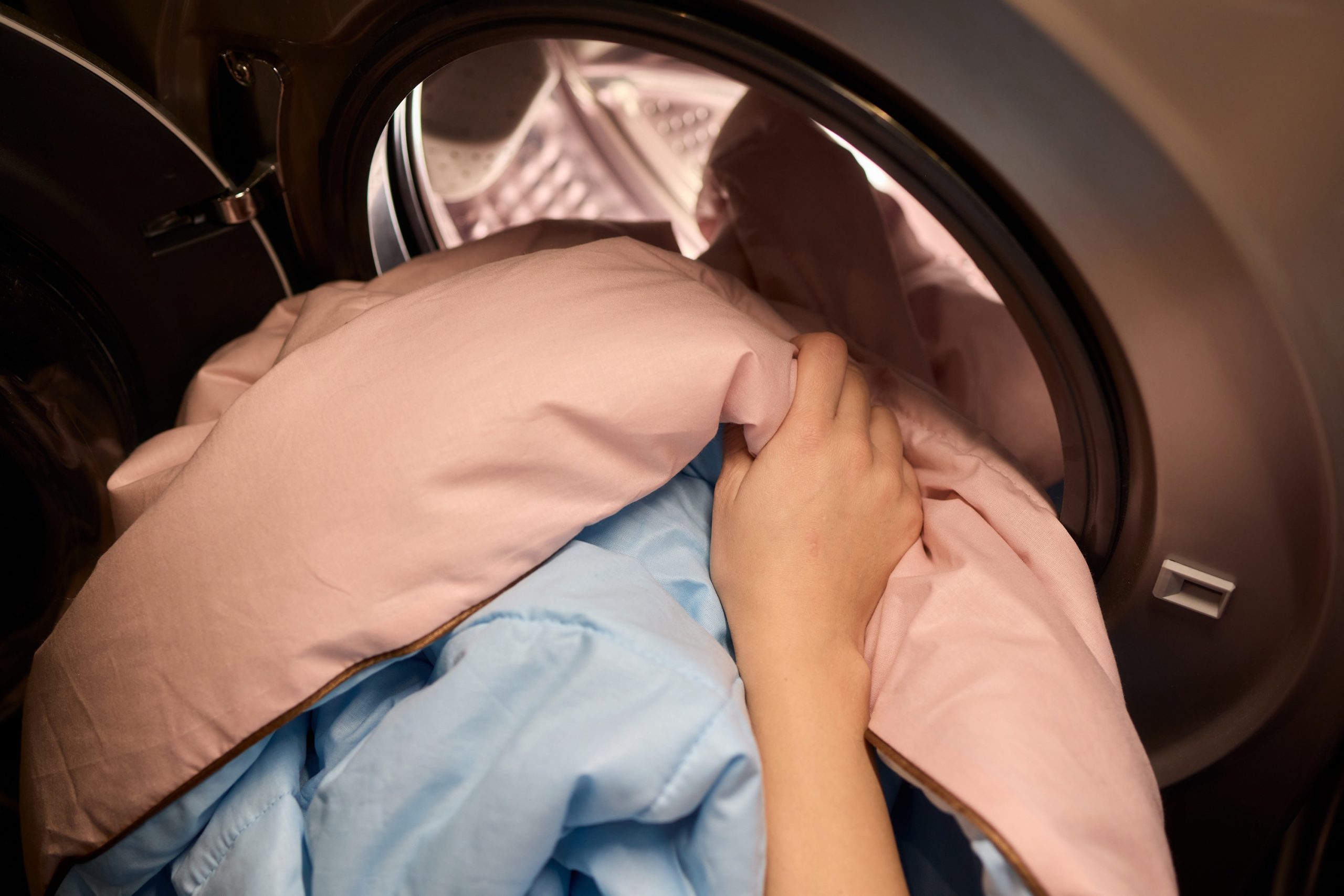
This is where the practical advice matters most. Every dermatologist source in this guide recommends washing pillowcases every two to three days for breakout-prone skin, and the NHS guidelines recommend 60°C washes to kill bacteria and dust mites effectively. The best anti-acne pillowcase is one that actually survives this routine: machine washable, durable at higher temperatures, and quick-drying, so a fresh case is always ready.
This is where some popular options fall short. Bamboo pillowcases are soft and breathable, but can lose shape with frequent washing. Silk cannot be washed above 30°C, which is insufficient for killing pathogens.
The Silk Pillowcase Hype
Scroll through any skincare community on TikTok or Instagram, and you’ll see silk pillowcases credited for clearing skin, reducing wrinkles, and preventing frizz. Brands like Slip, Shhh Silk, and Blissy have built entire companies around these promises. In Australia, a single mulberry silk pillowcase costs between $55 and $120+, depending on momme weight (a measure of silk density) and brand.
The reality is that silk does have real strengths: lower friction than cotton, less absorbency (so it doesn’t soak up your moisturiser), and a surface that’s gentle on both skin and hair. Dermatologists like Dr Anna Chacon and Sydney VanHoose recommend silk for patients with sensitive skin, and those recommendations carry weight.
But the marketing has gone well beyond what the science supports.
No published, independent, peer-reviewed clinical trial has demonstrated that silk pillowcases prevent or reduce acne. The study cited most often (Wake Forest University, NCT00767104) actually tested a polyester-nylon blend with embedded antimicrobial technology, not real silk. It was funded by the pillowcase manufacturer, and its results were never published in a peer-reviewed journal. The only study using genuine silk (Schaunig & Kopera, 2017) tested silk bonded with a permanent antimicrobial coating on back acne, with just fourteen participants and no control group. The first properly designed trial comparing real silk to cotton for facial acne (NCT06142487) is still underway with no published results. Even a 2026 comprehensive review of non-pharmacological acne treatments that searched PubMed, MEDLINE, Cochrane, and ClinicalTrials.gov didn’t consider pillowcases worth mentioning.
Claims that silk is “naturally antibacterial” appear on almost every silk brand’s website. Dr Michelle Wong (Lab Muffin Beauty Science), a PhD cosmetic chemist, reviewed the evidence and found no peer-reviewed studies supporting this claim for plain, untreated silk. Curology (medically reviewed by a dermatologist) is direct: “There is currently no research linking specific pillowcase materials to the risk of acne.”
There’s also the practical issue. Silk needs to be hand-washed or machine-washed on a delicate cycle at 30°C maximum, which is not hot enough to kill bacteria and dust mites. It typically lasts one to three years with careful handling. A quality microfibre sheet set that includes two pillowcases costs $30–60 in Australia, can be machine-washed at 60°C, tumble-dried, and lasts for years. That’s a significant price difference for a product with no clinical proof that it works better than a clean, breathable, regularly washed alternative.
Silk isn’t bad for your skin. But the gap between what the marketing promises and what the evidence actually supports is wide.
Is It Your Pillow or Your Hormones?
This is the question worth asking before you overhaul your bedding. Acne has multiple causes, and not every breakout is your pillowcase’s fault. But there are specific patterns that point toward your pillow being involved.
Check where breakouts show up
Hormonal acne tends to cluster along the jawline, chin, and neck, and usually shows up as deep, painful cysts under the skin. These breakouts are driven by internal hormone fluctuations, not external irritants. Breakouts on the cheeks or the side of the face that press into the pillow are more likely to have an environmental or friction-related trigger.
Try the wash test
If your skin clears up noticeably after sleeping on freshly washed bed linen and then gradually gets worse over the next few days, that pattern points to pillowcase buildup as a contributing factor.
Track the timing
Hormonal breakouts tend to follow a cyclical pattern around menstruation, with 65 per cent of adult women noticing flares before their period. Pillow-related irritation doesn’t follow a cycle. It’s persistent and gets worse gradually between washes.
If basic changes (washing pillowcases every two to three days, cleansing before bed, tying hair back) produce visible improvement within two to four weeks, those factors were likely contributing. If breakouts persist, a GP or dermatologist is the right next step.
Seven Habits for Cleaner Skin Overnight
Wash pillowcases every two to three days
This is the single most effective change most people can make. Dr Davin Lim, a Brisbane-based Fellow of the Australasian College of Dermatologists, recommends changing pillowcases every three to four days for oily skin and more often in summer. Use fragrance-free, dye-free liquid detergent, and skip the fabric softener. Softeners leave a waxy residue that can clog pores.
Let skincare absorb before bed
If you apply retinoids, serums, or moisturisers at night, give them at least 30 to 60 minutes to soak in before your face hits the pillow. Otherwise, that product ends up on the fabric instead of in your skin.
Tie your hair up or cover it
The American Academy of Dermatology identifies hair products as a direct cause of breakouts along the hairline and forehead. Leave-in conditioners, oils, and serums transfer onto pillowcases and then re-contact your face. A loose bun, braid, or bonnet keeps product residue off the pillow.
Never sleep in makeup
The AAD doesn’t mince words: remove makeup before bed, no exceptions. Even products labelled non-comedogenic (meaning they’re formulated not to block pores) can cause breakouts when left on overnight. If you’re too exhausted for a full cleanse, a micellar water or makeup wipe is the minimum.
Flip the pillowcase mid-week
If washing every two days feels unrealistic, flipping to the unused side mid-week gives you a cleaner surface without extra laundry. It’s a compromise, not a permanent fix, but it helps.
Hair product residue on shared towels can transfer to facial skin. A clean towel designated just for your face, washed every two to three uses, cuts down on cross-contamination.
Built for the Wash Cycle Your Skin Needs
Everything in this guide comes back to one practical truth: the best pillowcase for acne is one that breathes, stays smooth on the skin, and holds up to frequent hot washing. That combination is harder to find than it sounds.
Which is where we step in. Here at Letto, we’re an Australian sleep company that designs Italian-engineered beds, mattresses, and bedding for people who take their rest seriously. Everything from the pillow to the base is built around a simple belief: sleep affects every part of your life, from how your body recovers to how your skin looks in the morning, and everyone deserves a setup that supports that.
Our sheet sets are made from ultra-soft 1800TC microfibre with a smooth, low-friction surface that won’t irritate acne-prone skin. They’re hypoallergenic and moisture-wicking, and they’re fully machine washable and quick-drying, so keeping up with the every-two-to-three-day wash cycle dermatologists recommend is actually doable, not just good advice you can’t follow. Every set is OEKO-TEX® Certified, meaning the fabric has been independently tested for over 1,000 harmful substances. For a closer look at why this fabric works, the guide to the benefits of microfibre sheets covers it in detail.
The Letto Pillow pairs an Ice Fibre breathable cover with gel-infused memory foam to wick away moisture and regulate temperature through the night. A cooler pillow means less sweat reaching the pillowcase, which means less of the buildup that feeds breakouts.
For anyone looking to upgrade the full sleep setup, our adjustable bed bases allow gentle head elevation, which can reduce facial puffiness and improve airflow around the face. Paired with a reversible-firmness mattress that you can flip between medium-soft and medium-firm, it’s a sleep environment designed for comfort and skin health from the pillow down.
Your Pillowcase Won’t Cure Acne (But It Can Stop Making It Worse)
No pillowcase will fix a hormonal imbalance, change your genetics, or replace the treatment your dermatologist prescribes. Acne is a medical condition with real, complex causes, and the research is clear that what you sleep on is a secondary factor at best.
But secondary doesn’t mean irrelevant. A pillowcase that traps heat, absorbs oil, harbours bacteria, and drags across your skin for eight hours can make an already frustrating problem measurably worse. One that breathes, stays clean, and comes out of the machine ready to go two days later removes a variable you can actually control.
The best pillowcase for acne won’t replace a good skincare routine or a GP visit. But it makes everything else you’re already doing work a little harder while you sleep.
Frequently Asked Questions
Can a dirty pillowcase actually cause acne?
On its own, a dirty pillowcase is unlikely to cause acne in someone who isn’t already prone to it. But accumulated oil, dead skin cells, and bacteria on unwashed fabric can clog pores and make existing breakouts worse. Dermatologists describe this as an aggravating factor, not a root cause. If your skin gets better after fresh sheets and worse as the week goes on, your pillowcase is likely playing a role.
How often should I change my pillowcase if I have acne?
Silk produces less friction than cotton and absorbs less oil, which is why some dermatologists recommend it for sensitive skin. But no published clinical trial has proven that silk prevents or reduces acne. Silk also can’t be washed at the temperatures needed to kill bacteria (60°C), which may offset its surface advantages. At $55–120+ per single pillowcase in Australia, it’s a significant investment for a product without clinical proof.
What is the best pillowcase material for acne-prone skin?
The best pillowcase for acne balances low friction, breathability, moisture-wicking, and washability. The Sleep Foundation recommends silk, Tencel, and tightly woven microfibre as the gentlest options for breakout-prone skin. For people who need to wash frequently at high temperatures, microfibre and cotton-lyocell blends offer the best combination of skin-friendliness and practical durability.
Can sleeping position affect acne?
Yes. Side and stomach sleepers press one cheek into the pillowcase for hours, increasing friction, heat, and bacterial transfer on that side of the face. Back sleeping minimises pillow contact altogether. If breakouts appear mainly on one side, your sleeping position is likely contributing. Changing pillowcases more often or choosing a breathable, low-friction fabric can help reduce the impact.
The right postpartum sleeping positions can reduce pressure on a healing C-section wound, ease back and pelvic pain, and help manage fluid retention common in the weeks after delivery.
Slightly elevated back sleeping, supported side sleeping, and leg elevation are the three positions most recommended for postpartum comfort and recovery from lower back pain.
Adjustable beds provide stable, mechanical elevation that removes the guesswork from pillow-stacking, and split configurations allow a partner or support person to sleep undisturbed.
Disclaimer: This article provides general information only and is not intended as medical advice. If you are experiencing persistent sleep difficulties or health concerns after birth, please consult your GP, midwife, or a qualified healthcare professional. In Australia, you can contact PANDA (Perinatal Anxiety & Depression Australia) on 1300 726 306, Beyond Blue on 1300 22 4636, or Lifeline on 13 11 14.
Nobody warns you about the specific kind of exhaustion that comes after having a baby. And not just tiredness, but the bone-deep, foggy fatigue of sleeping in fragments for weeks on end while your body heals from one of the most physically demanding experiences it will ever go through. Whether this is a first baby or a fourth, and whether the birth was vaginal or a caesarean, the early postpartum weeks have a way of making sleep feel like something that happens to other people.
If that sounds familiar, or if the due date is approaching and the reality of newborn sleep is starting to set in, this is worth reading. The right postpartum sleeping positions won’t add more hours to the night. But they can make the hours available more restorative, less painful, and more supportive of the recovery that’s happening underneath the exhaustion.
Adults typically need around 90 minutes of unbroken sleep to reach REM, the deep restorative stage that supports emotional regulation and mental health. For parents waking every two to three hours, sustained REM becomes rare, and sleep debt compounds fast. A meta-analysis of actigraphy studies found that maternal sleep quality may not fully return to pre-pregnancy levels for up to six years after the birth of a first child. That number can feel confronting, but it’s worth knowing because it reframes the goal: when sleep quantity is limited, sleep quality matters enormously.
Hormones make the situation harder. Oestrogen and progesterone levels drop sharply in the first few days post delivery. Progesterone is calming and sleep-promoting; its sudden decline can make falling asleep harder, even when the baby is settled. Cortisol often stays elevated from the physical demands of birth and early caregiving, creating a “wired but tired” state that many new parents describe as being utterly exhausted yet unable to switch off.
Then there’s the psychological shift. Up to one in five Australian mothers experiences perinatal depression or anxiety. Hypervigilance around the baby’s safety can keep the nervous system on high alert, making it difficult to fall asleep during quiet moments. Sometimes called “momsomnia,” this is a reminder that postpartum sleep disruption isn’t only about the baby’s schedule. The mother’s body and mind are both recovering, often at the same time, often without enough support. If any of this resonates, please reach out to PANDA (1300 726 306) or your GP. These feelings are common, and help is available.
Physical Challenges That Affect Postpartum Sleep
Beyond the feeding schedule and the hormonal upheaval, the body itself is healing. Several specific physical conditions make finding a comfortable sleeping position harder than most expecting parents anticipate.
C-section recovery involves healing through multiple layers of tissue, including the rectus abdominis muscles, which are surgically separated during the procedure. The standard motion of sitting up from a flat bed forces contraction of those healing muscles and generates significant intra-abdominal pressure on the wound. It’s the kind of pain that catches people off guard: not just soreness, but a sharp, seizing sensation that makes every nighttime feed feel like an ordeal. Fiona Stanley Hospital’s physiotherapy guidance advises side-rolling to get out of bed rather than sitting straight up. Wound dehiscence (reopening) occurs in 2–7% of caesarean births, and straining movements are a known risk factor. Initial healing takes at least six weeks, with deeper tissue repair continuing beyond that. Sleeping after a C-section can remain uncomfortable well into this period.
Back and Pelvic Discomfort
Pregnancy places enormous strain on the spine and pelvic floor, regardless of delivery method. An Australian hospital study found 71% of women in their third trimester reported lumbo-pelvic pain, and for many, this persists well into the postpartum months. Diastasis recti (abdominal separation) affects roughly 60% of women at six weeks postpartum, weakening the core muscles that normally support the lower back.
Pelvic floor dysfunction is strikingly common. One in three Australian women who have given birth experience incontinence, and a 2024 international study found nearly 74% of women at one year postpartum reported at least one pelvic floor symptom. Tailbone pain affects an estimated 7% of new mothers and can make lying flat deeply uncomfortable. These numbers aren’t shared to overwhelm. They’re here because too many new parents assume something is wrong with them when in reality, these experiences are remarkably normal. Finding a sleeping position that supports spinal alignment and reduces pressure on the lower back becomes more than a preference in the weeks after delivery.
Breastfeeding Strain
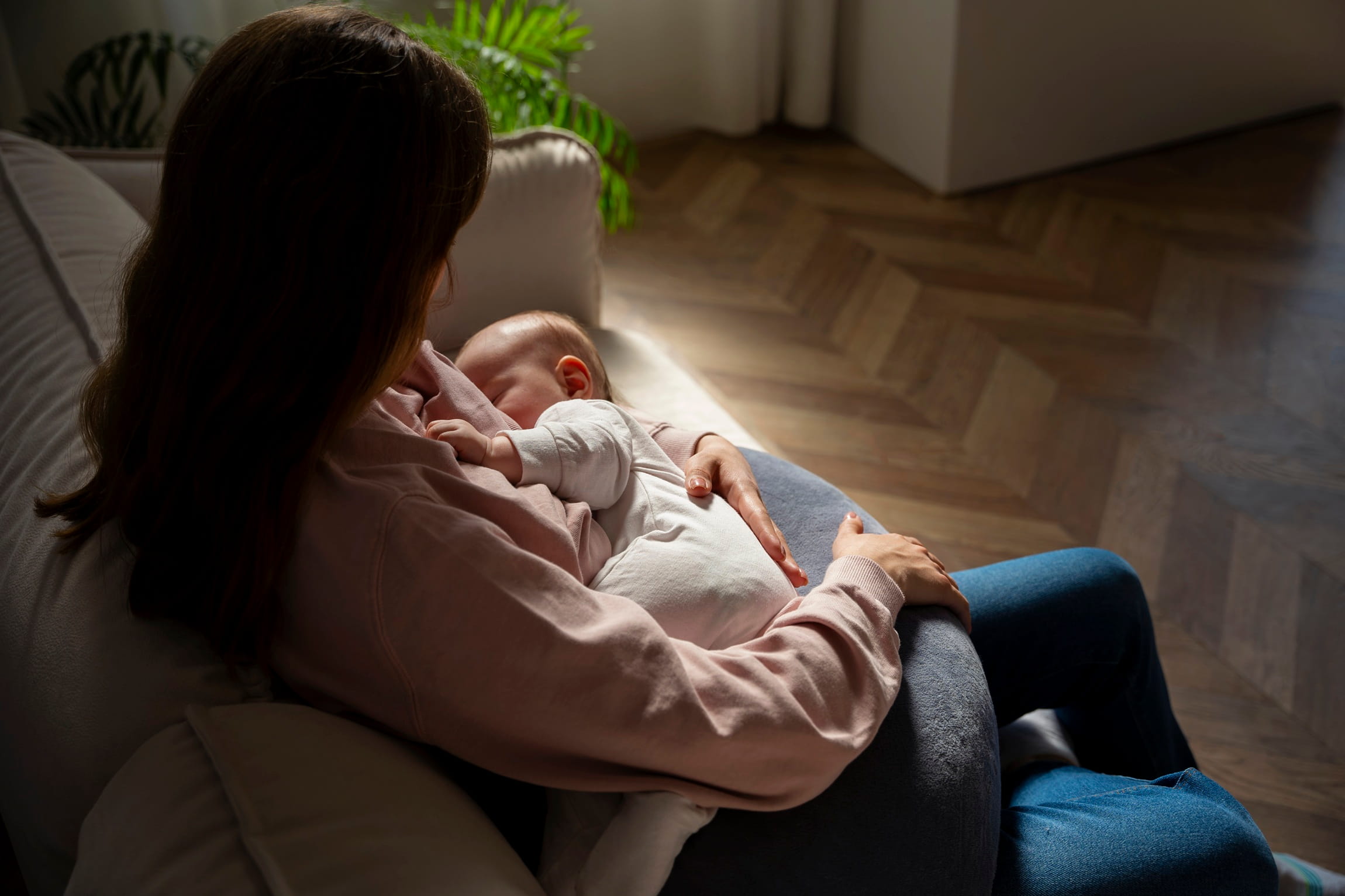
Breastfeeding involves holding a sustained posture for 20 to 30 minutes at a time, multiple times a day and throughout the night. A study of 395 breastfeeding mothers found 84% experienced back pain at least once per month, and nearly 52% experienced breastfeeding-related neck pain. The cause is typically sustained forward-head posture while looking down at the baby with rounded shoulders, sometimes called “nursing neck.” For anyone who has sat hunched in a dark room at 3 am, desperately trying to get a latch while their shoulders ache and their back seizes up, the numbers won’t come as a surprise.
For mothers recovering from a caesarean, breastfeeding positions matter even more. The baby’s weight needs to stay off the healing abdominal wound, which rules out several common holds unless the mother is well-supported in a semi-reclined or side-lying position.
Fluid Retention and Circulation
Blood volume increases by roughly 50% during pregnancy, and shedding that extra fluid takes time. Postpartum oedema (swelling in the feet, ankles, and legs) is nearly universal, typically peaking around day five and resolving within one to two weeks, though it can persist longer after caesarean delivery due to IV fluids administered during surgery.
More seriously, the risk of deep vein thrombosis (DVT) is 21 to 84 times higher in the first six weeks after birth compared to non-pregnant women. Caesarean delivery increases this risk more than threefold compared to vaginal birth. Positioning that supports healthy circulation during sleep isn’t a luxury in the weeks after delivery. It’s a meaningful part of recovery.
The Best Postpartum Sleeping Positions
There’s no single perfect position for every new mother, and what works at two weeks post delivery might need adjusting at six weeks. The body changes quickly during recovery, and the best approach is to try these positions and pay attention to which one reduces pain and helps sleep come more easily on any given night.
Slightly Elevated Back Sleeping
Back sleeping with the upper body raised to around 30 to 45 degrees (the clinical “semi-Fowler” position) is often the most comfortable option immediately after a caesarean. This angle reduces tension on the abdominal incision without requiring the stomach muscles to work. It also helps with two common post-delivery complaints: heartburn and snoring. A randomised trial found that elevating the upper body reduced oesophageal acid exposure by 67%, and a separate study found snoring stopped in 67% of participants at a 20-degree incline.
One important distinction: the entire upper body needs to be elevated, not just the head. Propping up with extra pillows behind the head alone can create a kink at the neck or waist, which may actually worsen back pain and reflux.
Supported Side Sleeping
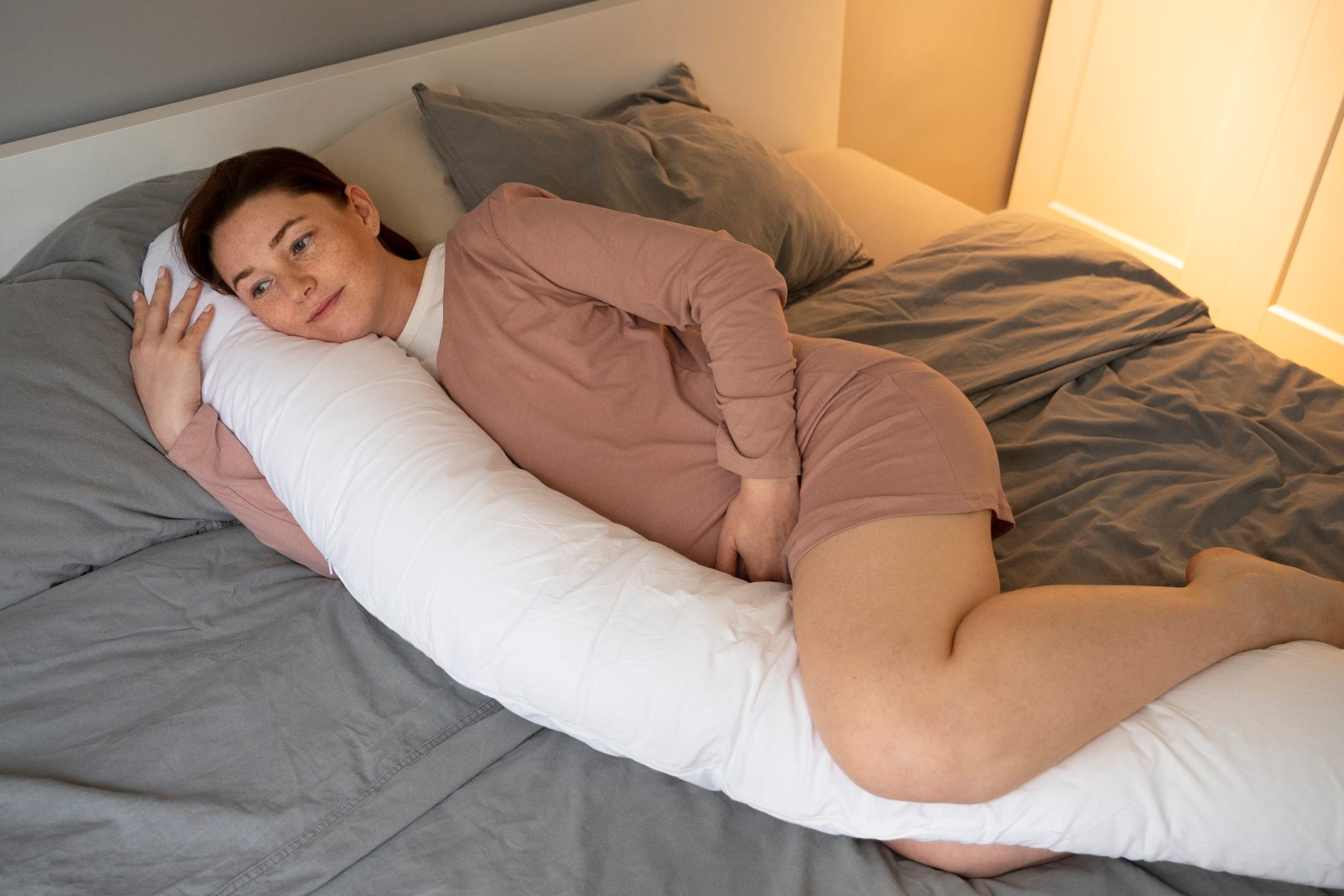
Side sleeping is widely recommended postpartum because it avoids pressure on the abdomen and supports circulation. To lie on your side comfortably, place a pillow between the knees to maintain spinal alignment and reduce hip pressure, and another pillow under the abdomen to support the belly and reduce pulling on a C-section incision. Left-side sleeping in particular may help optimise circulation, as it avoids compressing the inferior vena cava (the body’s largest vein returning blood to the heart), though recent evidence suggests both sides offer substantial benefits over lying flat.
This position is especially useful for mothers experiencing lower back pain or tailbone discomfort, as it distributes weight more evenly and removes direct pressure from the coccyx.
Elevating Legs for Circulation
For mothers dealing with postpartum oedema, elevating the legs above heart level for 15 to 20 minutes several times daily is a standard clinical recommendation. Research has shown a clear linear relationship between the angle of elevation and the volume of fluid drained from the lower extremities.
This is one area where pillow-stacking falls short. Pillows compress under weight, shift during sleep, and can create pressure points behind the knees that impede circulation. Consistent, stable leg elevation throughout the night requires mechanical support.
How Adjustable Beds Support Postpartum Recovery
Every postpartum sleeping position described above shares a common requirement: precise, sustained elevation of different parts of the body. Pillows can approximate this, but they introduce instability, inconsistency, and frequent readjustment that interrupt already fragmented sleep. For a mother who is already waking several times a night, losing additional rest to rearranging pillows is the last thing her recovery needs.
Elevation for Comfort and Reduced Abdominal Pressure
An adjustable bed base raises the upper body mechanically, bringing a mother from lying flat to a supported semi-reclined position without engaging her abdominal muscles. For C-section recovery, this means fewer painful transitions during nighttime feeds. It also means a partner or support person sharing the bed doesn’t need to physically help the mother sit up each time.
The semi-Fowler position (30–45 degrees) is the standard post-caesarean hospital positioning for good reason: it reduces abdominal wall tension, improves breathing capacity, and promotes uterine drainage. An adjustable bed replicates this clinical positioning at home, where the bulk of recovery actually happens in the weeks after delivery.
Easier Feeding Positions
“Biological nurturing,” or laid-back breastfeeding, involves the mother reclining while the baby lies prone on her body. Developed by Dr Suzanne Colson, this approach triggers primitive neonatal reflexes that help the baby latch and feed effectively. It’s particularly recommended after caesarean births because the baby’s weight rests on the mother’s chest rather than her abdomen.
The Australian Breastfeeding Association recommends trying several breastfeeding positions to find what works best, noting there is no single “right” way. For mothers managing a forceful milk let-down, the ABA specifically suggests laid-back or semi-reclined positions because gravity slows the flow of milk, making it easier for the baby to manage.
An adjustable bed provides a stable recline angle that doesn’t shift mid-feed. Unlike stacked pillows, which compress and move, a mechanical base offers consistent support that helps prevent the hunching and forward-leaning posture responsible for breastfeeding-related back and neck pain.
Improved Circulation
Adjustable beds with independent foot elevation allow mothers to raise their legs above heart level throughout the night. For postpartum oedema, this encourages venous return and lymphatic drainage in a way that stacked pillows cannot maintain. Combined head-and-foot elevation (sometimes called zero-gravity positioning) distributes body weight more evenly, reduces pressure on the lower back and tailbone, opens airways for easier breathing, and promotes the kind of deep, uninterrupted rest that supports recovery.
The zero-gravity concept originates from NASA’s observations of the posture astronauts’ bodies naturally adopt in microgravity, documented as the Neutral Body Posture during Skylab and shuttle missions. Consumer adjustable beds adapt these principles for sleep, creating a position that minimises gravitational strain across the body.
How Letto Can Help
After everything covered above, the last thing a new parent needs is a bed that works against them. Struggling to sit up for a 3 am feed, wrestling with pillows that have shifted for the third time, or lying awake because there’s no comfortable position for a body that’s sore in five different places at once: these aren’t small inconveniences. They compound, night after night, right when recovery matters most.
Letto’s Italian-engineered adjustable bed bases are built to take that friction away. The motorised head and foot articulation means finding a comfortable semi-reclined position for feeding, elevating the legs for circulation, or settling into a zero-gravity configuration for deeper rest can happen at the press of a button, in the dark, without waking anyone up.
For couples, Letto’s split queen, split king, and split super king configurations are worth a serious look. Each side adjusts independently, so the recovering parent can elevate their upper body for a midnight feed while their partner or support person sleeps flat and undisturbed. Because postpartum recovery isn’t just physically hard on the person who gave birth; it’s hard on the whole household. When both people in the bed can sleep in a way that works for their body, everyone gets more rest, and that makes the early weeks a little more manageable for the whole family.
The Letto mattress features reversible firmness, so each sleeper can choose the support level that suits them. For a postpartum body that feels different from week to week, with back pain one night, pressure sensitivity the next, and a healing incision that changes what’s comfortable as it mends, that flexibility is more than a feature. It’s peace of mind.
If you’re not sure whether an adjustable base is right for your situation, our guide on whether adjustable bed bases are worth it covers the practical side in detail, or you can get in touch with us directly to talk through your needs. Letto offers a 30 Night Comfort Guarantee, so there’s space to try before committing. Discover why Letto is trusted by Australian families, or explore our full range of package deals to find a setup that supports your recovery and beyond.
A Note on Safe Sleep for Your Baby
Adjustable beds support the parent’s recovery and comfort. They are not safe sleep surfaces for infants.
It’s completely natural to want your baby close. After months of waiting, the instinct to keep them curled up beside you, especially during those long, quiet nighttime feeds, is one of the strongest feelings new parenthood brings. But adult beds pose real risks to infant safety, and adjustable beds introduce additional ones. The incline created by head or foot elevation can cause a baby to slide or roll into a position that restricts breathing. Split bed configurations may leave small gaps between mattress sections where an infant could become trapped. And the soft, conforming mattress surfaces designed to relieve adult pressure points do not provide the firm, flat support that a baby’s airway requires during sleep.
Red Nose Australia’s safe sleep guidelines are clear: babies should always sleep on their back, on a firm and flat surface, in their own cot or bassinet, free from soft bedding, pillows, and bumpers. Adult beds, whether adjustable or not, do not meet these standards. The safest setup for nighttime feeds is a bassinet or cot placed right beside the parents’ bed. Your baby stays within arm’s reach, you can respond in seconds, but they’re always in their own safe sleep space, for every sleep, day and night.
Finding Comfort in the Fourth Trimester
The weeks after birth are demanding in ways that are hard to fully prepare for, no matter how many books have been read or classes attended. Sleep becomes fragmented. Pain can make simple movements feel monumental. The exhaustion layers on itself, night after night, and it’s easy to feel like something is wrong when, in reality, the body is doing an extraordinary amount of healing all at once.
If you’re in the thick of it right now, know this: it does get easier. Not overnight, and not on a predictable schedule, but it does. And in the meantime, you don’t have to just push through on willpower and cold coffee. The right postpartum sleeping positions can reduce pain, support healing, and help you get more from the limited rest available. An adjustable bed won’t replace a good GP, a supportive midwife, or the partner or support person who takes the 2am feed so you can sleep. But it can give your body the mechanical support it needs to rest properly and recover well, so you can show up for yourself and your baby with a little more in the tank.
For expecting parents reading this ahead of time: this is one of the most practical things you can do before the baby arrives. The nursery will get decorated. The tiny clothes will get washed. But your own sleep setup, the place where your body will actually recover, is worth just as much attention. Small changes now can make a meaningful difference when recovery begins.
Frequently Asked Questions
What are the best postpartum sleeping positions after a C-section?
Slightly elevated back sleeping at 30 to 45 degrees is the most commonly recommended position during C-section recovery, as it reduces pressure on the healing abdominal muscles and incision. Side sleeping with a pillow between the knees and under the abdomen is also effective. Fiona Stanley Hospital advises rolling to the side when getting out of bed, rather than sitting straight up, to protect the wound. An adjustable bed can assist by providing mechanical elevation without requiring abdominal muscle engagement.
How long does postpartum sleep disruption typically last?
The most intense disruption occurs in the first six weeks after delivery, when night feeds are most frequent. However, research suggests maternal sleep may not fully return to pre-pregnancy levels for up to six years after the birth of a first child. Sleep debt accumulates quickly during this period, and prioritising sleep quality when quantity is limited can help reduce its impact.
Can an adjustable bed help with postpartum back pain?
Back pain affects the majority of postpartum women, with 71% reporting lumbo-pelvic pain during pregnancy that often persists after birth. An adjustable bed allows customised positioning that supports spinal alignment and reduces pressure on the lower back and tailbone. The ability to adjust the head and foot of the bed independently means mothers can find a position that relieves their specific pain points without relying on unstable pillow arrangements.
Are adjustable beds safe to use while co-sleeping with a baby?
No. Adjustable beds are for the parent’s comfort and recovery only. Red Nose Australia recommends that babies always sleep on their back, on a firm and flat surface, in their own cot or bassinet. Adult beds do not meet infant safe sleep standards. The safest arrangement is a separate bassinet or cot placed beside the parents’ bed for easy access during night feeds.
Disclaimer: This article provides general information only and is not intended as medical advice. If you are experiencing persistent sleep difficulties or health concerns after birth, please consult your GP, midwife, or a qualified healthcare professional. In Australia, you can contact PANDA (Perinatal Anxiety & Depression Australia) on 1300 726 306, Beyond Blue on 1300 22 4636, or Lifeline on 13 11 14.
Snoring is the most common trigger. Around 40% of Australian men and 30% of women snore on at least some nights, according to the Sleep Health Foundation.
Poor sleep doesn’t just make you tired. Research from UC Berkeley found that even one bad night reduces empathy and increases conflict between partners the following day.
Sharing a bed has measurable benefits, too. A peer-reviewed study in Frontiers in Psychiatry found couples who slept together had about 10% more REM sleep and more synchronised sleep cycles than when they slept alone.
A Split King adjustable bed lets each partner control their own side independently, addressing the most common reasons couples end up in separate rooms without sacrificing the closeness of a shared bed.
Disclaimer: This article provides general information only and is not intended as medical advice. If you or your partner are experiencing persistent snoring, breathing pauses during sleep, or chronic sleep difficulties, please consult a qualified healthcare professional. In Australia, you can speak to your GP or call Healthdirect on 1800 022 222.
If you’ve spent the last few months sleeping on the edge of your own bed, one elbow wedged against the headboard, trying to get away from your partner’s snoring or restless legs, you already know what a sleep divorce feels like. You just might not have had a name for it.
Despite its dramatic name, a sleep divorce doesn’t signal the end of a relationship. The term describes a deliberate, mutual decision by partners to sleep in separate beds or separate rooms to get better rest. Many sleep experts and therapists actually prefer the term “sleep separation” or “sleep alliance”, arguing the word “divorce” attaches unnecessary stigma to what is, at its core, a practical health decision.
Australian-specific data on separate sleeping arrangements is harder to pin down, but a Sleep Health Foundation survey found that 17% of partnered Australians currently sleep alone, while 22% said they would prefer to. A 2023 Real Insurance survey of around 1,200 Australians found that among those whose partner had sleeping issues, 38% had tried sleeping in separate rooms, and 40% described the disruption as a strain on the relationship.
The trend isn’t uniquely Western, either. In Japan, sleeping separately has been culturally normalised for decades, often linked to futon culture, co-sleeping with children, and staggered work schedules. What’s changed isn’t the practice itself. What’s changed is that more couples in Australia, the US, and the UK are willing to talk about it openly rather than treating it as something to be embarrassed about.
Why Couples End Up in Separate Beds
Most couples don’t arrive at a sleep divorce overnight, instead it starts out small. A nudge at 2 am. A polite mention of the snoring. A slow migration toward opposite edges of the mattress. Then one night, someone grabs a pillow and heads for the couch, and what was supposed to be temporary becomes the new normal.
The frustrations that push couples apart tend to fall into a few predictable categories, and if you recognise yourself in any of them, you’re far from alone.
Snoring (and What It Might Be Hiding)
Snoring is the single most cited reason for separate sleeping arrangements, and in Australia, it’s extremely common. The Sleep Health Foundation estimates that about 40% of men and 30% of women snore on at least some nights, with around 15% snoring on most nights. The Sleep Health Foundation National Survey found that 24% of Australian men and 17% of women reported frequent, loud snoring. Among those loud snorers, 70% also reported daytime impairment or other sleep-related symptoms.
But snoring isn’t always harmless. Loud, frequent snoring can be a warning sign of obstructive sleep apnoea (OSA), a condition where the airway repeatedly narrows or collapses during sleep, cutting off normal breathing. Only about 8% of Australian adults report a diagnosed case of OSA, yet true prevalence is estimated at around 20%, suggesting the majority of cases remain undiagnosed. For a deeper understanding of how snoring relates to sleep quality and what to look for, it helps to know the warning signs. If your partner’s snoring includes gasping, choking, or long pauses in breathing, a conversation with a GP or sleep specialist should come before a conversation about separate beds.
Different Sleep Schedules
One partner is a natural early riser; the other doesn’t feel human until 10 pm. One works shifts; the other keeps standard hours. These differences in sleep schedules create a nightly negotiation that rarely ends well for either person. The partner who goes to bed first gets woken when the other climbs in. The early riser’s alarm disrupts the night owl’s last sleep cycle, often pulling them out of the deep sleep stages the body relies on for physical restoration.
Over time, these micro-disruptions add up to chronic poor sleep for both. Understanding how your circadian rhythm works can help explain why these schedule clashes feel so disruptive: your body’s internal clock governs when you feel alert and when you feel drowsy, and it’s not something you can easily override with willpower alone.
It’s nobody’s fault. But that doesn’t make the exhaustion any easier to live with.
Mattress Firmness Disagreements
This one sounds trivial until you’re living it. One partner needs firm support for a bad back; the other finds anything firmer than a cloud unbearable. On a traditional shared mattress, someone always compromises, and compromise in this context usually means neither person sleeps well.
Research published in The Lancet found that a medium-firm mattress significantly outperformed a firm mattress for people with chronic lower back pain over 90 days. The “right” firmness isn’t universal; it depends on body weight, sleeping position, and existing health conditions. When two people with different needs share one sleep surface, improved sleep quality for one often means worse sleep for the other. If your mattress is also past its best, the problem gets worse. Our guide on when to replace a mattress covers the signs worth watching for.
Movement Disturbance
Every time one partner rolls over, gets up for the bathroom, or shifts position, the other person’s sleep is disrupted. Sleep researchers call these micro-awakenings: brief disturbances that fragment your sleep architecture (the pattern of sleep stages your brain cycles through each night) without you necessarily remembering them the next morning. The cumulative effect is reduced time in the deep and REM stages where the body does its most important repair work.
For couples where one partner has restless legs syndrome or simply moves frequently, the impact on the other person’s sleep environment can be substantial. You might not remember waking up six times. But your body does.
What Poor Sleep Actually Does to a Relationship
This is where things get harder to talk about, because the effects of sleeping badly go well beyond feeling tired. When you’re running on broken sleep, night after night, it changes who you are as a partner. Not because you’re a bad person, but instead because your brain is working against you.
Research published in Current Biology found that after a night of total sleep deprivation, participants showed a 60% increase in amygdala reactivity to negative emotional stimuli. The amygdala is the part of the brain that detects threats, and when it becomes hyperactive, neutral comments start sounding like attacks. A partner’s innocent question about the dishes becomes a provocation. Meanwhile, the prefrontal cortex, the part of the brain responsible for rational thinking and emotional control, loses its connection to the amygdala when you’re sleep-deprived. It’s like your emotional brakes stop working.
UC Berkeley psychologist Amie Gordon has studied the relationship between sleep and romantic partnerships extensively. Her research with Serena Chen, published in Social Psychological and Personality Science, found that participants reported more conflict following nights of poor sleep. In a lab setting, when even one partner slept badly, both showed reduced empathic accuracy (the ability to read and understand the other person’s emotions) during a recorded conflict discussion, a lower ratio of positive to negative emotions, and less successful conflict resolution. The effects weren’t explained by stress, depression, or general relationship dissatisfaction. Sleep itself was the variable.
A randomised study published in Affective Science went further, assigning 30 couples to either a night of total sleep deprivation or normal sleep. The sleep-deprived couples had higher cortisol (the body’s main stress hormone) levels during a conflict discussion and reported less positive emotions both before and after the disagreement. This was causal evidence, not just correlation: poor sleep directly worsened how couples handled conflict.
As Gordon herself put it: “Poor sleep may make us more selfish as we prioritise our own needs over our partner’s.”
If that resonates, it’s not a character flaw. It’s biology. And understanding that can actually help, because it means the problem has a solution that doesn’t require couples therapy. Over weeks and months, the pattern compounds. Chronic exhaustion makes partners less patient, less generous in their interpretations of each other’s behaviour, and less capable of the emotional repair work that keeps relationships healthy. Research consistently shows that sleep and mental health are deeply intertwined, and that includes the health of your closest relationships. Australian relationship counsellors at The Hart Centre describe sleep quality as “one of the strongest predictors of next-day relationship satisfaction.”
The arguments that feel like they came out of nowhere, the resentment that builds over small things, the feeling that your partner just doesn’t understand you anymore: sometimes, the root cause isn’t the relationship; it’s the sleep.
Why Sleeping Separately Isn’t Always the Answer
Given everything above, it might seem obvious: just sleep apart and fix the problem. And for some couples, separate sleeping arrangements do help. A Sleep Foundation survey found that people who maintained a sleep divorce reported sleeping an average of 37 extra minutes per night compared to when they shared a bed. That’s significant, especially when even small amounts of accumulated sleep debt can affect mood, focus, and health over time.
But there’s a cost, and it’s not just emotional.
A peer-reviewed study published in Frontiers in Psychiatry used dual simultaneous polysomnography (the gold standard for measuring sleep, where both partners are monitored at the same time) to compare couples’ sleep when sharing a bed versus sleeping apart. When sleeping together, couples showed about 10% more REM sleep, less fragmented REM periods, and significantly longer stretches of uninterrupted REM. REM sleep is the stage most closely linked to emotional regulation, memory, and creative problem-solving, so losing it isn’t trivial. Their sleep stages also synchronised more closely, and this synchronisation correlated positively with how deeply the partners rated their relationship. (The study was small, just 12 couples, so these findings are preliminary, but a larger follow-up analysis supported the REM finding.)
The researchers proposed a hypothesis they called a “positive feedback loop”: emotional closeness helps stabilise REM sleep, and better REM sleep in turn supports the emotional processing and social cognition that strengthen relationships. Sleeping apart may break that loop.
Harvard Health notes that couples considering separate sleeping arrangements need to be deliberate about maintaining intimacy, recommending scheduled time together before separating for the night and ensuring both sleeping spaces are equally comfortable.
Sleep researcher Alix Mellor from Monash University’s Turner Institute suggests framing it as a flexible arrangement rather than a permanent one. Some of her clients use “visiting rights,” where one partner comes into the other’s bed for connection time before moving to sleep separately. The point is that choosing to sleep separately doesn’t have to mean abandoning closeness entirely, but it does require effort to maintain what sharing a bed provides naturally.
How a Split King Adjustable Bed Addresses the Real Problems
For most couples dealing with sleep conflicts, the choice isn’t binary. You don’t have to pick between suffering through disrupted nights and retreating to separate rooms. There’s a practical middle ground: a Split King adjustable bed.
A Split King configuration places two independent mattresses and two independent adjustable bases inside a single King-sized bed frame. From the outside, it looks and feels like a regular shared bed. Underneath, each side operates independently.
This matters because it directly addresses each of the common sleeping arrangement conflicts without requiring a sleep divorce.
Snoring and Breathing Issues
Head elevation is one of the most studied non-pharmaceutical approaches to reducing snoring severity. A peer-reviewed study published in Sleep and Breathing found that elevating the head of the bed by 7.5 degrees reduced the apnoea-hypopnoea index (a measure of how many times breathing is disrupted per hour) by approximately 32% in patients with obstructive sleep apnoea. Astudy in JMIR Formative Research found that sleeping at an incline reduced snoring duration and decreased nighttime awakenings. With a Split King, the snoring partner can elevate their head to open their airway while the other sleeps completely flat. No compromise required.
Different Schedules and Preferences
When one partner wants to read with the head raised at 11 pm and the other needs to be asleep by 9:30, a Split King makes both possible in the same bed. Each side adjusts independently, so different bedtimes and wake-up routines don’t have to mean different bedrooms. For couples looking to improve their wind-down habits, a solid bedtime routine can also help both partners fall asleep faster, even if they’re heading to bed at different times.
Firmness Disagreements
On a standard King mattress, the entire surface is one firmness level. With a Split King, each side can have its own mattress with its own firmness. There’s no negotiation, no compromise, and no resentment about whose back pain takes priority.
Movement Transfer
Because each side sits on its own base, movement on one side doesn’t transfer to the other. Rolling over, getting up, adjusting position: none of it disturbs the other partner. This is the same problem that drives couples to sleep in separate beds, solved without leaving the room.
How Letto Can Help
If anything in this article has resonated, or if you’ve recognised yourself or your relationship in these patterns, it’s worth knowing that meaningful change doesn’t have to be complicated.
At Letto, we designed our adjustable bed range specifically for Australians dealing with these exact problems. Our Split King,Split Queen, and Split Super King configurations give each partner full independent control of their side of the bed, including head and foot elevation, built-in massage functions, and one-touch zero gravity positioning.
The zero gravity position is based on NASA’s research into how the body naturally rests in a weightless environment. It distributes weight more evenly, reduces pressure points, and opens the upper airway, which can help with both snoring and the physical discomfort that keeps people tossing through the night. If you’re curious about whether the investment makes sense for your situation, our guide on whether adjustable bed bases are worth it covers the practical considerations. Our Anti-Snore preset gently elevates the head of the bed to encourage better airflow, a practical step backed by the head-elevation research referenced above.
Our Letto mattresses feature reversible firmness. By flipping the internal foam layer, each sleeper can switch between Medium-Soft and Medium-Firm without replacing the mattress. That means two partners can each choose the support level that suits their body, and change it as their needs shift over time.
Every Letto mattress is OEKO-TEX Certified and uses cooling gel-infused memory foam with a breathable cover, designed for Australian summers where heat can fragment sleep quality.
If you’re unsure where to start, our complete package deals pair mattresses with adjustable bases at a bundled price. We offer a 30 Night Comfort Guarantee, a 10-year warranty, and direct-to-door delivery across Australia from our Melbourne warehouse.
The sleep divorce conversation isn’t really about beds. It’s about a tension most couples recognise: the desire to sleep next to the person you love versus the biological reality that their snoring, movement, or schedule is wrecking your rest.
For some couples, separate rooms will be the right call, at least for a while. For many others, the problem isn’t that they need to sleep apart. The problem is that their current sleeping arrangement doesn’t accommodate two different bodies with two different needs.
That’s not a relationship problem, it’s a logistics problem, and logistics problems have practical solutions.
How common is the sleep divorce trend in Australia?
Australian-specific research is limited, but a Sleep Health Foundation survey found 17% of partnered Australians sleep alone and 22% would prefer to. The ResMed 2026 Global Sleep Survey (which sampled 1,500 Australians) found 80% of people in relationships reported their sleep was disrupted by their partner, and 18% of couples globally now sleep apart permanently. In the US, the AASM’s 2025 survey found 31% of adults have tried some form of sleep divorce.
Can a Split King adjustable bed help with snoring?
Yes. Peer-reviewed research shows that head-of-bed elevation reduces the severity of snoring and breathing disruptions in people with obstructive sleep apnoea. A Split King configuration lets the snoring partner elevate their head independently while the other partner sleeps flat and undisturbed. This doesn’t replace medical evaluation for suspected sleep apnoea, but it is a practical step that can improve the sleep environment for both people.
What is the Scandinavian Sleep Method?
The Scandinavian Sleep Method involves sharing one bed but using two separate duvets instead of a single shared blanket. It’s a centuries-old practice standard throughout Sweden, Denmark, Norway, and Germany. It eliminates blanket-stealing and allows each partner to regulate their own temperature. The AASM’s 2024 survey found that about 10% of Americans had tried it. While there’s no peer-reviewed study comparing it directly to sharing a duvet, the principle is sound: reducing disruption at the points where partners’ needs diverge.
Small, practical changes to your sleep habits and environment can make a real difference to long-term brain health.
Disclaimer: This article provides general information only and is not intended as medical advice. If you or a loved one is experiencing persistent sleep difficulties, cognitive concerns, or symptoms of memory loss, please consult a qualified healthcare professional. In Australia, you can speak to your GP, contact the National Dementia Helpline on 1800 100 500, or reach out to Lifeline on 13 11 14.
“I haven’t slept well in years. Should I be worried about my brain?” It’s one of the most common concerns older Australians raise about their health.
So, can poor sleep cause dementia? Researchers around the world have been working on exactly that question. The answer isn’t a simple yes or no, but what the science tells us is both sobering and, honestly, quite hopeful. Because even if poor sleep does increase risk, it’s one of the factors you can actually do something about. Understanding how sleep works is a solid place to start.
The numbers back this up. A population-level analysis of 5,900 older adults estimated that approximately 12.5 per cent of all dementia cases could be attributed to insomnia-related sleep disturbances. That’s comparable to the impact of hearing loss, one of the most established risk factors on the list.
A meta-analysis of 76 longitudinal studies found short sleep duration carried a 27 per cent increased risk of cognitive decline. Excessive daytime sleepiness carried an 85 per cent increased risk of vascular dementia. These sleep patterns aren’t footnotes in the research. They’re central to it.
Researchers at the Australian National University analysed over 29,000 adults and found that sleeping outside the optimal window of six to nine hours of sleep per night was tied to smaller brain volumes and poorer cognitive scores. Both too few and too many hours of sleep showed a negative impact.
And a UK Biobank study of 27,500 individuals found that the gap between a person’s actual age and the biological age of their brain widened by roughly six months for every one-point decrease in a healthy sleep score. Poor sleep was linked to measurable, physical changes in the brain itself.
How Deep Sleep Protects Your Brain
To understand why poor sleep can cause dementia is such an urgent question for researchers; you need to know what happens inside your head while you’re asleep.
During the deep, slow-wave stages of NREM sleep, the brain activates a specialised waste-clearance network called the glymphatic system. Discovered in 2012 at the University of Rochester, it works by flushing cerebrospinal fluid through the brain along channels surrounding blood vessels. That fluid collects amyloid-beta and tau proteins (the hallmarks of Alzheimer’s disease) and carries them out.
What makes this system remarkable: a follow-up study showed the spaces between brain cells expand by roughly 60 per cent during sleep, allowing fluid to flow far more freely. Your brain opens the floodgates for a deep clean. It can’t do that while you’re awake.
The stakes are clear. A Framingham Heart Study analysis tracked 346 older adults over 17 years and found that for every one per cent annual decrease in slow-wave sleep, participants were 27 per cent more likely to develop all-cause dementia and 32 per cent more likely to develop Alzheimer’s specifically.
Deep Sleep and Memory
Deep sleep does double duty. It’s also when your brain consolidates memories, replaying the day’s experiences and transferring information from short-term to long-term storage during the various stages of sleep. This process relies on sleep spindles: brief bursts of brain activity that synchronise with slow waves to physically reinforce learning.
Professor Sharon Naismith at the University of Sydney, who leads the SIESTA sleep research initiative, has shown that changes in sleep spindle patterns serve as early markers of dementia risk, even in people who seem cognitively sharp. At the University of Queensland, researchers discovered a lipid-based pathway essential for making memories permanent, a chemical process that depends on synaptic strengthening during deep sleep.
When sleep is fragmented, these processes get interrupted. The brain doesn’t finish its housekeeping or complete its filing. Over the years and decades, that unfinished work adds up.
Correlation, Causation, and the Bigger Picture
It’s worth being upfront about what the research can and can’t tell us, because nuance matters here.
One major challenge is reverse causality. The brain changes associated with Alzheimer’s, specifically the buildup of amyloid plaques, can begin 15 to 20 years before symptoms appear. Those early changes often damage the brain regions that regulate your circadian rhythm and sleep-wake cycle. So sometimes poor sleep may be an early signal of disease, not the cause.
But the evidence doesn’t only point in one direction. A study tracking participants for up to 23 years found that chronic short sleep and frequent night waking, observed decades before any diagnosis, were strongly associated with later dementia. The association grew stronger as the time gap widened. That’s what you’d expect if poor sleep were contributing to the disease, not just reflecting it.
There’s also a scientific debate about the exact mechanics. A 2024 study from Imperial College London found toxin clearance was actually reduced during sleep in mice by approximately 30 per cent. The researchers stressed that sleep remains critical for brain health, but the protective mechanisms may be more complex than one simple analogy can capture. Sleep may protect the brain partly by reducing waste production, not only by clearing it.
What nobody disputes: chronic, long-term poor sleep is associated with significantly greater dementia risk. And whether the question is “can poor sleep cause dementia” or “can poor sleep accelerate it,” the practical response is the same. Better sleep is better for your brain.
Practical Steps to Protect Your Sleep and Your Brain
Sleep quality responds to the choices you make every day. You don’t need a lab or a prescription to start.
Prioritise Consistency
Your circadian rhythm thrives on regularity. Same bedtime, same wake time, every day. Dementia Australia recommends this as one of the most effective strategies for protecting sleep architecture.
Watch What You Consume
Caffeine blocks the brain’s natural sleepiness signals for hours. Research from Stanford shows that afternoon caffeine can suppress deep slow-wave sleep even if you feel like you dozed off. Alcohol fragments the second half of the night and worsens sleep apnoea. Limiting both well before bed is one of the simplest changes you can make.
Move Your Body
Regular physical activity directly increases slow-wave sleep. The Monash research found the combination of adequate sleep and regular activity was particularly powerful for lowering dementia risk. Moderate daily movement counts. Just avoid vigorous exercise in the few hours before bed.
Build a Bedtime Routine
A 30-minute wind-down period with dim lighting and no screens helps signal to your nervous system that the day is over. This isn’t indulgent — it’s preparation for the most important maintenance cycle your brain runs each night.
Be Cautious with Sleep Medications
This one deserves a conversation with your doctor. Dementia Australia warns that traditional sleep medications, including benzodiazepines and “Z-drugs,” carry real risks for older adults: daytime confusion, falls, paradoxical agitation. Some research suggests certain sleep medications suppress the brain waves needed for effective waste clearance, even while you appear to be asleep. Controlled-release melatonin has a lower risk profile for falling asleep, though it may not sustain the deep sleep your brain needs for full restoration. Any changes to sleep medications should always go through your healthcare professional.
Create a Sleep Environment That Works
A Griffith University study found that for older adults, a bedroom temperature around 24°C reduced cardiovascular stress during sleep. Keep the room dark and quiet. And pay attention to the surface you sleep on: a mattress that creates pressure points triggers micro-arousals that pull you out of the restorative stages of sleep before your brain finishes its work.
How Letto Can Help
Research shows sleeping position influences how effectively the brain clears waste, and that even modest head elevation of 10 to 30 degrees can support venous drainage and reduce airway obstruction that fragments sleep. For people managing health conditions like sleep apnoea, acid reflux, or chronic back pain, mechanical elevation offers a practical, non-pharmaceutical solution.
At Letto, we design Italian-engineered adjustable bed bases built for Australians who want to sleep better as they age. Our bases feature one-touch zero gravity positioning (inspired by NASA’s research into the posture the body naturally assumes free of gravitational stress), built-in massage functions, and independent head and foot elevation.
An adjustable base won’t prevent dementia. No bed can make that claim. But it can help you spend more time in the deep, restorative stages of sleep your brain depends on. That’s a meaningful investment in your long-term health.
If there’s one thing the research makes clear, it’s this: you have far more influence over your brain health than previous generations ever believed. Sleep is one factor among many, but it’s one of the most responsive to change.
You don’t need to be perfect. Thirty extra minutes of sleep made a measurable difference in the Monash research. A consistent schedule, a cooler bedroom, a bed that actually supports your body: these things compound over time.
The relationship is complex. What the evidence shows is that chronic poor sleep is a significant, independent risk factor for cognitive decline, sitting alongside factors like high blood pressure and physical inactivity. Sleep and dementia have a bidirectional relationship: poor sleep accelerates the buildup of harmful brain proteins, and those proteins damage the brain’s ability to generate deep sleep. Long-term studies tracking people for over two decades suggest chronic short sleep and fragmented sleep are contributors to the disease process, not just early symptoms. But no single factor causes dementia in isolation. It’s always a combination of genetics, lifestyle, and health conditions over a lifetime.
How many hours of sleep do I need to protect my brain?
Most research points to six to nine hours as the optimal range. But total hours of sleep are only part of it. The quality and architecture of your sleep matter just as much. Spending enough time in deep slow-wave sleep and REM sleep is as important as duration. If you’re getting seven hours but waking repeatedly, your brain may still be missing out on the sustained deep sleep it needs.
If I already have trouble sleeping, does that mean I’ll get dementia?
No. This is really important. Trouble sleeping does not mean dementia is inevitable. Sleep is one of many modifiable risk factors, and even modest improvements make a difference. The Monash study found that short sleepers who added 30 minutes of sleep per night saw a nine to 19 per cent reduction in risk. The emphasis across this entire body of research is on hope and action. Improving your sleep patterns, managing underlying health conditions, staying active, and creating a supportive sleep environment all contribute to long-term brain health.
My parent is living with dementia and has terrible sleep. What can I do?
Sleep disturbances are extremely common for people living with dementia. Up to half of all people with a formal diagnosis experience significant sleep disruption: night waking, day-night confusion, difficulty staying asleep. Dementia Australia recommends a consistent daily routine, natural light exposure during the day, naps limited to 30 minutes in the early afternoon, and a calm sleep environment. The Sleep Health Foundation also provides helpful guidance. Any changes to sleep medications should go through your parent’s doctor, as many traditional sleep aids carry serious risks for people with cognitive impairment.
Can an adjustable bed help reduce dementia risk?
An adjustable bed cannot prevent or treat dementia. But it can create the physical conditions for deeper, less disrupted sleep. Research shows gentle head elevation supports airway patency and reduces snoring and sleep apnoea, which are major drivers of the micro-arousals that shatter deep sleep. The zero gravity position relieves spinal pressure and improves circulation, reducing the pain-related wake-ups that affect older Australians managing conditions like arthritis or back pain. More time in the deep stages of sleep, your brain relies on for maintenance, is a practical investment in your overall health.
Sleep and mental health share a two-way relationship — poor sleep can trigger mood problems, and mental health conditions can disrupt your sleep pattern.
Even one or two hours of lost sleep can reduce positive emotions, increase anxiety, and impair focus and decision-making.
Chronic lack of sleep elevates stress hormones like cortisol, fuelling a cycle of inflammation, irritability, and emotional overwhelm.
Simple, evidence-based habits — consistent scheduling, light management, and a supportive sleep environment — can meaningfully improve sleep quality and emotional resilience.
If sleep difficulties persist for more than four weeks or significantly affect daily life, professional support is recommended.
Disclaimer: This article provides general information only and is not intended as medical advice. If you are experiencing persistent sleep difficulties, chronic anxiety, low mood, or emotional distress, please consult a qualified healthcare professional. In Australia, you can speak to your GP, contact Beyond Blue on 1300 22 4636, or call Lifeline on 13 11 14.
You know the feeling. After a rough night, the world looks a little greyer. Small frustrations feel bigger. Your patience is thinner, your focus scattered, and your mood sits somewhere between flat and fragile. It is not just in your head — or rather, it is exactly in your head, in the most literal sense. How does sleep affect mental health? The short answer is: profoundly, and in more ways than most people realise.
In Australia, roughly 40 per cent of adults regularly experience inadequate sleep, according to the Sleep Health Foundation and the Australasian Sleep Association — at an estimated cost of $75.5 billion per year in lost productivity, healthcare expenses, and reduced well-being. Behind those numbers are real people: parents running on empty, professionals burning out, and everyday Australians struggling to feel like themselves.
The science of how sleep works has shifted dramatically in recent years. Researchers now understand that the relationship is not one-directional — it runs both ways. Poor sleep does not simply result from mental health problems; it actively drives them. And improving sleep quality can be one of the most powerful things you can do for your emotional well-being.
What Happens in Your Brain While You Sleep
Sleep is not a passive shutdown. It is a carefully orchestrated sequence of neurological events, each serving a distinct purpose for your mind and body. Understanding these stages of sleep helps explain why poor rest affects so much more than energy levels.
During deep NREM sleep — particularly the slow-wave stage known as N3 — your brain performs essential housekeeping. The glymphatic system flushes out neurotoxic waste products, including beta-amyloid proteins linked to cognitive decline. Your pituitary gland releases growth hormone, fuelling cellular repair and tissue recovery, while your immune system undergoes critical restoration. And your synapses undergo a recalibration process that keeps your neural networks efficient and responsive.
Then there is REM sleep — the stage where your brain processes emotional experiences. During REM, noradrenaline (the brain’s stress chemical) drops to its lowest levels of the entire day. This creates a uniquely calm neurochemical environment where emotionally charged memories can be safely reprocessed and “defused.” Researchers describe this as your brain’s way of remembering what happened while letting go of the acute emotional pain attached to it.
When you cut sleep short — or when it is fragmented by stress, discomfort, or environmental disruptions — both of these processes suffer. The waste builds up. The emotional charge remains.
How Sleep Deprivation Affects Your Mood, Focus, and Emotions
The emotional toll of sleep deprivation goes far beyond tiredness. A landmark meta-analysis published in Psychological Bulletin in 2024 analysed over 50 years of experimental research — 154 studies involving more than 5,700 participants aged 7 to 79. The findings were striking.
Every form of sleep loss tested — total deprivation, partial restriction, and fragmented rest — significantly reduced positive emotions and amplified symptoms of anxiety, including racing thoughts and persistent worry. Perhaps most concerning: the threshold was remarkably low. Even staying up just one to two hours later than usual was enough to measurably shift mood and anxiety levels.
Brain-imaging studies help explain why. Research from UC Berkeley found that after just one night of sleep deprivation, the amygdala — your brain’s emotional alarm system — showed 60 per cent greater reactivity to negative stimuli. At the same time, its connection to the prefrontal cortex (the rational, calming part of your brain) weakened significantly. In simple terms, a sleep-deprived brain overreacts to threats and has fewer resources to calm itself down.
The Two-Way Link Between Sleep and Mental Health
For decades, clinicians assumed that sleep problems were simply a symptom of mental health conditions — an unfortunate side-effect of anxiety and depression. That understanding has changed fundamentally.
The relationship between sleep and mental health is now recognised as bidirectional. Poor sleep does not just follow psychiatric disorders; it actively contributes to their onset, severity, and relapse. Genetic studies using Mendelian randomisation have confirmed this at the DNA level — a genetic predisposition to insomnia independently increases the risk of developing depression, and vice versa.
The numbers are sobering. People living with chronic insomnia face a significantly elevated risk of developing depression prospective studies suggest three to ten times higher than for the general population. For anxiety, the connection is even more pronounced. In Australia, Beyond Blue reports that approximately 3 million people live with a diagnosed anxiety condition, and their 2024 Mental Health and Wellbeing Check found that 43 per cent of Australians aged 16 to 85 have experienced a mental disorder at some point.Recent Monash University research confirmed this bidirectional pattern in new mothers — insomnia during the postnatal period predicted later anxiety, and depressive symptoms predicted later insomnia.
This two-way dynamic creates what clinicians call a self-perpetuating cycle. Anxiety makes it harder to fall asleep. A lack of sleep elevates cortisol and weakens the prefrontal cortex’s ability to regulate the amygdala. The resulting emotional reactivity fuels more anxiety. Understanding that this is a cycle — not a character flaw — is the first step toward breaking it.
Your Stress Hormones and the Sleep–Mood Connection
Behind the emotional effects of poor sleep is a cascade of hormonal disruption. When you consistently miss out on quality rest, your body’s stress-response system — the hypothalamic-pituitary-adrenal (HPA) axis — begins to malfunction.
Under normal conditions, cortisol follows a precise circadian rhythm: peaking in the morning to promote wakefulness and dropping at night to allow sleep. Chronic sleep restriction disrupts this pattern. Research shows that sleep-deprived individuals produce significantly more cortisol in response to even mild stressors, while evening cortisol stays elevated — keeping the nervous system stuck in a low-grade state of alert. Over time, this contributes to systemic inflammation, heightened anxiety, and that persistent sense of feeling “overwhelmed.” It is not a lack of willpower. It is biology.
Sleep deprivation also disrupts the hormones that regulate appetite and blood sugar. Studies show it can elevate ghrelin (the hunger hormone) and impair insulin sensitivity, contributing to the brain fog, irritability, and energy crashes that compound an already fragile emotional state.
Five Evidence-Based Ways to Improve Sleep for Better Mental Health
So how does sleep affect mental health in practical terms — and what can you actually do about it? The encouraging news is that improving sleep does not require a complete life overhaul. A meta-analysis of 65 randomised controlled trials found that improving sleep quality led to significant improvements in depression, anxiety, and overall mental health — with a clear dose-response pattern. Better sleep produced a better mood, reliably.
Here are five strategies backed by the strongest evidence.
Lock In a Consistent Sleep Schedule
Your brain’s master clock — the suprachiasmatic nucleus — thrives on predictability. Going to bed and waking at the same time every day, including weekends, stabilises the release of melatonin and cortisol, making it easier to fall asleep and wake feeling rested. It sounds deceptively simple, but consistency is one of the most powerful sleep hygiene habits you can build. For most adults, aiming for seven to nine hours of sleep is ideal.
Manage Your Light Exposure
Light is the single strongest signal your circadian system receives. Bright natural sunlight in the morning helps suppress residual melatonin and promotes daytime alertness. In the evening, dim your lights and limit screen use for 30 to 60 minutes before bed — it is the stimulating content as much as the blue light that can keep your brain in alert mode.
Create a Wind-Down Routine
A dedicated pre-sleep routine helps your nervous system transition from “do” mode to “rest” mode. This might include reading a physical book, practising box breathing (inhale for four counts, hold for four, exhale for four, hold for four), or progressive muscle relaxation. Even 15 to 20 minutes of intentional winding down can lower cortisol and make sleep onset noticeably easier. Our guide to building a bedtime routine walks through this step by step.
Watch What and When You Consume
Caffeine has an average half-life of around five hours, but research shows it can significantly disrupt sleep even when consumed six hours before bed. A good rule of thumb is to switch to caffeine-free options by early afternoon. Alcohol is equally worth watching — while it may help you fall asleep faster, it fragments sleep architecture and heavily suppresses REM sleep, the very stage your brain needs most for emotional processing.
Build a Sleep Environment That Supports Calm
Your bedroom should send one clear signal to your nervous system: it is safe to let go. Temperature matters — a cool room (around 15–19°C) supports the natural core temperature drop your body needs to initiate deep sleep. Physical comfort matters too. A mattress that creates pressure points or traps heat keeps your body in low-level alert, triggering micro-awakenings that fragment sleep without you even realising it.
How Letto Can Help
If anything in this article has resonated — if you have recognised yourself in the cycle of poor sleep, frayed nerves, and mornings that feel harder than they should — it is worth knowing that meaningful change does not have to be complicated.
At Letto, we design Italian-engineered adjustable bed bases built for Australians who want to sleep better. Not because we think a bed fixes everything — but because we have seen, time and again, how the right physical support can be the missing piece.
Our adjustable bases feature one-touch zero gravity positioning — inspired by NASA’s research into how the body rests in weightlessness. By gently elevating both head and legs, it reduces spinal pressure, opens the upper airway to ease snoring, and helps relieve the physical tension that keeps your nervous system on alert. For those managing back pain, arthritis, or poor circulation, this is a practical step toward calmer, more restorative nights.
While good habits and a supportive sleep environment make a genuine difference, some sleep difficulties need professional attention. If you have been struggling with sleep for more than four weeks, if daytime fatigue is affecting your ability to function, or if you are experiencing persistent low mood, anxiety, or emotional distress, please speak with your GP.
Your doctor can assess whether an underlying sleep disorder — such as obstructive sleep apnoea or chronic insomnia — may be contributing, and can refer you to a sleep specialist. Cognitive Behavioural Therapy for Insomnia (CBT-I) is the gold-standard treatment for chronic insomnia, effective for 70 to 80 per cent of patients — helping people fall asleep faster, spend less time awake during the night, and experience significant reductions in anxiety and depressive symptoms.
How does sleep affect mental health? If there is one thing the research makes clear, it is this: sleep is not a luxury. It is an active maintenance cycle for your emotional and cognitive health. When it works well, it clears stress, recalibrates mood, and gives your brain the resources to cope with whatever comes next. When it does not, those resources deplete, and the cycle tightens.
But the cycle can be broken. Small, consistent changes — a regular routine, a calmer evening, a bed that supports your body — add up. They send the right signals to a nervous system that has been stuck in overdrive.
Can a lack of sleep actually cause mental health problems, or does it just make them worse?
Both. The relationship is bidirectional. Poor sleep worsens existing anxiety and depression by disrupting emotional regulation. But it can also create mental health problems in people who did not previously have them — by elevating stress hormones, increasing amygdala reactivity, and weakening the prefrontal cortex’s calming influence. Prospective studies have found that sleep problems are actually a stronger predictor of future anxiety than anxiety is of future sleep problems.
How many hours of sleep do I need to protect my mental health?
The Sleep Health Foundation recommends seven to nine hours per night for adults aged 18 to 64. However, quality matters as much as quantity. Fragmented sleep — even over eight hours — can leave you depleted if you are not reaching enough deep and REM sleep. A consistent sleep pattern, a comfortable environment, and a calming bedtime routine all contribute to the consolidated rest your brain needs.
What is CBT-I, and is it better than sleeping pills?
CBT-I (Cognitive Behavioural Therapy for Insomnia) is a structured program that addresses the thought patterns and behaviours driving poor sleep. Unlike sleeping medication — which can be habit-forming and often suppresses restorative sleep stages — CBT-I produces lasting improvements without side effects. It is recommended as first-line treatment by the American College of Physicians, the Australasian Sleep Association, and the World Sleep Society. Ask your GP for a referral.
Can an adjustable bed really help with sleep and mental health?
An adjustable bed base will not treat a mental health condition that requires professional support. But physical discomfort is one of the most common barriers to quality sleep. If pain, reflux, or pressure points are fragmenting your rest, an adjustable base can help by allowing you to find a position that relieves pressure. Fewer micro-awakenings mean more time in deep and REM sleep, and a more emotionally resilient morning.