
The Quick Version
- New mothers lose an estimated 450 to 700 hours of sleep in their baby’s first year, and over 67% of women experience poor sleep quality in the first six months post-delivery.
- The right postpartum sleeping positions can reduce pressure on a healing C-section wound, ease back and pelvic pain, and help manage fluid retention common in the weeks after delivery.
- Slightly elevated back sleeping, supported side sleeping, and leg elevation are the three positions most recommended for postpartum comfort and recovery from lower back pain.
- Adjustable beds provide stable, mechanical elevation that removes the guesswork from pillow-stacking, and split configurations allow a partner or support person to sleep undisturbed.
- Babies must always sleep separately on a firm, flat surface in their own cot or bassinet. Red Nose Australia’s safe sleep guidelines apply at all times.
Disclaimer: This article provides general information only and is not intended as medical advice. If you are experiencing persistent sleep difficulties or health concerns after birth, please consult your GP, midwife, or a qualified healthcare professional. In Australia, you can contact PANDA (Perinatal Anxiety & Depression Australia) on 1300 726 306, Beyond Blue on 1300 22 4636, or Lifeline on 13 11 14.
Nobody warns you about the specific kind of exhaustion that comes after having a baby. And not just tiredness, but the bone-deep, foggy fatigue of sleeping in fragments for weeks on end while your body heals from one of the most physically demanding experiences it will ever go through. Whether this is a first baby or a fourth, and whether the birth was vaginal or a caesarean, the early postpartum weeks have a way of making sleep feel like something that happens to other people.
If that sounds familiar, or if the due date is approaching and the reality of newborn sleep is starting to set in, this is worth reading. The right postpartum sleeping positions won’t add more hours to the night. But they can make the hours available more restorative, less painful, and more supportive of the recovery that’s happening underneath the exhaustion.
Why Sleep Becomes So Hard After Birth
Newborns feed six to eight times over every 24-hour period, and at six months, nearly 79% of infants still wake at least once per night. That alone would be enough to leave anyone running on empty, but in reality, the feeding schedule is only part of the picture.
Adults typically need around 90 minutes of unbroken sleep to reach REM, the deep restorative stage that supports emotional regulation and mental health. For parents waking every two to three hours, sustained REM becomes rare, and sleep debt compounds fast. A meta-analysis of actigraphy studies found that maternal sleep quality may not fully return to pre-pregnancy levels for up to six years after the birth of a first child. That number can feel confronting, but it’s worth knowing because it reframes the goal: when sleep quantity is limited, sleep quality matters enormously.
Hormones make the situation harder. Oestrogen and progesterone levels drop sharply in the first few days post delivery. Progesterone is calming and sleep-promoting; its sudden decline can make falling asleep harder, even when the baby is settled. Cortisol often stays elevated from the physical demands of birth and early caregiving, creating a “wired but tired” state that many new parents describe as being utterly exhausted yet unable to switch off.
Then there’s the psychological shift. Up to one in five Australian mothers experiences perinatal depression or anxiety. Hypervigilance around the baby’s safety can keep the nervous system on high alert, making it difficult to fall asleep during quiet moments. Sometimes called “momsomnia,” this is a reminder that postpartum sleep disruption isn’t only about the baby’s schedule. The mother’s body and mind are both recovering, often at the same time, often without enough support. If any of this resonates, please reach out to PANDA (1300 726 306) or your GP. These feelings are common, and help is available.
Physical Challenges That Affect Postpartum Sleep
Beyond the feeding schedule and the hormonal upheaval, the body itself is healing. Several specific physical conditions make finding a comfortable sleeping position harder than most expecting parents anticipate.
C-Section Recovery
According to the latest national data, 41% of Australian women giving birth in 2023 had a caesarean section, a rate that has risen every year since 2004 and more than doubled since the early 1990s. State-level data suggests the trend is still climbing: Western Australia reported a rate of 43.2% for 2024. That means close to half of all new mothers in Australia are recovering from major abdominal surgery while simultaneously caring for a newborn around the clock.
C-section recovery involves healing through multiple layers of tissue, including the rectus abdominis muscles, which are surgically separated during the procedure. The standard motion of sitting up from a flat bed forces contraction of those healing muscles and generates significant intra-abdominal pressure on the wound. It’s the kind of pain that catches people off guard: not just soreness, but a sharp, seizing sensation that makes every nighttime feed feel like an ordeal. Fiona Stanley Hospital’s physiotherapy guidance advises side-rolling to get out of bed rather than sitting straight up. Wound dehiscence (reopening) occurs in 2–7% of caesarean births, and straining movements are a known risk factor. Initial healing takes at least six weeks, with deeper tissue repair continuing beyond that. Sleeping after a C-section can remain uncomfortable well into this period.
Back and Pelvic Discomfort
Pregnancy places enormous strain on the spine and pelvic floor, regardless of delivery method. An Australian hospital study found 71% of women in their third trimester reported lumbo-pelvic pain, and for many, this persists well into the postpartum months. Diastasis recti (abdominal separation) affects roughly 60% of women at six weeks postpartum, weakening the core muscles that normally support the lower back.
Pelvic floor dysfunction is strikingly common. One in three Australian women who have given birth experience incontinence, and a 2024 international study found nearly 74% of women at one year postpartum reported at least one pelvic floor symptom. Tailbone pain affects an estimated 7% of new mothers and can make lying flat deeply uncomfortable. These numbers aren’t shared to overwhelm. They’re here because too many new parents assume something is wrong with them when in reality, these experiences are remarkably normal. Finding a sleeping position that supports spinal alignment and reduces pressure on the lower back becomes more than a preference in the weeks after delivery.
Breastfeeding Strain
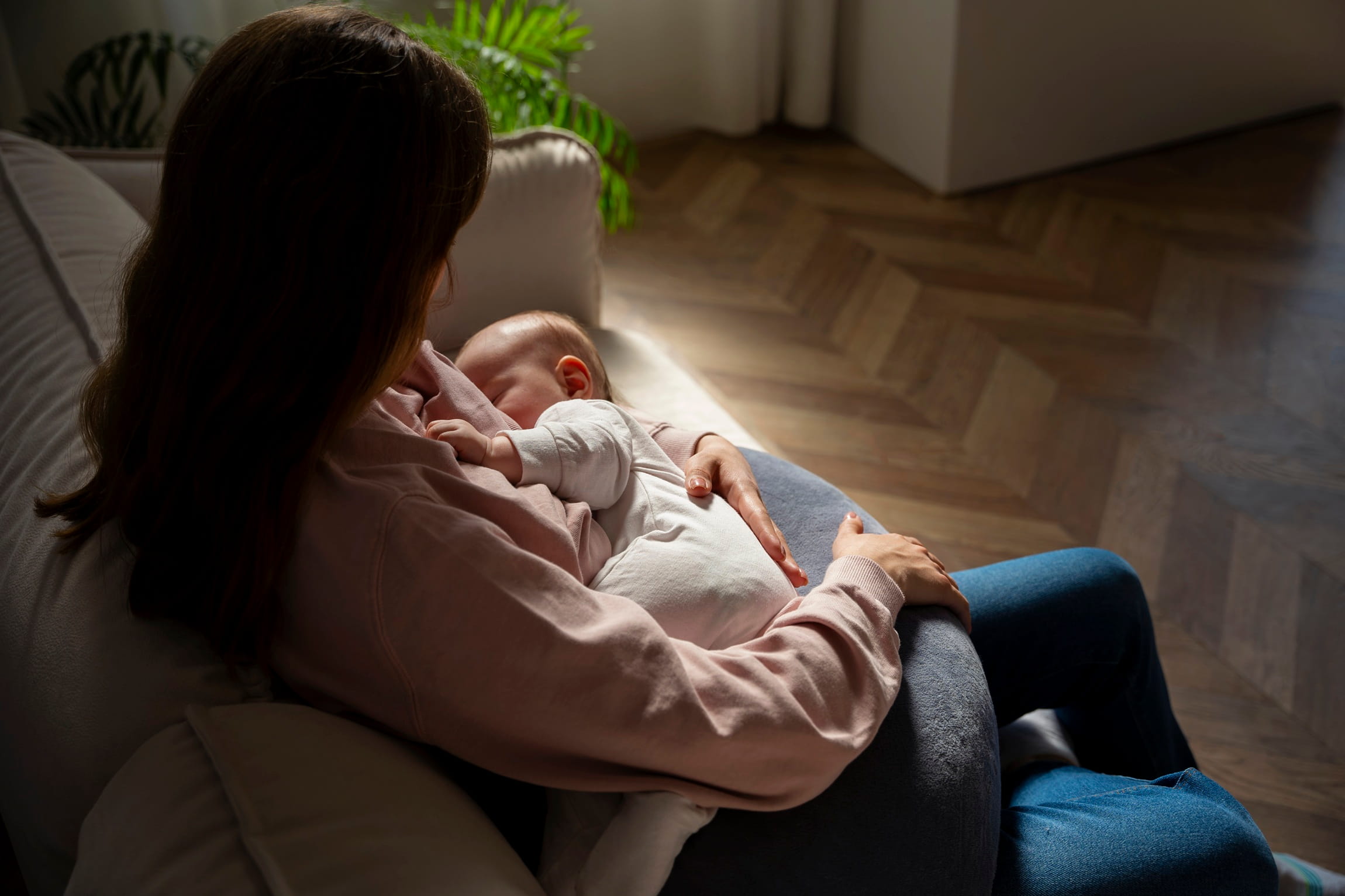
Breastfeeding involves holding a sustained posture for 20 to 30 minutes at a time, multiple times a day and throughout the night. A study of 395 breastfeeding mothers found 84% experienced back pain at least once per month, and nearly 52% experienced breastfeeding-related neck pain. The cause is typically sustained forward-head posture while looking down at the baby with rounded shoulders, sometimes called “nursing neck.” For anyone who has sat hunched in a dark room at 3 am, desperately trying to get a latch while their shoulders ache and their back seizes up, the numbers won’t come as a surprise.
For mothers recovering from a caesarean, breastfeeding positions matter even more. The baby’s weight needs to stay off the healing abdominal wound, which rules out several common holds unless the mother is well-supported in a semi-reclined or side-lying position.
Fluid Retention and Circulation
Blood volume increases by roughly 50% during pregnancy, and shedding that extra fluid takes time. Postpartum oedema (swelling in the feet, ankles, and legs) is nearly universal, typically peaking around day five and resolving within one to two weeks, though it can persist longer after caesarean delivery due to IV fluids administered during surgery.
More seriously, the risk of deep vein thrombosis (DVT) is 21 to 84 times higher in the first six weeks after birth compared to non-pregnant women. Caesarean delivery increases this risk more than threefold compared to vaginal birth. Positioning that supports healthy circulation during sleep isn’t a luxury in the weeks after delivery. It’s a meaningful part of recovery.
The Best Postpartum Sleeping Positions
There’s no single perfect position for every new mother, and what works at two weeks post delivery might need adjusting at six weeks. The body changes quickly during recovery, and the best approach is to try these positions and pay attention to which one reduces pain and helps sleep come more easily on any given night.
Slightly Elevated Back Sleeping
Back sleeping with the upper body raised to around 30 to 45 degrees (the clinical “semi-Fowler” position) is often the most comfortable option immediately after a caesarean. This angle reduces tension on the abdominal incision without requiring the stomach muscles to work. It also helps with two common post-delivery complaints: heartburn and snoring. A randomised trial found that elevating the upper body reduced oesophageal acid exposure by 67%, and a separate study found snoring stopped in 67% of participants at a 20-degree incline.
One important distinction: the entire upper body needs to be elevated, not just the head. Propping up with extra pillows behind the head alone can create a kink at the neck or waist, which may actually worsen back pain and reflux.
Supported Side Sleeping
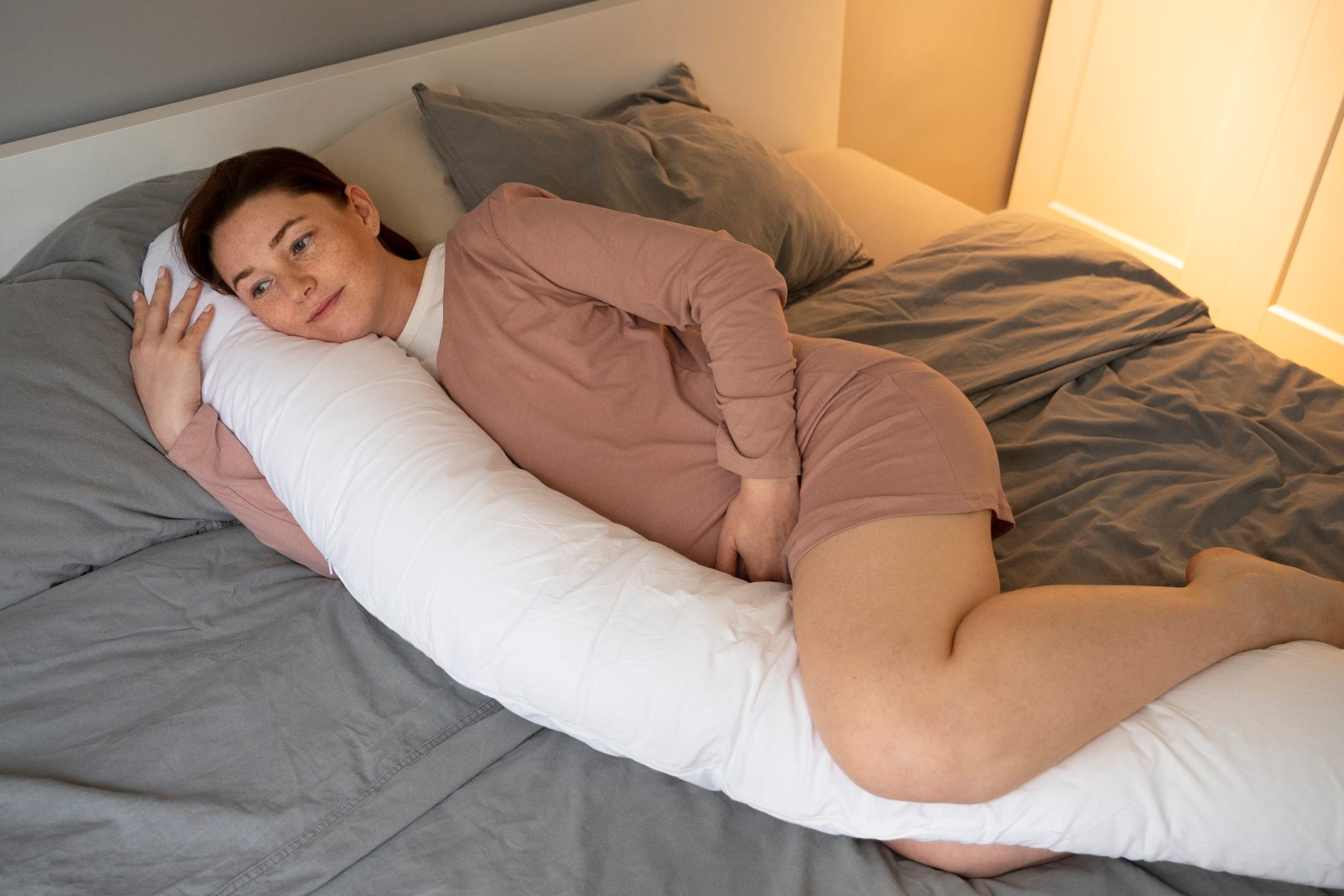
Side sleeping is widely recommended postpartum because it avoids pressure on the abdomen and supports circulation. To lie on your side comfortably, place a pillow between the knees to maintain spinal alignment and reduce hip pressure, and another pillow under the abdomen to support the belly and reduce pulling on a C-section incision. Left-side sleeping in particular may help optimise circulation, as it avoids compressing the inferior vena cava (the body’s largest vein returning blood to the heart), though recent evidence suggests both sides offer substantial benefits over lying flat.
This position is especially useful for mothers experiencing lower back pain or tailbone discomfort, as it distributes weight more evenly and removes direct pressure from the coccyx.
Elevating Legs for Circulation
For mothers dealing with postpartum oedema, elevating the legs above heart level for 15 to 20 minutes several times daily is a standard clinical recommendation. Research has shown a clear linear relationship between the angle of elevation and the volume of fluid drained from the lower extremities.
This is one area where pillow-stacking falls short. Pillows compress under weight, shift during sleep, and can create pressure points behind the knees that impede circulation. Consistent, stable leg elevation throughout the night requires mechanical support.
How Adjustable Beds Support Postpartum Recovery
Every postpartum sleeping position described above shares a common requirement: precise, sustained elevation of different parts of the body. Pillows can approximate this, but they introduce instability, inconsistency, and frequent readjustment that interrupt already fragmented sleep. For a mother who is already waking several times a night, losing additional rest to rearranging pillows is the last thing her recovery needs.
Elevation for Comfort and Reduced Abdominal Pressure
An adjustable bed base raises the upper body mechanically, bringing a mother from lying flat to a supported semi-reclined position without engaging her abdominal muscles. For C-section recovery, this means fewer painful transitions during nighttime feeds. It also means a partner or support person sharing the bed doesn’t need to physically help the mother sit up each time.
The semi-Fowler position (30–45 degrees) is the standard post-caesarean hospital positioning for good reason: it reduces abdominal wall tension, improves breathing capacity, and promotes uterine drainage. An adjustable bed replicates this clinical positioning at home, where the bulk of recovery actually happens in the weeks after delivery.
Easier Feeding Positions
“Biological nurturing,” or laid-back breastfeeding, involves the mother reclining while the baby lies prone on her body. Developed by Dr Suzanne Colson, this approach triggers primitive neonatal reflexes that help the baby latch and feed effectively. It’s particularly recommended after caesarean births because the baby’s weight rests on the mother’s chest rather than her abdomen.
The Australian Breastfeeding Association recommends trying several breastfeeding positions to find what works best, noting there is no single “right” way. For mothers managing a forceful milk let-down, the ABA specifically suggests laid-back or semi-reclined positions because gravity slows the flow of milk, making it easier for the baby to manage.
An adjustable bed provides a stable recline angle that doesn’t shift mid-feed. Unlike stacked pillows, which compress and move, a mechanical base offers consistent support that helps prevent the hunching and forward-leaning posture responsible for breastfeeding-related back and neck pain.
Improved Circulation
Adjustable beds with independent foot elevation allow mothers to raise their legs above heart level throughout the night. For postpartum oedema, this encourages venous return and lymphatic drainage in a way that stacked pillows cannot maintain. Combined head-and-foot elevation (sometimes called zero-gravity positioning) distributes body weight more evenly, reduces pressure on the lower back and tailbone, opens airways for easier breathing, and promotes the kind of deep, uninterrupted rest that supports recovery.
The zero-gravity concept originates from NASA’s observations of the posture astronauts’ bodies naturally adopt in microgravity, documented as the Neutral Body Posture during Skylab and shuttle missions. Consumer adjustable beds adapt these principles for sleep, creating a position that minimises gravitational strain across the body.
How Letto Can Help
After everything covered above, the last thing a new parent needs is a bed that works against them. Struggling to sit up for a 3 am feed, wrestling with pillows that have shifted for the third time, or lying awake because there’s no comfortable position for a body that’s sore in five different places at once: these aren’t small inconveniences. They compound, night after night, right when recovery matters most.
Letto’s Italian-engineered adjustable bed bases are built to take that friction away. The motorised head and foot articulation means finding a comfortable semi-reclined position for feeding, elevating the legs for circulation, or settling into a zero-gravity configuration for deeper rest can happen at the press of a button, in the dark, without waking anyone up.
For couples, Letto’s split queen, split king, and split super king configurations are worth a serious look. Each side adjusts independently, so the recovering parent can elevate their upper body for a midnight feed while their partner or support person sleeps flat and undisturbed. Because postpartum recovery isn’t just physically hard on the person who gave birth; it’s hard on the whole household. When both people in the bed can sleep in a way that works for their body, everyone gets more rest, and that makes the early weeks a little more manageable for the whole family.
The Letto mattress features reversible firmness, so each sleeper can choose the support level that suits them. For a postpartum body that feels different from week to week, with back pain one night, pressure sensitivity the next, and a healing incision that changes what’s comfortable as it mends, that flexibility is more than a feature. It’s peace of mind.
If you’re not sure whether an adjustable base is right for your situation, our guide on whether adjustable bed bases are worth it covers the practical side in detail, or you can get in touch with us directly to talk through your needs. Letto offers a 30 Night Comfort Guarantee, so there’s space to try before committing. Discover why Letto is trusted by Australian families, or explore our full range of package deals to find a setup that supports your recovery and beyond.
A Note on Safe Sleep for Your Baby
Adjustable beds support the parent’s recovery and comfort. They are not safe sleep surfaces for infants.
It’s completely natural to want your baby close. After months of waiting, the instinct to keep them curled up beside you, especially during those long, quiet nighttime feeds, is one of the strongest feelings new parenthood brings. But adult beds pose real risks to infant safety, and adjustable beds introduce additional ones. The incline created by head or foot elevation can cause a baby to slide or roll into a position that restricts breathing. Split bed configurations may leave small gaps between mattress sections where an infant could become trapped. And the soft, conforming mattress surfaces designed to relieve adult pressure points do not provide the firm, flat support that a baby’s airway requires during sleep.
Red Nose Australia’s safe sleep guidelines are clear: babies should always sleep on their back, on a firm and flat surface, in their own cot or bassinet, free from soft bedding, pillows, and bumpers. Adult beds, whether adjustable or not, do not meet these standards. The safest setup for nighttime feeds is a bassinet or cot placed right beside the parents’ bed. Your baby stays within arm’s reach, you can respond in seconds, but they’re always in their own safe sleep space, for every sleep, day and night.
Finding Comfort in the Fourth Trimester
The weeks after birth are demanding in ways that are hard to fully prepare for, no matter how many books have been read or classes attended. Sleep becomes fragmented. Pain can make simple movements feel monumental. The exhaustion layers on itself, night after night, and it’s easy to feel like something is wrong when, in reality, the body is doing an extraordinary amount of healing all at once.
If you’re in the thick of it right now, know this: it does get easier. Not overnight, and not on a predictable schedule, but it does. And in the meantime, you don’t have to just push through on willpower and cold coffee. The right postpartum sleeping positions can reduce pain, support healing, and help you get more from the limited rest available. An adjustable bed won’t replace a good GP, a supportive midwife, or the partner or support person who takes the 2am feed so you can sleep. But it can give your body the mechanical support it needs to rest properly and recover well, so you can show up for yourself and your baby with a little more in the tank.
For expecting parents reading this ahead of time: this is one of the most practical things you can do before the baby arrives. The nursery will get decorated. The tiny clothes will get washed. But your own sleep setup, the place where your body will actually recover, is worth just as much attention. Small changes now can make a meaningful difference when recovery begins.
Frequently Asked Questions
What are the best postpartum sleeping positions after a C-section?
Slightly elevated back sleeping at 30 to 45 degrees is the most commonly recommended position during C-section recovery, as it reduces pressure on the healing abdominal muscles and incision. Side sleeping with a pillow between the knees and under the abdomen is also effective. Fiona Stanley Hospital advises rolling to the side when getting out of bed, rather than sitting straight up, to protect the wound. An adjustable bed can assist by providing mechanical elevation without requiring abdominal muscle engagement.
How long does postpartum sleep disruption typically last?
The most intense disruption occurs in the first six weeks after delivery, when night feeds are most frequent. However, research suggests maternal sleep may not fully return to pre-pregnancy levels for up to six years after the birth of a first child. Sleep debt accumulates quickly during this period, and prioritising sleep quality when quantity is limited can help reduce its impact.
Can an adjustable bed help with postpartum back pain?
Back pain affects the majority of postpartum women, with 71% reporting lumbo-pelvic pain during pregnancy that often persists after birth. An adjustable bed allows customised positioning that supports spinal alignment and reduces pressure on the lower back and tailbone. The ability to adjust the head and foot of the bed independently means mothers can find a position that relieves their specific pain points without relying on unstable pillow arrangements.
Are adjustable beds safe to use while co-sleeping with a baby?
No. Adjustable beds are for the parent’s comfort and recovery only. Red Nose Australia recommends that babies always sleep on their back, on a firm and flat surface, in their own cot or bassinet. Adult beds do not meet infant safe sleep standards. The safest arrangement is a separate bassinet or cot placed beside the parents’ bed for easy access during night feeds.
Disclaimer: This article provides general information only and is not intended as medical advice. If you are experiencing persistent sleep difficulties or health concerns after birth, please consult your GP, midwife, or a qualified healthcare professional. In Australia, you can contact PANDA (Perinatal Anxiety & Depression Australia) on 1300 726 306, Beyond Blue on 1300 22 4636, or Lifeline on 13 11 14.