Good sleep hygiene refers to the evidence-based habits and environmental practices that promote healthy, restorative sleep. It includes maintaining a consistent sleep schedule, creating an optimal bedroom environment (cool, dark, and quiet), establishing a relaxing wind-down routine, and avoiding common sleep disruptors like caffeine, alcohol, and screen time before bed. For older Australians, good sleep hygiene becomes even more critical as sleep naturally becomes lighter and more fragmented with age. This article explains what sleep hygiene means, why it matters for physical and cognitive health, which everyday habits support better rest, what to avoid, and how the right sleep environment, including a supportive mattress and adjustable bed, can help protect and improve your sleep quality.
Why “sleep hygiene” isn’t what you think
When you first hear “sleep hygiene,” you’d be forgiven for thinking it’s about washing your sheets more often or keeping your bedroom spotless. But here’s the thing: it’s got nothing to do with cleanliness at all.
Sleep hygiene is actually a clinical concept, which is just a fancy way of saying it’s a collection of habits and tweaks to your environment that help you achieve quality sleep. Think of it less like spring cleaning and more like setting the stage for your body to do what it naturally wants to do: rest, repair, and wake up feeling human again.
What catches most people off guard is this: a huge portion of sleep problems, especially the ones that hang around for months or years, come from sleep habits we’ve accidentally locked in without even realising it. That 3 pm coffee that “doesn’t affect you”? The hour you spend scrolling through your phone in bed? These little routines add up, and over time, they can quietly wreak havoc on your ability to fall asleep and stay asleep through the night.
The upside? Once you know what’s actually getting in your way, you can start making changes that genuinely help improve your sleep.
This becomes especially important as we get older. Our sleep naturally shifts with age; it becomes lighter, shorter, and easier to disrupt. Research shows we spend less time in that deep, restorative sleep stage, even though we still need a solid 7 to 9 hours to function well. So building good sleep hygiene isn’t just helpful, it’s essential protection for the healthy sleep you need.
Why sleep matters more as you age
You know that feeling after a terrible night’s sleep? Everything’s harder. Your patience is thin, your thinking’s foggy, and even simple tasks feel like they require Herculean effort. But the effects of poor sleep quality go much deeper than just feeling a bit rubbish the next day, especially as we get older.
While you’re sleeping, your body isn’t just lying there doing nothing. It’s incredibly busy, repairing cells, clearing out waste, and filing away memories. When you consistently miss out on quality sleep, you’re missing out on all that essential maintenance work.
And the consequences show up in ways you might not expect. Poor sleep quality increases your risk of heart disease, high blood pressure, and stroke. Your immune system takes a hit, too. During sleep, your body makes special proteins that fight off infections and calm inflammation. Without enough sleep, you’re basically leaving the door open for illness to walk right in.
Then there’s what happens in your brain, which is honestly fascinating. While you’re out cold, your brain is consolidating memories and clearing out waste, including a protein called beta-amyloid that’s linked to Alzheimer’s disease. So quality sleep isn’t just about remembering where you left your glasses. It’s about protecting your brain for the long haul.
And here’s one that often surprises people: poor sleep quality significantly increases your risk of falls. When you’re exhausted, your judgment suffers, your reactions slow down, and your balance isn’t what it should be. For older Australians, a fall can mean hospitalisation, loss of independence, or worse. Good sleep hygiene isn’t just about feeling rested; it’s about staying safe.
The three pillars of good sleep hygiene
Here’s what you need to know about building better sleep habits: there’s no single magic fix. Instead, it’s about creating a framework, a collection of small, consistent habits that work together throughout your entire day, not just at bedtime. Let’s break it down.
Pillar one: Respect your body clock
Your body runs on an internal clock called your circadian rhythm (pronounced sir-KAY-dee-an, if you’re wondering). This is the system that controls your sleep-wake cycle, telling you when to feel alert and when to feel sleepy, and it runs on roughly a 24-hour cycle. It’s controlled by hormones like melatonin and brain chemicals like adenosine, which gradually build up throughout the day, making you progressively sleepier.
As we age, this internal clock can shift. You might find yourself nodding off earlier in the evening and waking at dawn, even when you’d rather not. Your body also produces less melatonin than it used to, which can make it harder to fall asleep.
So what’s the single most powerful thing you can do to support your sleep-wake cycle? Go to bed and wake up at the same time every day. Even weekends. Even after a bad night when every fibre of your being wants to sleep in.
This consistency trains your body to expect sleep and wakefulness at predictable times. Think of it like teaching your body a schedule; the more regular you are, the easier falling asleep becomes.
Light plays a crucial role in regulating your circadian rhythm, too. It’s the main signal that syncs your internal clock with the outside world. Getting bright, natural light first thing in the morning, ideally 30 to 45 minutes worth, tells your brain, “Right, it’s daytime now. Time to be awake.” This helps shut down melatonin production during the day so it can work properly at night.
But here’s the flip side: bright light in the evening, especially the blue light from phones, tablets, and TVs, tricks your brain into thinking it’s still the middle of the day. Your melatonin production gets suppressed right when you need it most, making it harder to fall asleep and pushing your bedtime later and later.
Pillar two: Create a sleep sanctuary
Your sleeping environment is constantly sending signals to your brain, either “time to rest” or “stay alert!” Let’s make sure it’s sending the right message.
Get the temperature right. You know that annoying dance where you’re too hot under the covers but too cold without them? That’s not just uncomfortable, it’s actively preventing you from staying asleep. Your core body temperature needs to drop for you to fall and stay asleep, which is why 17-19°C is considered ideal by Australian health experts. If you’re constantly waking up too hot or too cold, getting your bedroom temperature right can make a world of difference.
Make it properly dark. Any light in your bedroom, the glow from a digital clock, phone charger, or streetlights filtering through curtains, can interfere with your ability to sleep at night. Blackout curtains or a comfortable eye mask can help. Your sleeping environment should be dark enough that you can’t see your hand in front of your face.
Keep it quiet. A quiet environment is essential for healthy sleep, and if you can’t control outside noise, traffic, neighbours, or possums on the roof, earplugs, a fan, or white noise can mask disruptive sounds.
Reserve your bed for sleep. This is a big one that people often overlook. When you watch TV in bed, scroll through your phone, or eat meals propped up against the pillows, you’re weakening your brain’s association between your bed and sleep. Your brain starts seeing your bed as a multipurpose space, not a place dedicated to rest. The fix is simple: bed is for sleeping and intimacy only.
Get properly comfortable. This might sound obvious, but a supportive mattress and pillows aren’t indulgences, they’re necessities for good sleep hygiene. If you’re waking up achy or spending half the night tossing and turning trying to find a comfortable position, your mattress and pillows are working against you.
Pillar three: Wind down with intention
You can’t go from checking work emails or watching the evening news straight to peaceful slumber. Your body and mind need time to shift gears before falling asleep.
This is where a proper wind-down routine comes in, that buffer zone of 30 to 60 minutes before bed where you deliberately do calming things. What works is personal, but some proven winners include a warm bath (the drop in body temperature afterwards actually promotes sleepiness), reading an actual book, listening to calming music or a podcast, or some gentle stretches.
The key is finding what genuinely relaxes you and doing it consistently. Building that routine trains your body to recognise these activities as the signal that sleep is approaching.
If you’re someone whose mind tends to race at night, replaying the day’s conversations, worrying about tomorrow’s to-do list, mentally rehearsing arguments that will probably never happen, try this: earlier in the evening, schedule a specific “worry time” where you write everything down that’s buzzing around your head. Getting it out of your brain and onto paper helps “park” those thoughts so they’re less likely to hijack you at 2 am.
The sneaky sleep saboteurs you need to avoid
Even if you’re doing everything right with your bedroom setup and wind-down routine, certain habits can completely undermine your efforts to improve your sleep. Let’s talk about the main culprits, and you might be surprised by how long their effects actually last.
Caffeine: The lingering troublemaker
Most people know caffeine keeps you awake. What they don’t know is just how long it hangs around in your system, quietly making it harder to fall asleep.
Caffeine works by blocking adenosine receptors in your brain, basically putting up a “do not disturb” sign on the receptors that make you feel sleepy. The problem? Even though you feel the main buzz within 30-70 minutes, it can take 3 to 7 hours for half of it to clear your system, and up to 24 hours to eliminate completely.
The research gets quite specific here: studies show that to avoid messing with your total sleep time, you should have your last coffee at least 8.8 hours before bed. So if you’re heading to bed at 10 pm, that 2 pm coffee is still having an effect. This is why sleep experts often recommend making lunch your caffeine cut-off if you struggle with sleep problems.
Drinking alcohol
This one catches people off guard because alcohol feels like it helps at first. You have a couple of glasses of wine, you feel relaxed and drowsy, and you drift off easily. Problem solved, right?
Not quite. While alcohol might help you fall asleep faster, what happens in the second half of the night is where things fall apart. Even moderate drinking significantly disrupts your REM sleep, the stage where your brain processes emotions and consolidates memories. You might be unconscious for eight hours, but it’s fragmented, light, and ultimately unrefreshing. That’s why you can wake up feeling awful after drinking, even if you were “asleep” for a full night.
Screens close to bedtime are problematic in two ways, and most people only know about one of them.
First, there’s the blue light issue. The light from phones, tablets, and TVs suppresses melatonin, essentially broadcasting to your brain that it’s the middle of the day when it should be winding down for the night.
But second, and this might actually be the bigger problem, is what you’re actually doing on those screens. Checking social media, responding to emails, and watching dramatic shows all keep your brain engaged and stimulated when it desperately needs to settle down. You’re essentially revving your engine when you should be coasting to a stop.
Health experts agree: create a screen-free zone for at least one to two hours before bed. If that feels impossible, start with just 30 minutes and gradually extend it.
Other habits worth avoiding
Nicotine: It’s a stimulant, just like caffeine. It revs up your heart rate and brain activity precisely when you need them to slow down. Avoid it for at least 2 hours close to bedtime.
Late, heavy meals: Eating a big dinner too close to bedtime means your body is working overtime to digest when it should be settling into rest mode. Aim to finish eating 2-3 hours before bed.
Poorly timed naps: Naps can be brilliant for a quick energy boost, but long or late-afternoon naps can reduce the sleep pressure you need to fall asleep at night. If you need one, keep it short, 15 to 30 minutes, and before 3 pm.
Clock-watching: When you can’t sleep, staring at the clock creates anxiety that releases stress hormones, which makes it even harder to fall asleep. It’s a vicious cycle. Turn the clock to face the wall or remove it from the room entirely.
How the right bed supports better sleep hygiene
Here’s something that doesn’t get talked about enough: creating a comfortable sleeping environment is a fundamental part of good sleep hygiene. And for many older Australians, a traditional flat mattress just isn’t cutting it anymore.
As we age, we’re more likely to deal with chronic pain, arthritis, acid reflux, circulation issues, or breathing problems, all of which can make lying flat uncomfortable or downright painful. When you’re constantly shifting positions, trying to get comfortable, you’re not getting quality sleep. And that’s where an adjustable bed stops being a luxury and becomes a practical tool.
Think about it: with an adjustable bed, you can customise your position to take pressure off your back, hips, and shoulders. There’s a position called “Zero-Gravity” that elevates your head and legs slightly to distribute your weight evenly, taking stress off joints and muscles. For people dealing with chronic back pain, this can be genuinely life-changing.
If acid reflux keeps you up at night, elevating the head of your bed lets gravity do its job, keeping stomach acid where it belongs, no more precarious pillow towers that collapse halfway through the night. Snore or have mild breathing troubles? Just a 10-15 degree incline can help keep your airways open by preventing soft tissues from collapsing back into your throat. Got swelling in your legs? Elevating them above heart level improves circulation and reduces that uncomfortable fluid buildup.
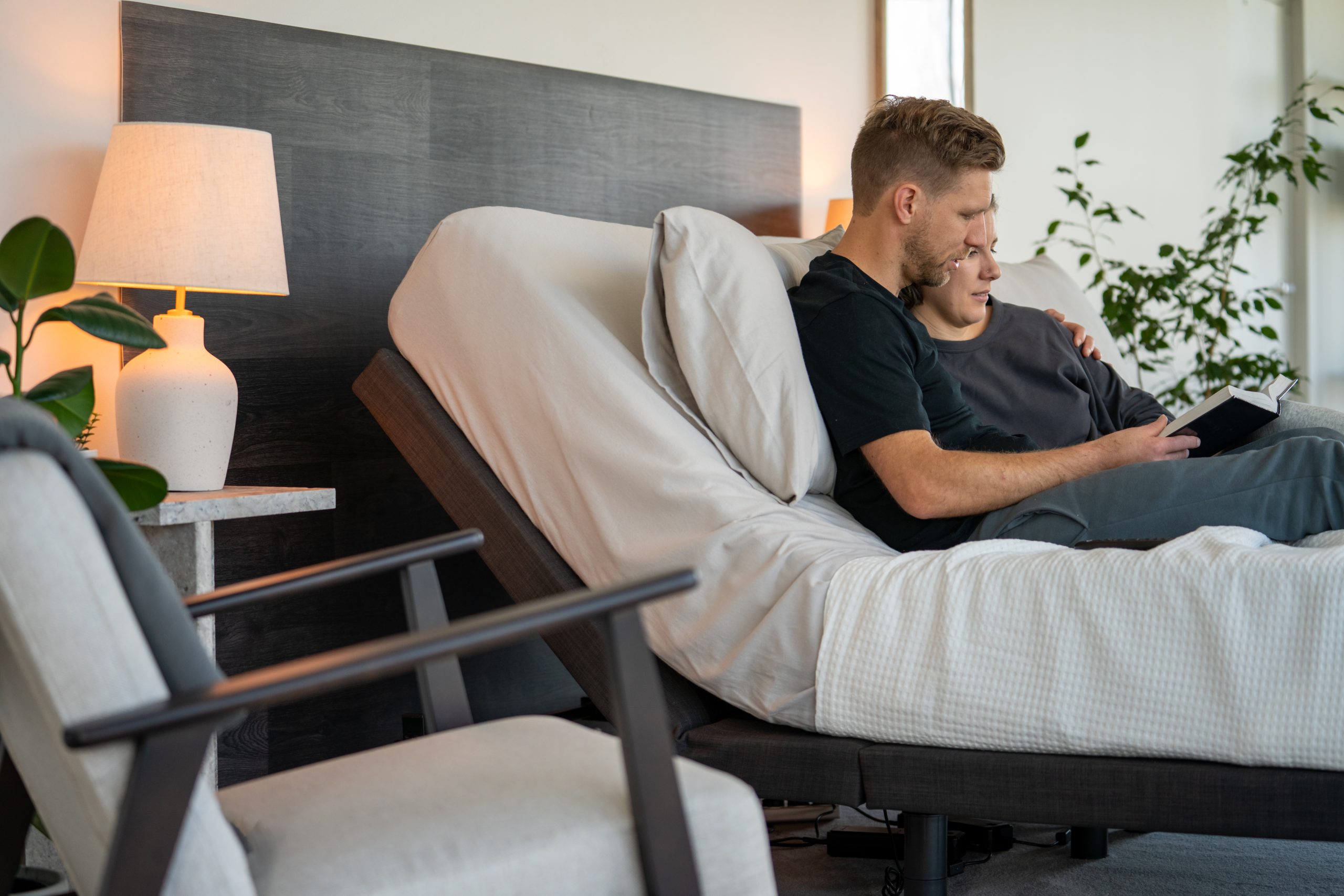
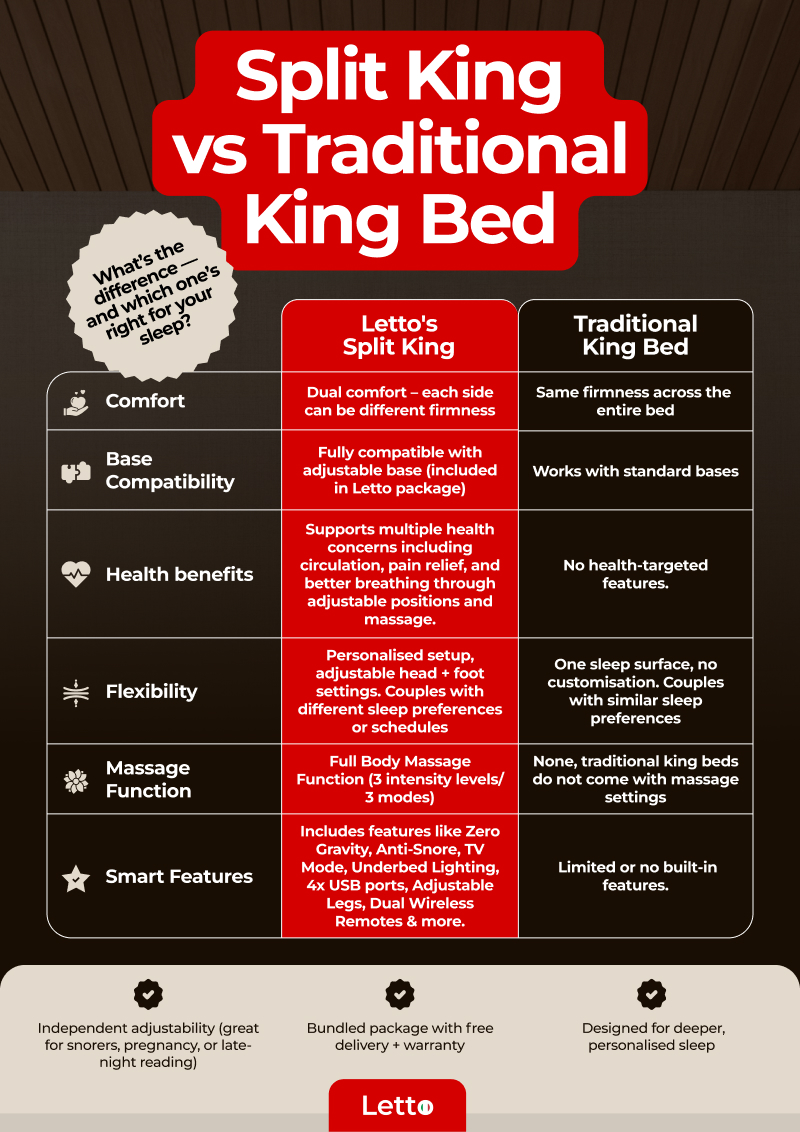
Beyond comfort, there’s a practical safety benefit: raising the bed to a seated position makes getting in and out safer and easier, reducing fall risk and helping you maintain your independence. This level of customisation is precisely why Letto adjustable beds are so effective. They aren’t just beds; they are tools for better health. With features like pre-set Zero-Gravity and Anti-Snore positions, plus full-body massage functions, you can actively manage your comfort and address the specific issues that are fragmenting your sleep. It’s about taking control of your sleep environment, which is the heart of good sleep hygiene.
If you’re curious about how the right bed setup can support your sleep hygiene goals, Letto’s package deals are designed specifically with older Australians in mind.
Movement is essential
Here’s something that might surprise you: one of the best things you can do to improve your sleep happens during the day, nowhere near your bedroom. Exercise.
Regular physical activity is a proven tool for improving sleep quality. And unlike sleeping pills, the side effects are all positive.
Here’s the mechanism: when you exercise, your body temperature rises. Then, in the hours after you finish, it gradually drops back down. This temperature decline mimics what naturally happens when your body prepares for sleep, essentially priming you to feel sleepy later on.
But timing matters for building good sleep habits. Morning or early afternoon exercise works best because it reinforces your circadian rhythm, especially if you’re doing it outdoors in natural light. On the other hand, vigorous exercise too close to bedtime can backfire; your heart rate’s elevated, adrenaline’s pumping, and you’re too revved up to wind down. The general guideline is to finish intense workouts at least three to four hours before bed.
And here’s the interesting bit for older Australians: while any exercise helps, recent research suggests that resistance training, weights, resistance bands, and bodyweight exercises are the single most effective type of exercise for improving sleep quality in older adults with insomnia. Even more effective than traditional cardio, like walking or swimming.
When to seek help
Let’s be clear: good sleep hygiene is powerful, but it’s not a cure for everything. If you’ve been consistently applying these sleep habits for a few weeks and you’re still struggling with sleep problems, it’s time to have a conversation with your GP.
Some signs your sleep problems might need medical attention:
You’re experiencing excessive daytime sleepiness, even after what should be enough sleep
You snore loudly and frequently
You wake up gasping or choking
You have an irresistible urge to move your legs at night
Your sleep problems are significantly affecting your mood or daily life
These could be signs of conditions like sleep apnea, restless legs syndrome, or chronic insomnia, all of which need proper medical treatment, not just better sleep hygiene.
Your sleep hygiene checklist
Let’s bring it all together in one place. Save this, print it, stick it on your fridge, whatever helps you remember:
Do:
Go to bed and wake up at the same time every day (yes, including weekends)
Get 30+ minutes of morning sunlight to support your circadian rhythm
Exercise regularly, preferably in the morning or afternoon (resistance training is particularly helpful)
Create a 30-60 minute screen-free wind-down routine
Keep your sleeping environment cool (17-19°C), dark, and quiet
Use your bed only for sleep and intimacy
Invest in a comfortable, supportive mattress and pillows
Avoid:
Caffeine after early afternoon
Alcohol within 4 hours of bedtime
Screens for 1-2 hours close to bedtime
Large meals within 2-3 hours of bedtime
Long naps or naps after 3 pm
Clock-watching when you can’t fall asleep
Small changes, big impact
The beauty of good sleep hygiene is that you don’t need to overhaul your entire life overnight. Start small. Pick one or two sleep habits from this list that feel doable. Maybe it’s sticking to a consistent wake-up time or swapping your bedtime scroll for a book.These improvements build on each other; they’re cumulative. You probably won’t see dramatic changes after one night, but stick with it for a few weeks, and you’ll likely notice a genuine difference in your sleep quality and how you feel.
And if you’re also dealing with sleep debt, building these habits becomes even more important. You’re not just improving tonight’s sleep; you’re creating a foundation for healthy sleep over the long term. Because here’s the truth: sleep isn’t a luxury or something to feel guilty about prioritising. It’s as fundamental to your health as eating well or staying active. And with the right sleep habits and the right support, you can protect it.Ready to improve your sleep environment? Explore Letto’s range of adjustable beds and mattresses designed to support natural, restorative sleep. As an Australian-owned company, Letto is dedicated to helping you find genuine comfort and pain relief. With features like Zero-Gravity pre-sets and a 30-night comfort guarantee, you can finally create the ideal sleep sanctuary to support your new, healthy sleep hygiene habits.
If you’ve ever spent a sweltering summer night tossing and turning, kicking off the sheets only to pull them back on moments later, you’re far from alone. For many Australians, learning how to sleep in the heat isn’t just about comfort; it’s about protecting your health, managing existing conditions, and waking up feeling genuinely rested rather than exhausted.
The challenge becomes even more pronounced as we age or manage conditions like arthritis, poor circulation, or heart disease. Add in the medications many of us take daily, and suddenly our bodies lose their natural ability to regulate temperature. What seems like a simple seasonal inconvenience can actually trigger a cascade of health problems, from increased inflammation and pain to strain on your heart and disrupted sleep cycles.
This guide draws on the latest research from Australian health authorities, international sleep science, and medical journals to offer practical, evidence-based strategies for sleeping comfortably during our increasingly warm summers. Whether you’re dealing with humid coastal nights or dry inland heat, we’ll explore why heat affects your sleep so profoundly, and what you can actually do about it.
What’s really happening to your body on hot nights
Before diving into solutions, it’s worth understanding what’s actually happening when heat disrupts your sleep. This isn’t just about feeling uncomfortable; there’s a precise biological process at work.
The temperature drop you need to fall asleep
Sleep isn’t simply what happens when you close your eyes and drift off. It’s an active, highly controlled state that requires specific conditions to start properly. One of the most critical triggers is a small but precise drop in your core body temperature.
Throughout the day, your core temperature naturally peaks in the early evening, then begins to fall as your brain starts releasing melatonin, the hormone that controls your sleep-wake cycle. To achieve this temperature drop, your body must actively push internal heat out into the surrounding environment. It does this mainly by increasing blood flow to your skin, particularly your hands and feet. Your skin becomes like a radiator, transferring warmth from your core to the air around you.
Here’s the problem: this entire process depends on a temperature difference between your body and your bedroom. When the room temperature is high, especially when combined with humidity, your body simply cannot release heat effectively. The biological trigger for sleep is blocked, making it genuinely difficult, sometimes impossible, to fall asleep. Research suggests the optimal bedroom temperature sits around 19°C, and it’s not arbitrary. This is the temperature at which your body can most efficiently complete its natural cooling process.
Why you wake up repeatedly during heat waves
Even if you do manage to fall asleep in the heat, the quality of that sleep can be severely compromised. Your body’s ability to regulate temperature becomes less effective during certain sleep stages, particularly REM sleep, the phase crucial for memory and emotional processing.
When the room temperature climbs too high, your brain sees the heat stress as a low-level survival threat. In response, it triggers a micro-arousal, waking you just enough to resume conscious temperature control. You might kick off the covers, shift position, or even wake fully without understanding why. This reveals a stark biological priority: your body will sacrifice restorative sleep to maintain temperature control.
The consequence is a dramatic reduction in N3 deep sleep and REM sleep, the stages essential for cellular repair, memory consolidation, and waking up feeling genuinely refreshed. Interestingly, research published in Sleep has shown that conductive body cooling, actively removing heat through your sleep surface, can actually protect and enhance these critical sleep stages whilst lowering your heart rate during sleep.
Humidity makes your body’s primary cooling mechanism, sweat evaporation, almost completely ineffective. Sweat can only cool you if it evaporates into the air. When the air is already saturated with moisture, evaporation cannot occur. Your body is placed under continuous strain with no effective way to cool down.
This is why the standard “hot weather” advice you’ve heard, use a fan, apply a damp cloth, has such a limited effect on humid nights. These are evaporative cooling strategies, and they fail when the air is already full of moisture. Understanding this distinction is crucial because it points towards a different solution: conductive cooling methods that actively draw heat away from your body, regardless of humidity levels.
Why summer sleep gets harder as you get older
If you’ve noticed that hot nights seem harder to handle than they used to be, you’re not imagining it. Ageing brings specific, measurable changes to how our bodies regulate temperature, and these changes create what researchers call a “triple threat” during hot weather.
When your body’s natural cooling system slows down
As we move past 65, several age-related changes occur simultaneously. Sweat production naturally decreases, and blood flow to the skin becomes less efficient. These aren’t minor inconveniences; they’re fundamental impairments to the two primary ways your body releases heat.
The body’s internal thermostat, controlled by a part of the brain called the hypothalamus, becomes less responsive. You might not feel hot until your core temperature has already risen significantly. Similarly, the sense of thirst diminishes with age, meaning you may be dangerously dehydrated without feeling thirsty at all.
A 2024 longitudinal study published in The Gerontologist quantified just how vulnerable older adults are to heat at night. By monitoring participants in their own homes, researchers discovered that sleep efficiency was optimal within a narrow temperature range of 20-24°C. When bedroom temperature increased by just 5°C above this range, participants experienced a clinically relevant 5-10% drop in sleep efficiency. That’s not a vague “feeling tired”, it’s a measurable decline in sleep quality that compounds night after night.
When sleep was already fragile to begin with
Even without heat stress, sleep patterns change as we age. Older adults naturally experience a phase advance; their sleep-wake cycle shifts earlier. They wake more frequently during the night, spend less time in restorative deep sleep, and experience more spontaneous wake-ups.
When you layer heat stress onto an already fragile sleep system, the effect multiplies rather than adds. The body that cannot cool itself effectively, doesn’t signal thirst, and already struggles to maintain deep sleep, now faces an environment that attacks all three systems simultaneously. This is why adjustable beds that support circulation and proper positioning whilst reducing pressure on joints become less of a luxury and more of a genuine health intervention for this age group.
The vicious cycle between heat, arthritis, and sleepless nights
Many Australians living with arthritis, whether rheumatoid arthritis or osteoarthritis, report that their symptoms intensify during hot, humid weather. This isn’t psychological; it’s driven by biological mechanisms that create a vicious, self-reinforcing cycle of pain, inflammation, and sleep loss.
What hot, humid weather does to your joints
The relationship between weather and joint pain has solid scientific backing. High humidity causes the body to retain excess fluid, leading to increased swelling in and around joints. This swelling creates stiffness and pain. Humidity also affects the thickness of synovial fluid, the lubricant within your joints, making movement more uncomfortable.
Air pressure changes that accompany summer heat and storms cause tissues around joints, tendons, ligaments, and scar tissue to expand and contract. This expansion can place pressure directly on pain receptors. Meanwhile, dehydration, a common risk in hot weather, reduces the fluid available for joint lubrication, increasing friction and discomfort.
How bad sleep makes inflammation worse (and vice versa)
Here’s where the situation becomes particularly insidious. A critical 2023 study published in Arthritis Research & Therapy, titled “Heat of the night: sleep disturbance activates inflammatory mechanisms and induces pain in rheumatoid arthritis,” revealed the missing link in this puzzle.
The cycle works like this: heat and humidity cause direct joint pain and swelling. This pain, combined with the heat itself, breaks up your sleep. But here’s what most people don’t realise, that sleep disturbance independently activates inflammatory processes throughout your entire body. This new wave of inflammation then causes more pain and stiffness, leading to even worse sleep the following night.
For people managing arthritis, protecting sleep quality isn’t simply about getting comfortable. It’s a therapeutic intervention designed to break the inflammatory cycle. When you understand how adjustable beds help with pain and fatigue through better sleep positioning and temperature control, you’re not just addressing symptoms; you’re interrupting the biological pathway that perpetuates them.
This is where features like adjustable positioning become genuinely valuable. Being able to find a position that distributes your body weight evenly, takes pressure off your spine, and reduces pressure on key joints, particularly the lower back and hips, addresses the positional discomfort that keeps you awake when arthritis flares during summer heat.
When poor circulation turns hot nights into a health risk
For individuals with pre-existing cardiovascular conditions, poor circulation, or related disorders like Peripheral Vascular Disease (PVD) and Restless Legs Syndrome (RLS), hot nights aren’t just uncomfortable; they can be genuinely risky.
Why your heart can struggle so much in the heat
When the weather turns hot and humid, your cardiovascular system is forced into overdrive. To cool your body, your heart must pump significantly more blood to your skin. On a particularly hot day, your heart can beat faster and circulate twice as much blood per minute as it would on a normal day. For anyone with heart, lung, or kidney conditions, this places enormous strain on an already compromised system.
Simultaneously, heat causes dehydration through sweating. This loss of fluid reduces your total blood volume, which increases blood viscosity, essentially making your blood “thicker” and harder to pump. A 2024 article in the European Heart Journal explicitly identified this mechanism as a nighttime danger, stating that elevated blood viscosity during hot nights increases the risk of ischaemic strokes by promoting blood clot formation and reducing blood flow efficiency.
This isn’t a vague, long-term risk. It’s a specific, potentially life-threatening danger that occurs while you sleep in the heat.
The leg elevation dilemma nobody warns you about
Poor circulation often comes with PVD and RLS, conditions that cause significant discomfort at night, pain, and an uncontrollable urge to move that destroys sleep quality. Standard advice suggests elevating your legs to improve circulation and reduce swelling. But here’s the conflict: for many people with PVD, elevating only the legs can be intensely painful because it reduces the already-limited blood flow to the lower extremities.
This creates what researchers call a “positional conflict.” You need elevation to reduce fluid build-up and improve blood flow back to your heart, but you can’t tolerate traditional leg elevation because it cuts off the blood supply going down. You’re left with no good options for restful sleep.
The solution lies in the Zero-Gravity position, a feature of adjustable beds that elevates both your head and feet, creating a neutral posture that reduces pressure on your heart. By elevating both ends of your body, gravity assists blood flow from your lower extremities without compromising the blood supply going down. This addresses the cardiovascular strain and positional discomfort that plague people with circulation issues at night, whilst also helping to reduce swelling in the legs through proper elevation therapy.
The medications that are secretly making it harder to sleep in the heat
One of the most overlooked vulnerabilities during hot weather is caused by the very medications prescribed to keep us healthy. If you’re taking medications for high blood pressure, arthritis, depression, or allergies, your body may be physically incapable of cooling itself effectively.
How your daily tablets might be sabotaging your cooling system
Many widely prescribed medications interfere with your body’s temperature regulation in specific, measurable ways:
Diuretics (often called “water pills” like Furosemide or Hydrochlorothiazide) increase fluid loss through urine, leading to dehydration and decreased sweat production. They can also reduce your sensation of thirst, meaning you won’t feel the need to drink even when your body desperately needs water.
Beta-blockers (such as Metoprolol, Propranolol, or Atenolol) slow your heart rate and limit the increase in blood flow to your skin that’s essential for releasing heat. By restricting this primary cooling mechanism, these medications can leave you unable to shed heat effectively.
Anticholinergics and antihistamines (like Diphenhydramine in Benadryl, or Promethazine) directly interfere with the neurotransmitters that signal your sweat glands. This can partially or completely block sweating, your body’s most powerful cooling mechanism.
Antidepressants, particularly tricyclic antidepressants (like Amitriptyline) and even some SSRIs and SNRIs (such as Fluoxetine or Sertraline), can affect your hypothalamus, your body’s internal thermostat, or cause excessive sweating that leads to dehydration.
ACE inhibitors and ARBs (blood pressure medications like Lisinopril, Ramipril, Valsartan, or Losartan) can mask your sense of thirst and, by lowering blood pressure, increase your risk of dangerous low blood pressure and fainting when you’re dehydrated.
If you’re taking any combination of these medications, and many Australians are, your body’s natural defence mechanisms against heat are compromised. This makes external cooling solutions not just helpful, but medically necessary. You cannot simply “tough it out” because your body’s ability to cope has been altered.
What actually works: Evidence-based strategies to sleep cool
Now that we understand why heat disrupts sleep so profoundly, let’s explore what actually works, drawing on guidance from Australian health authorities, sleep science research, and practical cooling strategies.
Setting up your bedroom to beat the heat
The foundation of sleeping well in the heat starts with your bedroom itself. During the day, keep all windows, blinds, and curtains closed to block heat from the sun. This prevents your home from becoming a heat sink that radiates warmth back at you all night.
If you have air conditioning, use it, but set it strategically. The body’s thermoregulation functions best at approximately 19°C, though a range of 20-24°C is generally effective for most people. If air conditioning isn’t available, use fans, but with an important caveat: once temperatures exceed 35°C, fans can actually speed up dehydration and heat stress by acting like a convection oven. At that point, they’re doing more harm than good.
Once the outside temperature at night drops below your indoor temperature, opening windows on opposite sides of your home creates a cooling cross-breeze. This strategic ventilation can make a significant difference. Also, avoid using appliances that generate heat and humidity, stoves, ovens, and clothes dryers, particularly in the evening hours before bed.
The truth about having a shower before bed
Most people instinctively reach for a cold shower before bed, and whilst it provides immediate relief, sleep experts suggest a counterintuitive alternative: a warm bath or shower 90-120 minutes before sleep.
The logic is rooted in temperature control. Warm water draws blood to your skin surface. When you step out of the warm shower before bed, this blood flow allows your core body temperature to drop more rapidly and significantly afterwards, mimicking and supporting the natural pre-sleep temperature drop your body needs. If you prefer a cool shower for immediate relief, that’s perfectly fine, just be aware that the warm shower timing may actually support better sleep initiation.
Staying hydrated without the midnight bathroom trips
Staying hydrated is critical to regulate temperature, but there’s a balance to strike. Drink plenty of water throughout the day, before you feel thirsty. Keep a glass of ice water by your bed for the night, but avoid drinking large amounts right before sleep to minimise nighttime bathroom visits that break up your rest.
Critically, avoid alcohol and caffeine in the evening. Both promote fluid loss and can disrupt sleep patterns. Alcohol might make you feel drowsy initially, but it breaks up sleep later in the night, particularly REM sleep. Similarly, avoid heavy meals close to bedtime; digestion generates metabolic heat, which is the last thing you need when trying to cool down.
Choosing bedding and sleepwear that won’t trap heat
Your bedding and sleepwear create a microclimate around your body. Natural, breathable fabrics like cotton, linen, and bamboo are superior to synthetics like polyester because they allow better airflow and moisture-wicking. Linen, in particular, is exceptional for hot weather; it doesn’t trap heat and stays dry even when you sweat.
For sleepwear, choose lightweight, loose-fitting options made from these same natural materials. Many people find that sleeping with minimal bedding, perhaps just a single cotton sheet, prevents heat from being trapped against their bodies.
Your pillow can also be a surprising source of heat retention. Traditional pillows trap warmth, leaving you sweaty and uncomfortable. Consider switching to a memory foam pillow infused with cooling gel or materials specifically designed to regulate temperature and wick away moisture.
When fans and damp cloths aren’t enough
Here’s where we need to address a critical gap in conventional advice. As established earlier, evaporative cooling, fans, damp cloths, and spray bottles fail in high humidity. If you live in coastal areas or anywhere moisture saturates the air during summer, you need a different approach.
Conductive cooling actively draws heat away from your body and transfers it elsewhere, regardless of humidity levels. This is where technology becomes genuinely valuable. Cooling accessories that use advanced materials can provide the external temperature regulation your body needs.
Phase Change Materials (PCMs) are engineered to absorb heat energy as they transition from solid to liquid, storing that heat and keeping your sleep surface at a stable, cool temperature. Gel or copper infusions in foam are highly conductive, pulling heat from your body and dispersing it throughout the mattress topper to prevent “hot spots” from forming under you.
For individuals whose medications have compromised their natural cooling mechanisms, these technologies aren’t luxury items; they’re medical necessities that provide the external cooling their bodies can no longer produce.
How sleep positioning can help you manage heat and pain
Beyond cooling your environment and choosing the right materials, there’s another dimension to consider: the position in which you sleep and the therapeutic support your body receives during the night.
Why the Zero-Gravity position works for hot nights
The Zero-Gravity position, a feature of adjustable beds that elevates both your head and feet, is more than just a comfort setting. It’s a drug-free intervention that directly addresses multiple problems simultaneously.
By elevating both ends of your body, this position places you in a neutral posture that reduces pressure on your heart. Gravity assists blood flow from your lower extremities back to your heart, improving overall blood circulation with less cardiac effort. For anyone experiencing the cardiovascular strain that hot weather creates, this represents genuine relief.
The position also evenly distributes body weight, taking pressure off your spine and reducing pressure on joints, particularly the lower back and hips. This positional relief directly addresses the joint pain associated with osteoarthritis and rheumatoid arthritis that intensifies during humid weather.
Additionally, by reversing gravity’s effect on your lower legs, this elevation helps drain excess fluid, directly combating the swelling caused by both high-humidity arthritis flare-ups and poor circulation. It’s a holistic solution that addresses circulation, pain, and swelling through simple positioning.
How massage features support sleep during heat waves
Some adjustable beds incorporate therapeutic massage features, which provide surprisingly specific benefits for sleep initiation, particularly when heat has disrupted your natural sleep cycle.
Research demonstrates that massage therapy can increase your body’s production of serotonin, a key brain chemical that serves as the direct building block for melatonin. Since heat can disrupt your natural melatonin cycle, massage functions as an active tool to support this critical hormonal pathway and help you build a wind-down routine that signals to your body it’s time to rest.
Massage also enhances blood flow to the extremities, delivering oxygen and nutrients to muscles while flushing metabolic waste. This can directly alleviate the nighttime discomfort, cramping, and restlessness associated with poor circulation and conditions like Restless Legs Syndrome.
Perhaps most importantly, massage helps shift your nervous system from the “fight or flight” state to the “rest and digest” state. This lowers heart rate, reduces blood pressure, and decreases cortisol, your body’s stress hormone. When pain and heat have created anxiety that prevents sleep, this nervous system regulation becomes genuinely therapeutic.
Why better summer sleep matters for your long-term health
It’s tempting to dismiss poor sleep during summer as a temporary inconvenience, just a few rough nights until the weather breaks. But the evidence paints a different picture. Heat-induced sleep disruption has direct, measurable links to serious, chronic health outcomes.
Poor sleep is a recognised risk factor for cardiovascular disease, hypertension, diabetes, and stroke. The American Heart Association has identified sleep as a critical pillar of cardiovascular health, with broken sleep linked directly to increased blood pressure. When that sleep disruption is caused specifically by heat, the compounding cardiovascular strain, your heart working harder to cool you whilst you’re simultaneously dehydrated, creates an acute risk.
Sleep is also essential for cognitive function and emotional regulation. Heat-induced sleep loss impairs learning and memory, affects decision-making, and is strongly associated with increased irritability, anxiety, and even aggression. These aren’t minor quality-of-life issues; they affect your relationships, work performance, and mental well-being.
This evidence collectively reframes the conversation. Managing sleep in the heat isn’t a seasonal lifestyle concern; it’s a critical, preventative health intervention to protect your long-term cardiovascular, cognitive, and metabolic health.
Creating your personal strategy to sleep in the heat
Every person’s situation is unique. Your age, health conditions, medications, climate, and access to cooling solutions all factor into what will work best for you. The key is to approach this systematically rather than reactively.
Start with the fundamentals: optimise your room temperature through strategic ventilation and blocking daytime heat. Ensure your bedding and sleepwear are made from breathable, natural materials. Stay hydrated throughout the day and time your showers to support your body’s natural temperature drop.
If you’re over 65, managing arthritis, living with cardiovascular conditions, or taking medications that impair temperature regulation, recognise that standard advice may not be sufficient. You’re not being overly sensitive; you’re dealing with legitimate physical vulnerabilities that require more targeted solutions.
Consider whether your current sleep surface is working against you. If you wake frequently, feel uncomfortably warm despite a cool room, or struggle to find a position that doesn’t aggravate joint pain or circulation issues, your bed itself may be the limiting factor.
Investing in solutions that address your specific needs, whether that’s breathable, cooling support for temperature regulation or adjustable positioning for circulation and pain management, represents an investment in your health, not just your comfort.
Take control of your summer sleep with Letto
Australian summers are only getting warmer, and the humid coastal heat so many of us experience renders traditional cooling advice less effective each year. Understanding the biology of sleep disruption, why heat fundamentally blocks your body’s ability to initiate and maintain restorative sleep, empowers you to make informed decisions about your sleep environment and support systems.
For those managing chronic conditions or age-related changes, the right combination of cooling materials, proper positioning, and therapeutic features can break the cycle of pain, inflammation, and sleeplessness that intensifies during hot weather.
You don’t have to resign yourself to months of tossing and turning on hot nights. With the right strategies and support, you can protect both your sleep quality and your long-term health, even during the hottest summer nights.
Explore how Letto’s adjustable beds and complete sleep solutions can transform your summer sleep experience and give your body the support it needs to rest, recover, and thrive.
Most mattress advice falls into one of two camps: either it’s frustratingly vague (“just pick what feels comfortable!”) or it buries you in technical details you don’t need. Neither helps when you’re awake at 3 am with your back screaming, or when getting out of bed feels impossible.
This guide is different. It focuses on what matters when you’re dealing with real health challenges. pain that won’t quit, joints that ache, sleep that never comes, or any combination of the above.
What you’ll learn:
Why that “firm mattress for back pain” advice is completely wrong (and what works instead)
How to choose when you’re juggling multiple health conditions at once
Which features are genuinely backed by research versus marketing hype
When an adjustable bed stops being fancy and starts being medical equipment
How your mattress connects to everything from pain relief to brain health
Why this matters more than you think
Your mattress isn’t just affecting your comfort. If you’re over 65, it’s affecting your health in ways that touch everything else in your life.
Pain is often the common thread. One in three people over 65 lives with chronic pain, with rates climbing even higher among those in aged care facilities. If you’re reading this, chances are you or someone you care about knows exactly what this feels like.
Here’s where it gets interesting. Pain and sleep aren’t just related; they’re locked in what researchers call the “painsomnia” cycle. Your pain makes it hard to fall asleep and stay asleep. That poor sleep increases how much pain you feel, slows down healing, and drains your energy. The next night, you’re in even more pain, making it even harder to sleep. Round and round.
But there’s another layer to this that really raises the stakes. During your deepest sleep stage, something remarkable happens in your brain. Scientists call it the “glymphatic system”—essentially your brain’s overnight cleaning crew. The space between brain cells actually increases, allowing fluid to wash out toxic proteins like beta-amyloid and tau. Those are the exact proteins that pile up in Alzheimer’s disease.
The connection is more than just theory. When you’re not getting enough deep sleep, these brain proteins build up faster. Healthy older adults have proven this link time and again. Even better news: poor sleep is now recognised as a modifiable risk factor for dementia, meaning you actually have control over this risk.
Suddenly, this isn’t about luxury or indulgence. It’s about giving your body the support it needs to manage pain and giving your brain the deep sleep it needs to protect your future. If you’ve been building up sleep debt from years of poor rest, your mattress might be the thing that finally breaks the cycle.
What to consider before you start shopping
Forget “soft versus firm” for now. Before you can choose the right mattress, you need clarity on what you’re actually trying to solve. Think of it like a doctor visit; they need your symptoms before they can help.
Start with your biggest sleep disruptor
What’s keeping you awake or making mornings so difficult?
If it’s back pain
Here’s something that might surprise you. That extra-firm mattress everyone swears by? Clinical research found that people with chronic low-back pain using medium-firm mattresses were twice as likely to see improvements compared to those using firm ones. These firmness myths have led a lot of people down the wrong path when finding the best mattress for back pain. This is especially true for the issues covered in this lower back pain guide.
If it’s arthritis and joint pain
You’re facing what could be called the Goldilocks problem. Your inflamed hips and shoulders need cushioning to avoid pressure points. But your spine needs support to prevent misalignment. Too soft? Your back hurts. Too firm? Your joints scream. The answer is finding the right type of mattress with a layered construction, not choosing between the two, but finding one that does both.
If getting in and out of bed is a struggle
Most mattress advice completely ignores safety. Older adults with mobility issues or morning stiffness face a high risk of falls, and that risk goes up when you’re taking sleep medications. A collapsing mattress edge isn’t just annoying; it’s a fall hazard. When you can’t get a stable footing to push yourself up, you’re at genuine risk.
If you’re waking up hot
You’re literally preventing your brain from doing its nightly maintenance. Your body’s core temperature needs to drop to start and maintain sleep, and overheating disrupts this cycle, preventing your brain from entering the most restorative stages. Recent research found that cooling mattresses increases deep sleep, specifically the N3 stage, otherwise known as the stage where your brain clears toxic proteins. This isn’t about comfort. It’s about giving your brain what it needs to function.
If snoring or sleep apnea is the problem
The connection runs deeper than you’d think. Yes, even a small elevation can reduce sleep apnea severity and improve oxygen levels. But here’s what matters more: sleep apnea speeds up the build-up of those brain proteins linked to dementia. Managing your sleep apnea protects your brain. The specifics are covered in this mattress guide for snoring.
Your sleep position matters (but don’t obsess)
Most people shift positions throughout the night, especially when in pain. Still, your usual position offers some guidance:
Side sleepers need cushioning at the shoulders and hips to prevent pressure points from building up
Back sleepers benefit from support that keeps the spine in a neutral position
Stomach sleepers (generally not recommended as we age) require firmer support to prevent lower back strain, though this position can put extra stress on your neck and spine
For those concerned with maintaining proper alignment, this guide to posture offers more detailed insights.
Think about mattress size, too
While health concerns drive most of your decisions, mattress size matters for practical reasons. If you’re sharing a bed, you need enough room to move without disturbing your partner, especially important when pain makes you restless at night. Queen and king sizes offer more space, while a single might work if you’re sleeping alone and have limited bedroom space.
Think investment, not price tag
Quality mattresses cost money, sure. But what’s the cost of another year of poor sleep? Another year of unmanaged pain? Or the increased risk of a fall because your mattress edge gives way? You’re investing in pain management, fall prevention, brain health protection, and potentially years of better rest. When you look at it that way, the numbers make more sense.
The truth about mattress firmness
Let’s clear up the biggest mattress myth: firmer is NOT better for back pain.
This belief is everywhere. Ask anyone what mattress they need for a bad back, and they’ll confidently say “firm.” Maybe even “orthopedic.” They’re wrong. The science is crystal clear on this.
What the research actually says
Researchers ran a clinical trial with 313 adults suffering from chronic low-back pain. They randomly gave them either firm or medium-firm mattresses and tracked them for 90 days. The results weren’t even close.
People using medium-firm mattresses were twice as likely to report improvements in pain-related disability. They also had less daytime low-back pain and less pain getting up in the morning. The conclusion was clear: medium firmness improves pain and disability in people with chronic low-back pain.
So why does everyone think firm is better? Partly marketing. Partly outdated advice that’s been repeated so many times it has become “common knowledge.” But the research tells a different story.
Understanding different comfort levels
Think of mattress firmness like this:
Too soft: You sink way in. Your heavier torso and hips drop lower than your shoulders and legs, creating a “hammock effect” that throws your spine out of alignment. You wake with muscle pain and stiffness because your body spent all night trying to compensate.
Too firm: You’re basically sleeping on a floor with a sheet over it. Your spine might stay straight, but all your weight presses down on a few pressure points: shoulders, hips, maybe your tailbone. For people with arthritis, this creates painful pressure that makes joint pain and stiffness worse.
Medium-firm (the sweet spot): You get enough support to maintain spinal alignment with enough “give” that your body settles slightly at pressure points. Your weight spreads more evenly. Your muscles can actually relax.
The arthritis exception: why you need both support and comfort
Remember how almost half of older Australians have arthritis? If that’s you, the firmness question gets more complicated.
Your challenge: inflamed joints need cushioning, but your spine needs support. It sounds contradictory. The solution is a hybrid or layered design, and this isn’t just marketing talk; it’s the only mattress construction that addresses both needs at once.
What you need:
A medium-firm support core made from high-density foam, latex, or pocket springs that keeps your spine properly aligned and prevents you from sinking too far
A contouring comfort layer like memory foam, gel-infused foam, or latex that cushions your joints, relieves pressure points, and spreads your body weight more evenly
This layered approach isn’t a compromise. It’s necessary when you’re managing multiple conditions, the reality for roughly a third of older Australians.
Understanding different mattress types
Different types of mattresses offer different benefits:
Memory foam contours closely to your body and relieves pressure points, though some people find it sleeps hot
Latex (especially natural latex) offers responsive support with natural cooling and hypoallergenic properties
Hybrid mattresses combine springs with foam or latex layers, giving you the support of springs with the pressure relief of foam
Pocket spring mattresses have individually wrapped coils that move independently, reducing motion transfer
Each type of mattress works better for different situations, but for most older Australians dealing with multiple conditions, hybrid designs tend to offer the best balance of support and comfort.
When an adjustable bed becomes medical equipment
For years, adjustable beds seemed like expensive gadgets for reading or watching TV in bed. That perception is outdated, and it’s keeping people from something that could dramatically improve their health.
Recent Australian research has completely changed the conversation around these systems. This isn’t about convenience anymore; it’s about real medical interventions.
The groundbreaking Australian physiotherapy research
This is the game-changer: In 2024 and 2025, the Australian Physiotherapy Association announced a “world-first model of care” for managing chronic pain, developed at the Florey Institute of Neuroscience and Mental Health. This new approach brings sleep assessment and posture-focused sleep interventions directly into physiotherapy practice.
Here’s what they did: Physiotherapists prescribed an innovative adjustable bed system to chronic pain patients, using video-guided fittings to customise the bed to each person’s specific needs and provide tailored support for optimal posture during sleep.
The results? They called the outcomes “remarkable”. The intervention led to significant pain relief and improved quality of life, even for chronic pain patients who’d made little progress with other treatments.
Think about that for a moment: Australian physiotherapists are prescribing adjustable beds as part of medical pain management. This changes adjusting sleep posture from a lifestyle choice to a first-line treatment for chronic pain.
What position adjustment does for specific conditions
The physiotherapy research opened the door, but adjustable beds help with a surprising number of health issues common in older Australians.
For acid reflux (GERD):
If you’ve woken with that burning feeling in your chest or throat, you know how awful reflux can be. The problem is simple mechanics: lying flat lets stomach acid flow into your esophagus.
Here’s the key detail: clinical guidelines note that stacking pillows doesn’t work because it can bend your neck at an odd angle or get pushed around during sleep. The specific recommendation is to elevate the bed frame at the head, exactly what an adjustable base does, giving you stable, consistent elevation all night.
For swollen legs and poor circulation:
Swelling in the legs and feet is common and painful for older adults, often linked to circulation issues.
An adjustable bed makes leg elevation simple. By raising your legs above heart level, gravity helps drain excess fluid from your lower legs, reducing puffiness and discomfort while encouraging better blood flow.
The “Zero Gravity” position, raising both head and legs, is particularly good for promoting proper blood flow throughout your entire body and taking pressure off your lower back.
For snoring and sleep apnea:
This was mentioned earlier, but it’s worth going deeper. Snoring and sleep apnea happen when your upper airway collapses or gets blocked during sleep, something that gets worse when you’re lying completely flat on your back.
Raising your head is a recognised “positional therapy” that uses gravity to help keep your airway open. Research found that elevating the head by just 7.5 degrees reduced sleep apnea severity and improved oxygen levels. Another study confirmed that this elevation reduced sleep apnea severity without messing up sleep quality; you get the health benefit without disrupting your sleep.
Remember: sleep apnea speeds up the build-up of toxic brain proteins linked to dementia. Managing it through position adjustment helps protect your long-term brain health.
Choosing the right mattress for an adjustable base
Not every mattress can handle the bending and movement of an adjustable base. You need a mattress specifically built to flex without damaging the internal structure or voiding your warranty.
Features that actually matter (and why)
It’s important to distinguish what marketing calls “premium features” from what healthcare calls “essential interventions.” The difference matters; it’s about understanding which features genuinely affect your health.
Cooling technology: supporting your brain’s nightly detox
While it’s known that your core temperature must drop to initiate sleep, recent studies are measuring exactly how cooling technology affects sleep patterns. The findings are eye-opening.
Here’s why this matters: Remember that glymphatic system, your brain’s overnight cleaning crew? It works hardest during N3 deep sleep, clearing toxic proteins linked to Alzheimer’s. If cooling technology increases the exact sleep stage your brain needs for this maintenance, a mattress with temperature regulation isn’t a luxury. It’s a practical tool for healthy brain aging.
Look for: gel-infused foam layers, breathable cover materials, and open-cell foam construction that lets air flow through.
Hypoallergenic materials: when breathing matters
With 80% of older Australians living with at least one chronic condition, many manage weakened immune systems or breathing conditions like asthma or COPD. For this group, minimising allergen exposure isn’t a preference; it’s a health priority.
The gold standard in Australia is the “Sensitive Choice” program, run by the National Asthma Council Australia. The blue butterfly certification shows products that may help people with asthma and allergies.
Approved materials are treated to eliminate dust mites and prevent the growth of mould, mildew, fungus, and bacteria. Natural latex is often mentioned as naturally resistant to dust mites and mould.
When shopping, look for materials with these certifications, not because they’re trendy, but because they address a real health need for a significant portion of older Australians.
Edge support: the fall prevention feature no one talks about
Most mattress advice treats edge support as a durability feature, something nice, so the mattress doesn’t sag over time. That completely misses the point for older adults. Geriatric-focused reviews consistently list edge support as a critical factor for seniors, along with responsiveness (meaning not sinking in too much).
Here’s why it’s a safety feature: the moment of highest fall risk is moving from sitting on the edge to standing up. If the edge collapses under your weight, you’re on an unstable, angled surface. You can’t get proper leverage to push yourself up. You need more energy, your balance is off, and fall risk shoots up, especially if you’re taking sleep medications.
High-density foam around the edges or reinforced edge support isn’t optional if mobility is a concern. It’s not about the mattress lasting longer. It’s about keeping you safe.
Your simple decision framework
Let’s bring this together into something you can actually use.
Step 1: Identify your primary health challenge
Chronic back pain → Medium-firm support (not firm!)
Arthritis → Hybrid/layered construction with both support and cushioning
Temperature issues → Cooling technology
Breathing concerns → Hypoallergenic materials with certifications
Mobility concerns → Strong edge support
GERD, sleep apnea, swelling, or severe chronic pain → Seriously consider an adjustable system
Step 2: Test thoughtfully (if you can)
If you can try a mattress in person, spend at least 15-20 minutes lying in your typical sleep position. Your body needs time to settle and show you what the mattress will actually feel like after an hour, not just 30 seconds.
Step 3: Protect yourself with a trial period
Your body may need several weeks to adjust to a new sleep surface. A generous trial period isn’t just nice; it’s essential protection for your investment and health.
Step 4: Think system, not just mattress
If you’re managing multiple conditions, especially chronic pain plus GERD, circulation issues, or sleep apnea, don’t evaluate the mattress alone. An adjustable base isn’t an optional luxury. It’s a therapeutic tool addressing conditions a mattress alone cannot fix.
Why Letto understands what you’re going through
This is what makes Letto different. It’s not just about selling beds; it’s about understanding that sleep affects everything: your pain levels, your energy, your safety, your brain health, and your ability to enjoy life.
Every feature discussed in this guide, medium-firm support validated by clinical trials, pressure relief for painful joints, cooling technology that increases the deep sleep your brain needs, hypoallergenic materials for breathing easier, edge support for safety, isn’t theoretical. It’s built into the design philosophy behind Letto mattresses.
Most older Australians aren’t dealing with just one issue. You’re juggling chronic pain and arthritis, maybe circulation problems, and possibly sleep apnea. You need a mattress that addresses multiple conditions at the same time, not one that solves one problem while creating another.
Here’s what makes Letto different:
Letto mattresses are designed around the specific health challenges older Australians face, based on the understanding that sleep isn’t separate from health; it’s central to it. When your pain is managed better because your mattress properly supports your spine while cushioning your joints, everything improves. When you’re getting the deep sleep your brain needs to clear toxic proteins, you’re actively protecting your cognitive future. When you can safely get in and out of bed without fear of falling, you maintain your independence.
This isn’t just about comfort. It’s about giving you back the quality of life that poor sleep has been stealing from you.
Letto mattresses are built to provide:
The clinically-appropriate medium-firm support that research validates for pain management
Seamless compatibility with adjustable bases for therapeutic positioning, Australian physiotherapists are now prescribing
Temperature regulation that supports the deep sleep your brain needs for long-term health
Firm edge support that makes transfers in and out of bed safer and reduces fall risk
Materials that minimise allergen exposure for better breathing health
When you choose Letto’s adjustable mattress, you’re not just buying a place to sleep. You’re accessing a complete sleep system designed around the specific health challenges you face, supported by the same Australian physiotherapy research that’s now prescribing these interventions in clinical practice.
Letto’s complete packages combine these mattresses with adjustable bases that give you control over your sleep posture, your pain management, and your ability to address conditions like GERD, sleep apnea, and circulation problems, all without medication.
This matters because when sleep improves, everything else has a chance to improve, too. Your pain becomes more manageable. Your energy returns. Your brain gets the maintenance it needs. You get back to living, not just existing.
Time to make a change
Here’s the bottom line: choosing the right mattress is genuinely one of the most important health decisions you’ll make.
The right sleep system can break the “painsomnia” cycle that’s been stealing your rest and making your pain worse. It can support the deep sleep your brain needs to clear toxic proteins and protect your cognitive future. It can address specific conditions like acid reflux and sleep apnea through evidence-based position adjustment. All without medications, without side effects, and without the risks that come with pharmaceutical interventions.
Pain, disrupted sleep, and declining mobility don’t have to be inevitable parts of aging. The right mattress, or better yet, the right sleep system, is a proactive strategy for better health that you control.
Ready to take the next step?
Explore Letto’s adjustable mattress to see how the design addresses every evidence-based requirement discussed in this guide. Or view the complete package deals to understand how a mattress and adjustable base work together as a complete therapeutic system, validated by the same Australian physiotherapy research now being prescribed in clinical practice.
Your sleep affects everything: pain levels, energy, safety, and cognitive health. You’ve spent long enough settling for “good enough.” It’s time to invest in genuine solutions.
Feeling tempted by an afternoon snooze? You’re not alone. Whether you’re catching a quick power nap on the weekend or feeling the afternoon slump pull you towards the couch, napping is something most of us have contemplated, or regularly indulge in. But is napping healthy, or could this habit be doing more harm than good?
The answer isn’t as simple as yes or no. For some Australians, particularly older adults dealing with disrupted nighttime sleep, napping can feel like a necessary part of the day. For others, it might be interfering with their ability to get quality rest when it matters most, at night.
In this guide, we’ll explore the science behind napping, unpack when short naps can be beneficial, and help you understand when daytime sleep might be a sign of something that needs attention. Most importantly, we’ll give you practical tips to make napping work for you, not against you.
Why that afternoon slump hits like a freight train
Picture this: it’s 2:30 PM on a Wednesday. You’ve had lunch, you’re sitting at your desk (or perhaps on the couch), and suddenly your eyelids feel like they weigh ten kilos each. Your brain has turned to fog, and all you can think about is finding somewhere, anywhere, to close your eyes for just a few minutes.
Sound familiar? You’re experiencing what scientists call the post-lunch dip, and it’s not just about what you had for lunch. Between work demands, family responsibilities, and the constant ping of notifications, many Australians simply aren’t getting enough quality sleep at night. When exhaustion hits mid-afternoon, a nap feels like the perfect solution, maybe even the only solution.
But here’s where it gets interesting. As The Sleep Foundation reveals, there’s a natural dip in alertness that occurs in the early to mid-afternoon, typically between 1:00 PM and 4:00 PM. So that irresistible urge to nap? It’s not laziness, it’s your body’s circadian rhythm at work.
The relationship between napping and health is complex, though. Brief daytime rests can sharpen your mind, lift your mood, and even help your heart. But long or poorly timed naps can leave you groggy, disrupt your nighttime sleep, and signal underlying health concerns. Understanding the when, why, and how long of napping can make all the difference between waking up refreshed and feeling worse than before you closed your eyes.
When short naps work wonders
Your brain actually gets bigger (Yes, really)
Here’s one of the most surprising benefits of napping: it doesn’t just help you feel better in the moment; it may even change your brain structure. For instance, a 2023 study published in Psychology Today found a causal link between regular daytime napping and larger total brain volume. We’re not talking about a tiny, insignificant difference either. Analysis from sleep experts at Cymbiotika suggests that increased brain size associated with habitual napping could potentially delay age-related cognitive decline by 3 to 6.5 years.
Think about that for a moment. A simple afternoon nap could buy you years of better cognitive function. That’s not just impressive, it’s life-changing.
But the benefits don’t stop at brain size. If you’ve ever felt sharper after a brief afternoon rest, you’re not imagining it; you’re experiencing real neurological benefits in real-time. Studies indicate that napping after learning something new leads to significantly better information retention. It’s like pressing the save button on your brain’s hard drive before something important gets deleted.
During those precious minutes of shut-eye, your brain is busy working through different stages of sleep. In Stage 1, as sleep health experts at Cymbiotika explain, you’re in light sleep, that transitional phase from wakefulness where your muscles relax and your heart rate slows. Move into Stage 2, and that’s where the magic happens for a power nap. Here, as Mattress Clarity explains, your body temperature drops slightly, and brainwave patterns called sleep spindles emerge. This stage is key for a power nap, as Sealy Australia points out that these sleep spindles are particularly effective for improving procedural motor skills and consolidating the memories you’ve formed throughout the day.
These learning benefits start young. Research featured in Parent magazine demonstrates that for infants, napping is essential for a high-level form of learning known as “abstraction”, basically, the ability to understand patterns and concepts. But adults benefit enormously too, especially when it comes to NREM sleep processes that help lock in new information. Studies indicate that naps involving deep sleep are particularly beneficial for declarative memory, recalling facts and events you’ve learned.
If you let yourself nap for 90 minutes, you’ll complete a full sleep cycle, including REM sleep, that stage associated with dreaming that’s vital for emotional processing, memory consolidation, and creativity. Sleep research confirms REM sleep is typically only reached in naps of 90 minutes or more, making it a rare but valuable component of longer daytime sleeps. But here’s the catch: longer naps come with trade-offs we’ll get to shortly.
The chemistry of feeling better
Ever notice how everything feels more manageable after a good rest? There’s solid science behind that feeling. Throughout your day, as research published in the National Center for Biotechnology Information explains, a byproduct of energy consumption called adenosine builds up in your brain, creating what researchers call “sleep pressure.” The more adenosine that accumulates, the groggier and more desperate for rest you feel. Napping helps clear that accumulated adenosine, reducing sleepiness and essentially giving your brain a fresh start for the afternoon.
At the same time, napping gets to work on your stress levels. Sleep experts at Cymbiotika demonstrate that napping can reduce levels of cortisol, the stress hormone that leaves us feeling frazzled and on edge. Lower cortisol means you feel calmer, less impulsive, and less prone to frustration. The Sleep Foundation notes that for those dealing with sleep deprivation, even a brief nap can relieve stress and bolster the immune system, and Psychology Today confirms that a daytime nap can actually help reset some of the immune alterations that occur due to a poor night’s sleep.
This is particularly relevant as we age. The Sleep Health Foundation Australia and National Seniors reveals your body’s production of melatonin, the sleep-promoting hormone, tends to decrease with age. This is one reason why many older Australians find their nighttime sleep becoming lighter and more fragmented. Between 20% and 60% of older Australians take a nap on most days, often to compensate for this shift. Understanding your body’s changing needs is part of learning how sleep works as you age.
Performance boosts you can actually feel
Australian authorities recommend short naps for drowsy drivers to restore alertness, and for good reason. The Sleep Health Foundation Australia, for instance, notes that a 15-20 minute rest when you’re feeling sleepy behind the wheel can quite literally save lives. They highlight this as a proven, life-saving measure, and it’s something every Australian driver should know.
The benefits extend well beyond driving safety. Further analysis from The Sleep Foundation and Sleep Health Foundation Australia demonstrates that naps enhance perception, attention, focus, and reaction time. This all adds up to you feeling more alert. Whether you’re operating machinery, making important decisions, or just trying to get through the afternoon without snapping at your family, that boost in alertness makes a real difference.
Here’s where napping gets particularly clever: research published in the National Library of Medicine found that very brief naps of just 5-15 minutes can produce almost immediate improvements in alertness that last for 1 to 3 hours. Scientists have proposed a biological model called “Process O,” which suggests that the simple act of sleep onset triggers a rapid reset of the brain’s “sleep-switch” mechanism. This is different from the slow clearance of adenosine during deep sleep; it’s more like hitting a quick reset button than doing a full system reboot.
The key word there is “once or twice a week.” Occasional, moderate napping seems protective. But, and this is crucial, frequent daily naps, especially long ones, tell a very different story. Which brings us to the other side of the coin.
When naps become your worst enemy
Waking up feeling like you’ve been hit by a bus
We’ve all been there: you wake up from a nap feeling worse than before you fell asleep. Disoriented, foggy, maybe even a bit cranky. Your mouth tastes like you’ve been chewing on cotton wool, and you can’t quite remember what day it is or why you thought napping was a good idea. Welcome to sleep inertia. Sleep experts at Sealy Australia and Mattress Clarity describe this as the physiological state of grogginess and disorientation immediately after waking that nobody wants.
This happens primarily when you wake up directly from Stage 3 deep sleep. Your body temperature has dropped, your muscles are fully relaxed, and your brain has entered its deepest state of unconsciousness. While this is the most physically restorative phase, where your body repairs tissues (as noted by Cymbiotika and Sealy Australia), waking from it is jarring. All brilliant things, unless you’re suddenly yanked out of it by an alarm or someone knocking at the door.
When you’re pulled out of deep sleep, your system hasn’t had time to transition back to wakefulness. This is why studies from Mattress Clarity and the Sleep Health Foundation Australia confirm that naps longer than 30 minutes carry a much higher risk of inducing this grogginess, which can impair your performance for 30 minutes or more after waking. For older Australians, this disorientation can be particularly concerning if you need to get up and move around quickly; the confusion can increase the risk of falls or poor decision-making in those first groggy moments.
Stealing sleep from tonight (The vicious cycle)
Here’s the catch-22 of napping that nobody warns you about: experts from Mattress Clarity, the Sleep Health Foundation Australia, and the Mayo Clinic reveal that daytime sleep can reduce the “sleep pressure” you need to fall asleep at night. If you’ve ever taken a long afternoon nap and then found yourself staring at the ceiling at midnight, frustrated and wide awake, you’ve experienced this firsthand.
Think of sleep pressure like hunger. If you eat a massive late lunch, you’re not going to be hungry for dinner. Similarly, if you take a substantial nap in the late afternoon, you’re essentially “eating into” your night-time sleep appetite. According to Sealy Australia, the Sleep Foundation, and the Sleep Health Foundation Australia, the effect is most pronounced with long naps over 30 minutes or naps taken late in the afternoon, particularly after 3:00 PM.
The Australian health service, Healthdirect, takes a particularly cautious stance on this, recommending “Don’t nap” as their primary advice. If you must nap, they suggest limiting it to 20 minutes and advise staying awake for at least 4 hours before bedtime. It’s strict guidance, but it reflects a genuine concern: poor nighttime sleep leads to more napping, which leads to even worse nighttime sleep. Before you know it, you’re caught in a cycle that’s hard to break.
Understanding what sleep latency is, basically, how long it takes you to fall asleep, can help you identify whether your napping habit is interfering with your ability to drift off at night. If you’re regularly taking more than 30 minutes to fall asleep at bedtime, your afternoon naps might be part of the problem.
When your “Nap habit” is actually a red flag
This is perhaps the most important section of this entire article: the need for long and frequent naps may be a symptom of an underlying condition rather than a harmless habit. This isn’t just a guess; research from Henry Ford Health and Psychology Today demonstrates that the need for long and frequent naps may be a symptom of an underlying condition.
Let’s be clear. If you occasionally enjoy a 20-minute afternoon rest on the weekend, you’re fine. But if you’re needing 60-90 minute naps every single day just to function, or falling asleep unintentionally throughout the day, that’s a different story. In fact, The University of Sydney’s Charles Perkins Centre and Project Sleep note these could be signs of sleep disorders like obstructive sleep apnea or narcolepsy. This was reflected in research from PLOS ONE studying Australian university students, which found that frequent nappers reported significantly more problems with motivation and concentration; their napping was treating the symptom, not the cause.
Before you panic, remember: correlation doesn’t equal causation. These associations often reflect that people who are already unwell need more daytime rest. Their bodies are crying out for sleep because something else is wrong: heart disease, undiagnosed diabetes, or a sleep disorder preventing restorative rest at night.
If you’re experiencing chronic sleep deprivation, needing increasingly long or frequent naps, or excessive daytime sleepiness despite adequate nighttime sleep, it’s time to talk with your GP. Sleep apnea alone affects roughly 5% of Australian adults, and many don’t even know they have it.
Your practical guide to napping smart (Without sabotaging your sleep)
Timing is everything (And science proves it)
Remember that natural dip in alertness we talked about earlier? That’s your window. Both The Sleep Foundation and Psychology Today identify the optimal time for napping as the early to mid-afternoon, typically between 1:00 PM and 3:00 PM. This timing aligns perfectly with your circadian rhythm’s natural lull, making it the most biologically opportune moment to catch some rest without interfering too much with your nighttime sleep.
Think of it this way: napping is like having a snack. There’s a right time of day for it (mid-afternoon when you genuinely need energy), and a wrong time for it (too close to dinner, or in this case, bedtime). Get the timing right, and it enhances your day. Get it wrong, and it ruins your appetite for the main meal.
This short timeframe is popular for a reason. Experts from Cymbiotika, Mattress Clarity, the Sleep Foundation, and the Sleep Health Foundation Australia confirm this duration provides a boost in alertness and mood while minimising the risk of sleep inertia. You’re getting the benefits of light and moderate sleep, where your heart rate slows and beneficial sleep spindles occur, without diving into the deeper stages that leave you groggy. Think of it as a quick system refresh: you’re clearing adenosine, pressing reset on your alertness, and giving your brain a chance to consolidate recent memories.
The 90-minute cycle
This is the “full reset” option. Sealy Australia and Mattress Clarity demonstrates this duration aligns with one complete sleep cycle, allowing you to progress through all stages of sleep, including REM sleep, brilliant for memory consolidation and creative problem-solving.
But here’s the trade-off: a 90-minute nap poses a much greater risk of interfering with your nighttime sleep. Research from Johns Hopkins Medicine, for example, found that for older adults specifically, naps between 30 and 90 minutes were associated with better cognitive outcomes, but this needs to be carefully balanced against nighttime sleep disruption. If you’re going to attempt a longer nap, make sure it ends by early afternoon and monitor how it affects your nighttime sleep.
The “Nappuccino” trick
Here’s an interesting bio-hack: drink a cup of coffee immediately before taking a 15-20 minute nap. Because caffeine takes about 20 minutes to kick in, you fall asleep before it hits your system, get the restorative benefits from your power nap, then wake up just as the caffeine starts working. This clever technique is what The Sleep Health Foundation Australia and Extracted call a “nappuccino.”
The key is keeping it brief; if you sleep longer than 20-25 minutes, you’ll enter deeper sleep stages and wake up groggy, defeating the entire purpose.
Creating your perfect nap environment
It’s no surprise that, as Mattress Clarity and the Sleep Foundation confirm, the ideal sleep environment is cool, dark, and quiet. This applies just as much to daytime naps as it does to nighttime sleep. Your body doesn’t really care what time of day it is; it responds to environmental cues.
Healthdirect Australia recommends using tools like blackout curtains, an eye mask, earplugs, or a white noise machine to minimise distractions. Even in the middle of the afternoon, creating a cave-like environment tells your brain it’s okay to let go and rest. Some people worry that making their napping environment too comfortable will make it harder to wake up or will turn a 20-minute power nap into a two-hour sleep session. If that’s a concern, try setting an alarm across the room so you have to physically get up to turn it off.
Mattress Clarity notes it’s generally recommended to lie down or recline to allow your muscles to fully relax. However, here’s a clever tip from Sealy Australia: napping in a location other than your primary bed, perhaps on a sofa, a recliner, or in a spare room, can reduce the temptation to oversleep and helps your brain maintain a strong association between your bedroom and nighttime sleep. You want your bed to mean “nighttime, proper sleep,” not “any old nap whenever I feel like it.”
When napping isn’t optional
Shift workers
If you work irregular hours, night shifts, rotating shifts, or extended hours, napping isn’t a luxury. Instead, sources like The Sleep Foundation, Sleep Health Foundation Australia, and Healthdirect Australia describe it as a vital countermeasure to improve alertness and reduce potentially dangerous errors. The Sleep Health Foundation specifically highlights “preparatory napping” before events like night shifts or long drives. If you’re a shift worker, napping isn’t something to feel guilty about; it’s a necessary tool for managing the health impacts of working against your natural circadian rhythm.
Navigating age-related changes
As we age, night-time sleep often becomes lighter and more fragmented. Don’t worry, Henry Ford Health and the Sleep Health Foundation Australia explain this is completely normal; your body’s melatonin production decreases, which is why many older Australians find themselves napping more frequently. To help, research from the Woolcock Institute of Medical Research suggests short naps of 15 to 45 minutes can help improve alertness and cognitive functions like memory.
However, if you’re needing increasingly long or frequent naps, or experiencing excessive daytime sleepiness that’s impacting your quality of life, don’t just accept it as normal ageing. It could indicate treatable conditions like sleep apnea that deserve proper attention rather than just managing symptoms with daytime naps.
Parents of young children
While naps are essential for infants and toddlers, research from Queensland University of Technology found that for children aged two and over, regular daytime napping was associated with poorer quality night-time sleep. Every family’s situation is different, but it’s helpful to understand these dynamics if you’re navigating the tricky transition away from daytime naps.
How Letto supports your rest
Here’s something most people don’t realise: the quality of your napping surface matters just as much as your bed. Whether you’re an occasional napper or someone who relies on a daily afternoon rest for health reasons, where and how you rest makes a genuine difference to whether you wake up refreshed or regretful.
Finding your perfect nap position (Without the grogginess)
An adjustable bed base isn’t just for nighttime sleep; it can completely transform your daytime rest too. For instance, research from Zinus Australia and Dreamland demonstrates the “zero-gravity” position… elevates both your head and legs to distribute your body weight evenly, reducing pressure on your spine and joints.
Think about how you usually nap: on the couch with your neck at an awkward angle, or propped up on pillows that keep sliding out from under you. With an adjustable base, you can find the exact position that lets your body fully relax without straining anything.
Further research from Dreamland, Solace Sleep, and Blue Sky Healthcare reveals that elevating the head and upper body can help with breathing issues, snoring, and acid reflux, all common culprits behind poor nighttime sleep that force you into afternoon naps. By addressing these root causes, you might find you need those daytime sleeps less and less.
Better nighttime sleep, fewer necessary naps
Let’s be honest about something: the ultimate goal isn’t to become a better napper. The goal is to improve your overall sleep quality so napping becomes a choice rather than a necessity. If back pain, circulation issues, or sleep position discomfort are disrupting your night rest and forcing you to accumulate sleep debt during the week, an adjustable base can address these issues directly.
For example, research from Dreamland and Solace Sleep indicates that elevating your legs encourages blood flow back towards the heart, which can reduce swelling, particularly beneficial if you’re dealing with blood pressure issues or circulation problems that worsen when you’re lying flat. Better circulation means better sleep quality, which means less desperate need for those long afternoon naps that can backfire and disrupt your sleep even further.
Letto’s package deals offer complete sleep solutions that work for your unique needs, whether you sleep alone or with a partner who has different comfort preferences. When you’re both getting the support you need, you’re both more likely to wake up refreshed, and less likely to be sneaking off for those long, sleep-cycle-disrupting naps in the afternoon.
Making napping work for you, not against you
So, are naps good for you? After everything we’ve covered, the answer isn’t a simple yes or no; it depends on how, when, and why you’re napping.
Short naps of 15-30 minutes, taken in the early afternoon between 1:00 PM and 3:00 PM, can improve your task performance, sharpen your memory, regulate your emotions, and give you that afternoon energy boost without sabotaging your nighttime sleep. They’re particularly valuable for shift workers, drowsy drivers, and anyone dealing with temporary sleep deprivation.
However, long naps over 30 minutes, frequent daily naps, or naps taken late in the day can leave you groggy and disoriented, interfering with your night-time sleep quality. And if you’re needing increasingly long or frequent naps, it may be masking underlying health issues like sleep disorders, heart disease, or diabetes that won’t be solved by simply sleeping more during the day.
The key is being intentional about your napping habits. Ask yourself: Am I waking up refreshed or groggy? Is my napping affecting my nighttime sleep? Am I needing increasingly long or frequent naps just to get through the day?
If you’re experiencing excessive daytime sleepiness or needing long naps daily just to function, speak with your GP. Sleep apnea alone affects about 5% of Australian adults and is very treatable, but it requires proper diagnosis, not just more naps.
Time to rethink your rest (And maybe your bed)
Understanding how napping fits into the bigger picture of your overall sleep health empowers you to make better choices about your rest. Whether that means embracing strategic power naps at the right time of day, improving your nighttime sleep hygiene through a solid wind-down routine, addressing underlying issues that are fragmenting your sleep, or investing in a sleep surface that actually supports your body’s needs throughout the night, every positive change counts.
Quality rest, whether it happens during the day or at night, is foundational to your health, mood, and overall quality of life. You deserve to wake up feeling refreshed, clear-headed, and ready to enjoy your day. You deserve to reach early in the afternoon without feeling like you’ve been hit by a truck. And you definitely deserve to sleep through the night without waking up multiple times or struggling with discomfort.
If your current sleep situation isn’t giving you that, it’s time for a change.
Ready to transform your rest? Explore how Letto’s adjustable bed solutions can support better sleep quality at night, which might just mean you need fewer desperate naps during the day. Your future, well-rested self will thank you.
Black Friday is no longer just about scoring a bargain; it’s about making smart, meaningful investments in your well-being. This guide will walk you through the seven wellness categories worth watching this year, helping you transform your home into a true sanctuary for rest and recovery. We’ll cut through the marketing noise to show you which products deliver real, lasting benefits for your health, comfort, and sleep quality.
The smart shopper’s guide to a wellness-focused Black Friday
Remember when Black Friday meant elbowing strangers at 5 am for a discounted TV? Those days are well and truly over. For Australians in 2025, Black Friday and Cyber Monday have evolved into something much smarter: A whole month of shopping events to carefully plan and invest in things that actually improve your life.
And what are we investing in? Wellness. Comfort. Creating a home that genuinely supports how we want to live.
Here’s what’s happening: 71% of us now wait specifically for Black Friday to buy things we’ve already been thinking about. And 86% of us are doing our homework first, reading reviews, comparing options, shopping online and in-store to make sure we’re spending wisely. This isn’t about grabbing random bargains anymore. With everyday costs squeezing budgets tighter, we’re being strategic about every dollar.
But here’s the interesting bit: even though we’re buying less often, we’re spending more per purchase. We’ve collectively decided that buying one really good thing beats buying three mediocre things. And nowhere is this more obvious than with wellness and home products.
Get this: 72% of Australians plan to use Black Friday sales to treat themselves to self-care items this year. That’s not frivolous spending. That’s recognition that a comfortable, restful home isn’t a luxury, it’s essential. Our homes have become more than just where we live. They’re where we recover from life, recharge our batteries, and take care of ourselves.
So if you’re ready to skip the stuff you don’t need and focus on things that genuinely make your days better, you’re in the right place. This holiday shopping season, here are seven wellness categories absolutely worth watching, purchases that’ll keep improving your life long after these sales events end.
1. The ultimate foundation for rest: Electric adjustable beds
Let’s start with the big one, the kind of purchase that could honestly change how you feel when you wake up every morning.
Most people think adjustable beds are just for hospitals or elderly care homes. That couldn’t be further from the truth. Modern adjustable beds are more like sophisticated wellness systems that happen to look like beautiful furniture. They’re designed to tackle real problems: chronic pain, poor sleep, breathing issues, and the nightly compromise couples make about sleeping positions.
Why Black Friday is the perfect time: This event of the year is prime time for furniture purchases—people plan these big-ticket items carefully, and the deals retailers offer make it the perfect moment to finally upgrade. We’re talking about a significant investment that’ll serve you every single night for years to come, so getting it at a reduced price is genuinely worth waiting for.
How it transforms your sleep sanctuary: Imagine walking into your bedroom and knowing that instead of tossing and turning all night, you can adjust your position at the touch of a button to find complete comfort. No more propping yourself up with pillows that slide away. No more waking with a stiff back or numb arms. An adjustable bed turns your bedroom into a personalised wellness retreat, a place where your body can truly rest and repair itself each night.
Take Letto’s Split King and Split Queen adjustable bed packages. These Italian-designed beds aren’t just adjustable, they’re like having a personal physio and massage therapist built into your bedroom. If you’re dealing with back pain, arthritis, or fibromyalgia, this is the kind of investment that pays dividends every single night.
Here’s why they work so well: when you can adjust your sleeping position, lifting your head or elevating your legs, you take pressure off your joints and muscles. The Zero Gravity position (yes, that’s a real thing) is specifically designed to take the load off your spine and improve blood flow. It feels like floating, and it genuinely helps with pain relief.
But it’s not just about managing pain. These beds help you sleep better, full stop. The Anti-Snore setting lifts your head slightly to keep your airways open, brilliant for reducing snoring and helping with sleep apnoea or acid reflux. There’s even a full-body massage function with three intensity levels to help you unwind. If massage features intrigue you,there’s fascinating research on how these therapeutic elements support deeper, more restorative sleep.
Now, here’s the genius feature for couples: the “Split” design means you each get your own remote. You can adjust your side completely independently. One of you wants to sit up and read? Go for it. The other wants to lie completely flat? No problem. No more negotiating. Add in under-bed lighting and USB charging ports, and you’ve got a bedroom that actually works with your life.
The wellness impact: Better sleep means better everything. Research shows that improving sleep quality leads to significant improvements in mental health, including reduced depression, anxiety, and stress. When you’re not waking up in pain or struggling to breathe comfortably, your body gets the deep, restorative sleep it needs. You’ll wake feeling genuinely refreshed, with more energy for the day ahead. Over time, reduced pain and improved sleep quality can mean better mood, sharper thinking, and a stronger immune system. Your bedroom becomes the foundation of your entire wellness routine.
Of course, the fanciest adjustable base in the world doesn’t mean much if you’ve got a rubbish mattress on top. Which brings us to…
2. The core of comfort: High-performance supportive mattresses
Your adjustable base does the clever mechanical stuff, but your mattress is what you’re actually lying on for eight hours every night. Getting the right one, something that supports your spine properly and helps you sleep deeply, is absolutely crucial. The good news? Mattresses are one of the most heavily discounted items during Black Friday and Cyber Monday.
Why Black Friday is the perfect time: Mattresses are a significant investment, and most of us put off replacing them far longer than we should. Black Friday pricing means you can afford to upgrade to a genuinely supportive, high-quality mattress without the financial stress. Plus, many brands offer extended trial periods, so you’re not gambling on something you’ll be sleeping on for the next decade.
Australian mattress shopping has changed completely over the last few years. Many brands now offer risk-free trial periods, so you can actually test a mattress at home for weeks before committing. No more lying on a showroom floor for two awkward minutes trying to imagine how you’d sleep on it. Letto offers the same confidence with a 30 Night Comfort Guarantee; they know their products work, so they’re happy to let you prove it to yourself.
When you’re shopping for a mattress that works with an adjustable base, you’ll see three main types:
Memory Foam moulds around your body and relieves pressure beautifully, perfect if you sleep on your side or deal with chronic pain. The downside? It can get a bit warm.
Latex is bouncier and more responsive, with gentle cushioning. Great if you sleep hot or care about eco-friendly materials, but it typically costs more.
Hybrid mattresses combine springs with foam or latex layers, giving you the best of both worlds: supportive but comfortable, with good edge support. They’re heavier, though, which can be annoying when changing sheets.
During Black Friday, keep your eyes on major mattress retailers for competitive pricing across different styles and firmness levels. Or, if you’re shopping online for a Letto adjustable bed package, you can grab a complete bundle with a perfectly matched mattress, no guessing whether they’ll work together.
Alright, you’ve sorted your bed and mattress. Now let’s talk about something that helps anxious minds actually settle down at night.
3. The calming embrace: Weighted blankets for stress and anxiety relief
Life’s pretty full-on these days, isn’t it? Products that genuinely help with mental wellbeing have moved from “that’s nice” to “I actually need this.” Weighted blankets have become one of those game-changing tools for calming anxiety and sleeping better, no pills required.
Why Black Friday is the perfect time: Weighted blankets have become incredibly popular, which means Black Friday sales make them genuinely affordable. Instead of $200+ for a quality weighted blanket, you’re looking at significant savings. For something that helps with anxiety and sleep every single night, that’s exceptional value.
The science is actually really cool. Weighted blankets work through something called Deep Pressure Stimulation. Basically, the gentle, even weight across your body mimics being hugged or held. This triggers your parasympathetic nervous system, the part that tells your body it’s safe to relax. Your stress hormone (cortisol) drops, and your happy chemicals (serotonin and dopamine) increase.
If your mind races when you’re trying to fall asleep, or you deal with anxiety or restless legs, a weighted blanket provides this grounding sensation that helps settle everything down. It’s like your nervous system gets permission to stop being on high alert.
For deals during this shopping event, watch for specialist weighted blanket brands and major online retailers that typically run significant discounts, making them really accessible at various weights and price points.
How it transforms your sleep sanctuary: Adding a weighted blanket to your sleep routine creates a signal to your body that it’s time to wind down. The physical sensation of being gently held becomes part of your evening ritual, helping you transition from the day’s stress into rest mode. Research confirms that improving sleep quality has a dose-response relationship with mental health improvements; the better you sleep, the better you feel. Over time, this can train your body to relax more quickly at bedtime. It’s a small addition that makes your bedroom feel like a true sanctuary where anxiety can’t follow.
But creating the perfect sleep environment isn’t just about what you feel; it’s also about what you hear. Which is where things get interesting…
4. The sound of silence: White noise machines and advanced sleep aids
If you’re a light sleeper, live near a noisy road, or find yourself waking up more during the night as you get older, you’ll know how frustrating it is when you can’t control the noise around you. White noise machines have become absolute lifesavers for this, and they’re hot items during Friday and Cyber Monday sales.
Why Black Friday is the perfect time: Quality white noise machines usually range from $80-150, but during Black Friday, you’ll find them at 30-50% off. For something that could genuinely solve your sleep disruption problems, that’s a smart investment. Plus, if you’re building a complete sleep sanctuary, bundling purchases during sales makes financial sense.
The concept is simple: these devices create a consistent background sound, maybe a gentle fan hum, rainfall, or steady static, that masks sudden noises. When there’s that constant baseline sound, random things like a car door slamming or a dog barking are way less likely to jolt you awake.
Many people also find continuous sound more relaxing than complete silence. Dead silence can actually make tinnitus louder or leave too much space for anxious thoughts to take over. As we age, sleep patterns naturally shift and change, making environmental control increasingly important for maintaining quality rest.
Look out for Australian-owned brands that offer generous trial periods (some offer up to 100 nights), as well as specialist sleep retailers that stock a variety of trusted options and usually run promotions during this period.
How it transforms your sleep sanctuary: A white noise machine transforms your bedroom into an acoustic cocoon. Suddenly, your partner’s snoring or the neighbour’s early morning routine doesn’t dictate your sleep quality. You’re in control. This consistent sound environment helps you fall asleep faster and stay asleep longer, meaning you spend more time in those crucial deep sleep stages where your body does its repair work. Better sleep equals better recovery, sharper focus, and improved emotional resilience throughout your day.
Sound environment sorted? Brilliant. Now let’s talk about something most of us never think about but breathe in all night long…
5. The air you breathe: Bedroom air purifiers for healthier sleep
We spend about a third of our lives in our bedrooms, but how often do you actually think about the air you’re breathing in there? Air purifiers have gone from niche gadgets to genuine necessities, especially in Australia, where we deal with pollen seasons and bushfire smoke.
Why Black Friday is the perfect time: Quality air purifiers represent a significant upfront cost, typically $300-600+. Black Friday deals can knock 30-40% off that price, making them suddenly accessible. When you consider the long-term health benefits and improved sleep quality, getting one at a sale price is genuinely worthwhile. Plus, cleaner air benefits everyone in your household, making it a smart family investment.
Modern air purifiers with HEPA filters capture 99.97% of tiny airborne particles, we’re talking dust mites, pollen, pet hair, mould spores, all the invisible stuff that makes you sneeze or blocks your nose at night. By constantly filtering the air, these devices can seriously reduce congestion, irritation, and allergic reactions, helping you breathe easier and sleep more deeply.
This is particularly relevant for us in Australia. When pollen counts soar or bushfire smoke drifts in, an air purifier becomes your first line of defence for keeping your sleep space clean and safe.
During the holiday shopping season, watch major electronics retailers for deals on trusted air purification brands. These stores consistently offer competitive pricing on quality models.
How it transforms your sleep sanctuary: Clean air isn’t something you see, but you absolutely feel it. Imagine lying down to sleep and being able to breathe freely through your nose all night, no congestion, no irritation, no waking up with a scratchy throat. Research shows thatchronic insufficient sleep is linked to increased risk of cardiovascular disease, diabetes, obesity, and other serious health conditions, making anything that improves sleep quality a worthwhile health investment. When you’re not fighting allergies or poor air quality, your sleep becomes naturally deeper and more restorative. Over time, this can mean fewer sick days, better respiratory health, and waking up feeling genuinely clear-headed. Your bedroom becomes a true refuge from environmental stressors.
Clean air? Tick. Peaceful sounds? Tick. Now for the details that make the biggest difference to your actual comfort, what’s touching your skin all night.
6. The finishing touches: Premium pillows and natural fibre bedding
The things that directly touch your body whilst you sleep matter more than you’d think. High-quality, natural-fibre bedding isn’t just about luxury; it’s about temperature control, comfort, and proper sleep hygiene. Sheet sets and pillows are bestsellers during Black Friday for good reason, and they tend to sell out fast.
Why Black Friday is the perfect time: Quality natural-fibre bedding isn’t cheap, but Black Friday sales often see 40-60% discounts on premium brands. This is your chance to upgrade everything, pillows, sheets, duvet covers, without the usual financial sting. Plus, having multiple sets of quality bedding means you can rotate them, extending their lifespan whilst always having fresh, comfortable linens ready.
Let’s start with pillows. The right pillow keeps your neck and spine aligned, preventing stiffness and headaches. What’s “right” depends on how you sleep; side sleepers need something thick and firm to fill the gap between head and shoulder, whilst back and stomach sleepers usually need something thinner.
Then there’s your bedding fabric, which is especially important in our climate. Natural materials like 100% linen, bamboo, and Tencel are fantastic because they breathe and wick moisture away. Unlike synthetic fabrics that trap heat and make you sweaty, these natural fibres keep air flowing, so you stay cool and dry. This becomes absolutely crucial during the summer. If heat keeps you awake, this summer sleep guide has some really practical tips.
For this shopping event, look out for Australian bedding brands and established homewares retailers that typically run big site-wide sales, perfect timing to refresh your whole bedroom with quality natural-fibre products.
How it transforms your sleep sanctuary: There’s something deeply calming about slipping into a bed made with beautiful, natural-fibre sheets. The temperature regulation means you’re not kicking covers off at 2 am or waking up drenched in sweat. The soft, breathable fabric feels luxurious against your skin, making bedtime something to look forward to rather than endure. Studies show thatindividuals who experience higher quality sleep have greater life satisfaction, more well-being, and feel healthier. When your bedding actively contributes to comfort and temperature control, you’re removing obstacles to deep sleep. It’s these finishing touches that elevate your bedroom from a functional space to a genuine sanctuary, a place where rest comes naturally.
Bedroom sorted? Great. But wellness isn’t just about where you sleep; it’s about being comfortable everywhere in your home, especially as you get older.
7. The everyday retreat: Ergonomic recliners and mobility-friendly furniture
Wellness is a 24/7 thing, not just an 8-hour sleep thing. Your daily comfort around the house matters enormously, particularly if you’re managing mobility challenges or just noticing that getting up from chairs isn’t as easy as it used to be.
Why Black Friday is the perfect time: Quality ergonomic recliners and lift chairs are substantial investments, often $1,000-3,000+. Black Friday sales can offer hundreds of dollars in savings on these essential pieces. When you’re looking at furniture that could support your independence and comfort for 10-15 years, getting it at a discount makes enormous financial sense. Plus, delivery and installation are often included during sales periods.
Good ergonomic recliners support your back and joints far better than standard armchairs, reducing strain when you’re resting. But lift chairs? They’re genuinely transformative. Press a button, and the chair gently tilts forward, giving you stable support to stand up safely and easily. For anyone who finds that sitting-to-standing movement difficult, this promotes independence and dramatically reduces fall risk.
You’ll find well-known brands at most Australian furniture stores. For more specialised options, dedicated mobility furniture suppliers offer purpose-built recliners and lift chairs designed for maximum support and durability.
These specialist retailers don’t always follow the traditional Black Friday model, but many run significant promotions during this period, definitely worth enquiring directly.
How it transforms your daily wellness: Imagine having a spot in your living room where you can truly relax, reading, watching TV, or just resting, without your back protesting or struggling to get up afterwards. A quality recliner becomes your daily retreat, a place where you can comfortably spend time without paying for it with pain later. For those with mobility concerns, a lift chair isn’t just comfortable, it’s confidence. It means you can rest without worrying about the struggle to stand. This independence contributes enormously to mental well-being and quality of life. When your home supports you physically throughout the day, you have more energy for the things that matter: time with family, hobbies, and activities you enjoy. It’s wellness that extends beyond sleep into every waking hour.
Investing in your wellbeing this Black Friday
Black Friday has grown up. It’s no longer about impulse buys and bargain hunting; it’s become the smartest time of year for Australians to make thoughtful, high-value investments in their health and home comfort.
Each of these seven wellness essentials plays a real role in building a home that actively supports your wellbeing and recovery. At the heart of it all is a simple truth: quality sleep isn’t optional; it’s the foundation of everything else. When you sleep well, everything improves.
An investment in something like a Letto adjustable bed isn’t just about one better night’s sleep. It’s about years of improved health, more energy, and genuinely better days. You’re not chasing a bargain, you’re securing something that’ll keep giving back.Ready to build your ultimate sleep sanctuary? Explore Letto’s adjustable bed packages and discover what truly restorative sleep feels like.
What Is a Split King Bed? Everything You Need to Know Before Buying
Overview: A split king bed is a king-size bed made up of two long single mattresses and bases placed side by side, giving each partner their own space and control. Unlike a traditional king, a split king allows you to customise your side—ideal for couples with different sleeping preferences, firmness needs, or those using an adjustable base. Benefits include independent comfort, reduced partner disturbance, and compatibility with adjustable beds, while drawbacks can include higher cost, more complex bedding, and a centre gap. Perfect for couples wanting personalisation without sacrificing size, a split king delivers both flexibility and comfort.
Picture this: you’re finally drifting off to sleep when your partner rolls over, and suddenly you’re wide awake. Or maybe you love a firm mattress while they prefer something softer, and you’re both compromising on comfort every single night. If this sounds familiar, you’re not alone. These are exactly the kinds of sleep disruptions that drive couples to explore more customizable solutions.
Premium sleep setups are becoming increasingly popular in Australia, particularly adjustable beds that allow each person to change position independently. Research shows these systems can help with snoring, reflux, and circulation issues when used appropriately. More fundamentally, good sleep underpins both physical and mental health, while poor sleep contributes to fatigue, mood changes, and reduced performance throughout the day.
Enter the split king bed: a setup designed specifically for couples who want to share a bed without sharing every single sleep experience. If you’ve been wondering whether this might be the solution to your sleep struggles, this guide will walk you through everything you need to know.
What Is a Split King Bed?
A split king bed isn’t one massive mattress. Instead, it’s a king-size setup where two separate long single mattresses sit side-by-side on individual bases. Think of it as two twin beds pushed together, but designed to look and function as one cohesive sleeping surface.
Here’s how the dimensions work: a standard king-size bed measures approximately 183cm wide by 203cm long as a single piece. A split king achieves the same overall footprint, but divides it into two long single mattresses, each measuring roughly 92cm by 203cm. When placed together, they create the same sleeping space you’d get with a traditional king, but with one crucial difference: complete independence.
This setup has become particularly popular with adjustable bases, where each person can control their side separately. One partner can sit up to read while the other stays flat. One can elevate their head to reduce snoring while the other remains undisturbed. The possibilities for customisation are exactly why split king configurations are gaining traction among Australian couples.
For those looking to build a complete sleep system, package deals often bundle the mattresses, bases, and essential accessories together, making it easier to set up your ideal split king configuration.
How Different Is It From a Regular King Bed
The footprint is identical. That’s the first thing to understand. A split king bed takes up the same floor space as a traditional king, so you won’t need to rearrange your entire bedroom or worry about whether it’ll fit through your door.
The real difference lies in the central split. Where a traditional king bed has one base and one mattress that moves as a single unit, a split king has two independent bases and two separate mattresses. This modularity is what enables each person to customise their side completely.
Australian adjustable bed ranges specifically highlight split queen and split king options for couples with different sleeping preferences. If you’ve ever wished you could elevate your head without forcing your partner into the same position, this is how you do it.
What About Bedding?
Here’s where things get slightly tricky. Standard king fitted sheets won’t work on a split king setup because the mattresses move independently. You’ll need either two separate long single fitted sheets (one for each mattress) or specially designed split king sheet sets that can accommodate the movement.
The gap between the two mattresses can be noticeable, especially if you and your partner tend to sleep close together in the centre of the bed. Many people use gap fillers or connecting straps to minimise this, though it’s worth knowing upfront that the seam will exist.
Some couples find that the gap becomes invisible with the right bedding and setup. Others barely notice it at all. It’s one of those things that matters more to some people than others, so consider how you and your partner actually use your bed space.
The Real Benefits of a Split King Bed
Complete Independence for Each Sleeper
This is the headline benefit. When your partner moves, you don’t feel it. When they get up in the middle of the night, your side of the bed stays perfectly still. For light sleepers or anyone who’s ever been jolted awake by their partner’s restless night, this alone can be transformative.
Studies show that around 40% of men and 30% of women snore regularly, often disrupting their bed partner’s sleep. With a split king setup, particularly when paired with adjustable bases, the person who snores can elevate their head without affecting the other side of the bed. This creates a practical solution for one of the most common sleep disturbances couples face.
Personalised Comfort Without Compromise
If you and your partner have different firmness preferences, you’ve probably spent years trying to find a middle ground that satisfies neither of you perfectly. With a split king, that compromise disappears entirely. One person can choose a firmer mattress while the other opts for something softer. Different body weights, sleep positions, and comfort preferences can all be accommodated individually.
Health and Lifestyle Flexibility
Adjustable bases paired with split king mattresses offer practical benefits for specific health situations. Elevating the head can help reduce snoring in some cases. Raising the torso slightly may provide relief for acid reflux. Elevating the legs can support circulation. These aren’t guaranteed medical solutions, and you should always consult with healthcare professionals about specific conditions, but the flexibility is there when you need it.
Beyond health issues, there’s simply lifestyle comfort. One partner might want to sit up and read before bed while the other is ready to sleep. One might want to elevate slightly while watching TV. Independence means neither person has to sacrifice their comfort for the other.
Easier to Move and Set Up
Two smaller mattresses are significantly easier to maneuver than one massive king. If you’ve ever tried to move a traditional king mattress up a narrow staircase or around tight corners, you know the struggle. Split king mattresses navigate these challenges far more easily.
Potential Drawbacks You Should Consider
The Middle Gap
There will be a seam between the two mattresses. For couples who sleep pressed together in the very centre of the bed, this can feel noticeable. Gap fillers and connector straps help minimise the issue, but they don’t eliminate it. If physical closeness in the centre of the bed is important to you, spend some time thinking about whether this trade-off is worth the other benefits.
Higher Initial Investment
Split king setups typically cost more than traditional king beds. You’re buying two mattresses instead of one, and if you want adjustable bases, you’ll need two of those as well. The price adds up quickly. However, many couples find that better sleep is worth the investment, especially when you consider how much time you spend in bed over the mattress’s lifespan.
Specialised Bedding Requirements
You can’t just grab any king sheet set off the shelf. You’ll need bedding designed for split configurations, which may be harder to find and potentially more expensive. Some people use two separate long single-sheet sets, which works functionally but can look less polished.
Weight and Appearance
Adjustable bases are heavier and bulkier than standard bed frames. Some people find them visually “clinical” unless styled thoughtfully. If bedroom aesthetics matter to you, plan how you’ll incorporate the setup into your room’s design.
Compatibility Considerations
Not every mattress works well with adjustable bases. Very thick or rigid innerspring mattresses often don’t flex properly. Foam and latex mattresses typically perform better because they can bend without damage. Motor noise can also be a factor, though modern adjustable bases have become quieter over time.
Who Should Actually Buy a Split King?
Couples With Vastly Different Sleep Needs
If one partner is a light sleeper and the other tosses and turns all night, a split king eliminates the disturbance. If one person runs hot while the other is always cold, separate mattresses mean separate temperature regulation. If your sleep schedules don’t align (shift workers paired with 9-to-5ers, for example), adjustable independence becomes invaluable.
Partners With Different Body Types or Firmness Preferences
Body weight significantly affects how a mattress feels. A heavier person might need more support, while a lighter partner might prefer more cushioning. When you’re sharing one mattress, someone always compromises. Split kings remove that equation entirely.
People Managing Specific Health Conditions
If you’re dealing with chronic pain, mobility challenges, or conditions that benefit from position changes, adjustable bases can provide genuine relief. Arthritis sufferers, for instance, often find that being able to adjust bed height and position helps them get in and out of bed more easily and sleep more comfortably. Adjustable beds are recognised as assistive technology when prescribed for mobility and independence needs.
Similarly, if one partner has sleep apnea, snoring issues, or acid reflux, elevating their side of the bed may help manage symptoms without disrupting their partner’s sleep. Always work with healthcare professionals to understand what positioning might help your specific situation.
Anyone Prioritising Long-Term Sleep Quality
Even if you don’t have pressing health concerns or dramatically different preferences, investing in better sleep quality pays dividends over time. Sleep affects everything from your immune function to your mood, cognitive performance, and relationship satisfaction. If you can afford the investment and value the customisation, a split king setup might simply be a smart long-term wellness decision.
Letto’s Approach to Split King Setups
When you’re building a split king configuration, mattress compatibility matters. The mattresses need to be flexible enough to work with adjustable bases without losing support or developing damage over time. Foam and latex constructions typically perform best because they can bend and move with the base adjustments while maintaining their structural integrity.
The Letto Mattress is designed with this flexibility in mind, providing consistent support and pressure relief whether flat or adjusted. For split king setups, you’d select two long single mattresses that can be paired with adjustable bases or used on standard frames.
Beyond the mattress itself, a complete sleep system includes the details that make daily use comfortable. Quality pillows that support your preferred sleep position, breathable linen sets in the right sizes, and protective mattress covers or protectors all contribute to a sleep environment that works seamlessly.
If you’re new to optimising your overall sleep habits, understanding how to build a good night routine can complement your investment in better sleep surfaces. Similarly, learning how to get more deep sleep helps you maximise the benefits of any sleep system you choose.
Making Sure Everything Works Together
Before committing to a split king setup, verify compatibility between all components. Adjustable bases have weight limits and thickness guidelines. Your mattresses need to be designed to flex properly without damage. Very thick or rigid mattresses may not bend as needed, while foam and latex options typically perform well.
Trial periods matter here. If possible, test your mattress on the actual adjustable base before finalising your purchase. Check that Australian sizing matches across all components (base, mattress, bedding). Small mismatches can create frustration down the line.
If you’re working with healthcare professionals on sleep positioning for medical reasons, involve them in the decision process. They can provide guidance on what adjustments might be most beneficial and whether an adjustable setup makes sense for your specific needs.
Is a Split King Right for You?
To help make the comparison crystal clear, we’ve put together a simple visual guide showing how a split king setup stacks up against a traditional king bed.
From comfort and flexibility to massage options and smart features, the differences are more than just structural.
A split king bed represents a genuine shift in how couples approach shared sleep. Instead of compromise, it offers customisation. Instead of disturbance, it provides independence. The trade-offs—cost, bedding complexity, the middle gap—are real, but for many couples, they’re worth it.
Consider your actual sleep patterns and needs. Do you wake up when your partner moves? Do you have different firmness preferences that leave one of you uncomfortable? Would independent adjustment help with health or lifestyle comfort? If you’re answering yes to these questions, a split king deserves serious consideration.
The investment is significant, but so is the potential return. Better sleep affects your entire life, from how you feel when you wake up to how you function throughout the day. Your relationship benefits when you’re both well-rested. Your health improves when sleep quality increases. These aren’t small things.
Take time to research your options, understand the components involved, and think honestly about what would improve your sleep. A split king isn’t the right solution for everyone, but for couples struggling with shared sleep disruption or compromise, it often transforms the bedroom from a source of frustration into a genuine sanctuary.
Ready to Build Your Perfect Sleep Setup?
If a split king sounds like the solution you’ve been looking for, start by exploring what a complete setup would look like. Package deals bundle the essentials together, making it easier to build a cohesive system without piecing together components separately.
Consider starting with a conversation about what each person needs from their sleep surface. What firmness feels best? What positions do you sleep in? Are there specific health considerations that would benefit from adjustability? These answers will guide your choices and help ensure the investment actually solves the problems you’re experiencing.
Quality sleep is personal. A split king bed is simply the most practical way to honour that principle while still sharing a bed with your partner. Stop compromising on rest. Design a setup that works for both of you, individually.