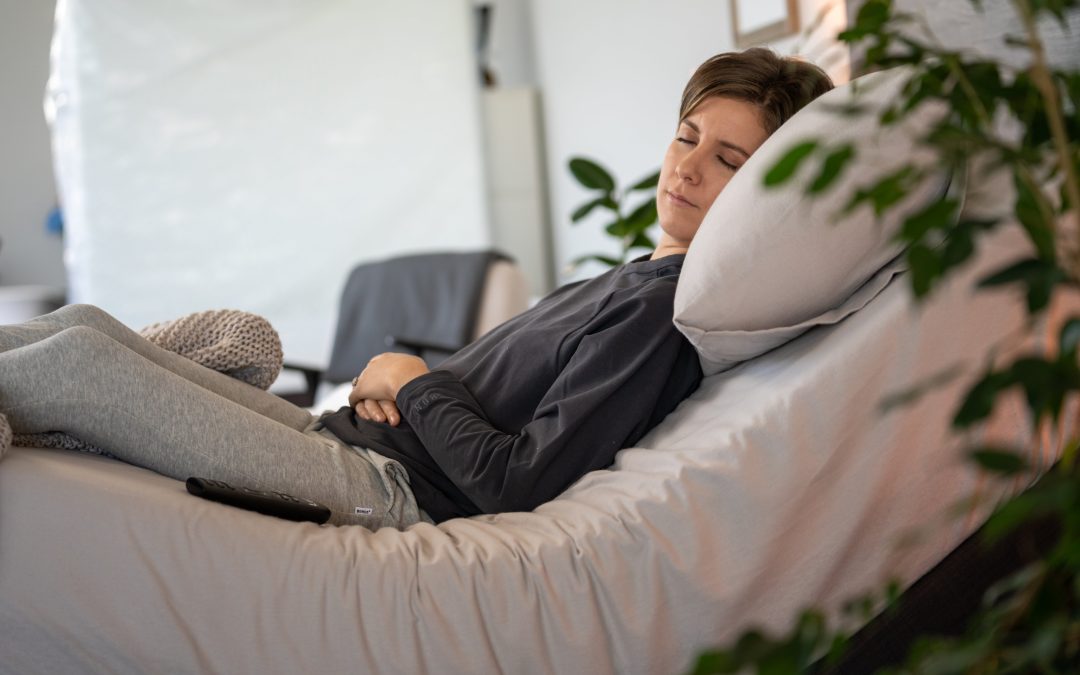
What Is a Split King Bed? Everything You Need to Know Before Buying
Overview: A split king bed is a king-size bed made up of two long single mattresses and bases placed side by side, giving each partner their own space and control. Unlike a traditional king, a split king allows you to customise your side—ideal for couples with different sleeping preferences, firmness needs, or those using an adjustable base. Benefits include independent comfort, reduced partner disturbance, and compatibility with adjustable beds, while drawbacks can include higher cost, more complex bedding, and a centre gap. Perfect for couples wanting personalisation without sacrificing size, a split king delivers both flexibility and comfort.
Picture this: you’re finally drifting off to sleep when your partner rolls over, and suddenly you’re wide awake. Or maybe you love a firm mattress while they prefer something softer, and you’re both compromising on comfort every single night. If this sounds familiar, you’re not alone. These are exactly the kinds of sleep disruptions that drive couples to explore more customizable solutions.
Premium sleep setups are becoming increasingly popular in Australia, particularly adjustable beds that allow each person to change position independently. Research shows these systems can help with snoring, reflux, and circulation issues when used appropriately. More fundamentally, good sleep underpins both physical and mental health, while poor sleep contributes to fatigue, mood changes, and reduced performance throughout the day.
Enter the split king bed: a setup designed specifically for couples who want to share a bed without sharing every single sleep experience. If you’ve been wondering whether this might be the solution to your sleep struggles, this guide will walk you through everything you need to know.
What Is a Split King Bed?
A split king bed isn’t one massive mattress. Instead, it’s a king-size setup where two separate long single mattresses sit side-by-side on individual bases. Think of it as two twin beds pushed together, but designed to look and function as one cohesive sleeping surface.
Here’s how the dimensions work: a standard king-size bed measures approximately 183cm wide by 203cm long as a single piece. A split king achieves the same overall footprint, but divides it into two long single mattresses, each measuring roughly 92cm by 203cm. When placed together, they create the same sleeping space you’d get with a traditional king, but with one crucial difference: complete independence.
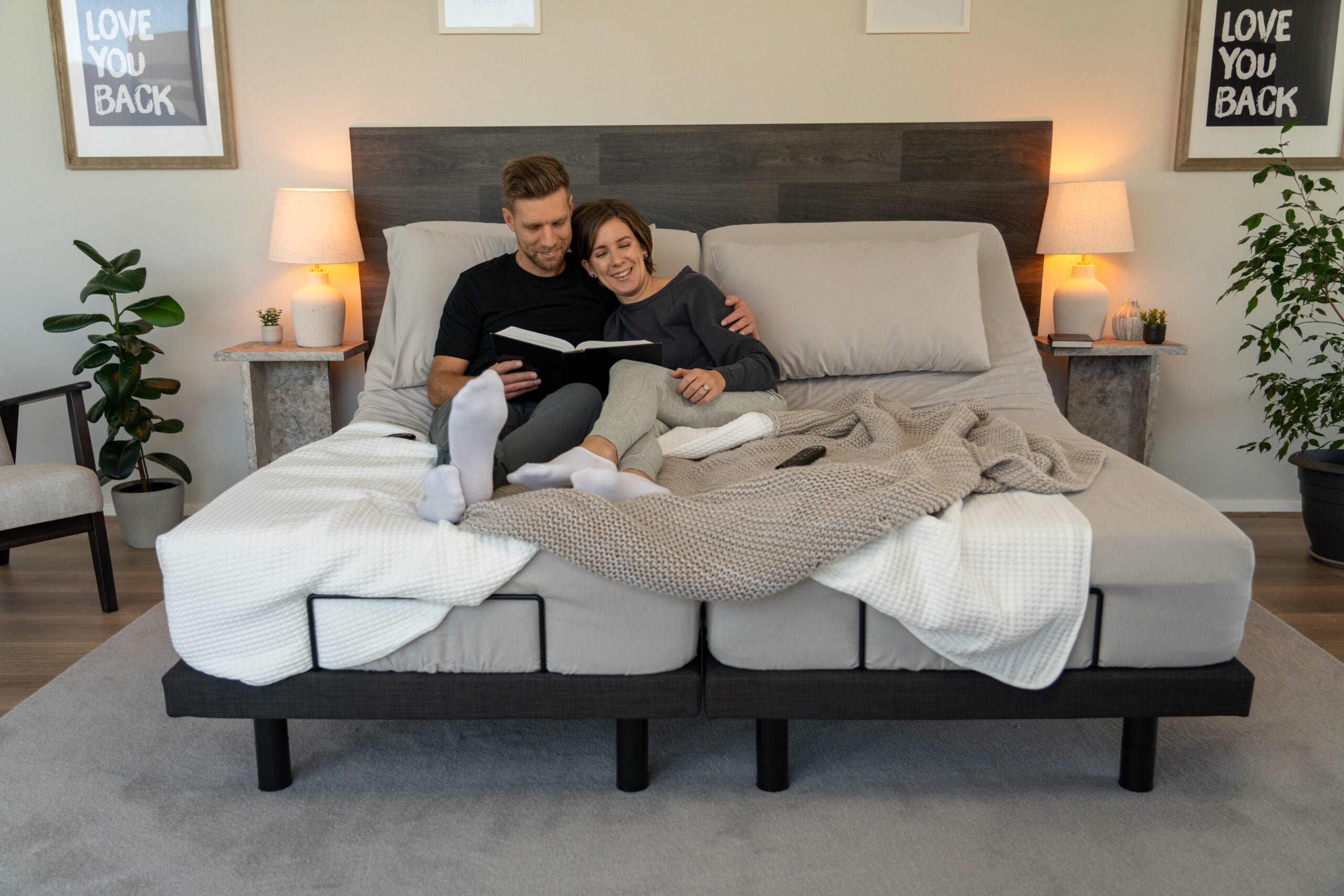
This setup has become particularly popular with adjustable bases, where each person can control their side separately. One partner can sit up to read while the other stays flat. One can elevate their head to reduce snoring while the other remains undisturbed. The possibilities for customisation are exactly why split king configurations are gaining traction among Australian couples.
For those looking to build a complete sleep system, package deals often bundle the mattresses, bases, and essential accessories together, making it easier to set up your ideal split king configuration.
How Different Is It From a Regular King Bed
The footprint is identical. That’s the first thing to understand. A split king bed takes up the same floor space as a traditional king, so you won’t need to rearrange your entire bedroom or worry about whether it’ll fit through your door.
The real difference lies in the central split. Where a traditional king bed has one base and one mattress that moves as a single unit, a split king has two independent bases and two separate mattresses. This modularity is what enables each person to customise their side completely.
Australian adjustable bed ranges specifically highlight split queen and split king options for couples with different sleeping preferences. If you’ve ever wished you could elevate your head without forcing your partner into the same position, this is how you do it.
What About Bedding?
Here’s where things get slightly tricky. Standard king fitted sheets won’t work on a split king setup because the mattresses move independently. You’ll need either two separate long single fitted sheets (one for each mattress) or specially designed split king sheet sets that can accommodate the movement.
The gap between the two mattresses can be noticeable, especially if you and your partner tend to sleep close together in the centre of the bed. Many people use gap fillers or connecting straps to minimise this, though it’s worth knowing upfront that the seam will exist.
Some couples find that the gap becomes invisible with the right bedding and setup. Others barely notice it at all. It’s one of those things that matters more to some people than others, so consider how you and your partner actually use your bed space.
The Real Benefits of a Split King Bed
Complete Independence for Each Sleeper
This is the headline benefit. When your partner moves, you don’t feel it. When they get up in the middle of the night, your side of the bed stays perfectly still. For light sleepers or anyone who’s ever been jolted awake by their partner’s restless night, this alone can be transformative.
Studies show that around 40% of men and 30% of women snore regularly, often disrupting their bed partner’s sleep. With a split king setup, particularly when paired with adjustable bases, the person who snores can elevate their head without affecting the other side of the bed. This creates a practical solution for one of the most common sleep disturbances couples face.
Personalised Comfort Without Compromise
If you and your partner have different firmness preferences, you’ve probably spent years trying to find a middle ground that satisfies neither of you perfectly. With a split king, that compromise disappears entirely. One person can choose a firmer mattress while the other opts for something softer. Different body weights, sleep positions, and comfort preferences can all be accommodated individually.
Health and Lifestyle Flexibility
Adjustable bases paired with split king mattresses offer practical benefits for specific health situations. Elevating the head can help reduce snoring in some cases. Raising the torso slightly may provide relief for acid reflux. Elevating the legs can support circulation. These aren’t guaranteed medical solutions, and you should always consult with healthcare professionals about specific conditions, but the flexibility is there when you need it.
Beyond health issues, there’s simply lifestyle comfort. One partner might want to sit up and read before bed while the other is ready to sleep. One might want to elevate slightly while watching TV. Independence means neither person has to sacrifice their comfort for the other.
Easier to Move and Set Up
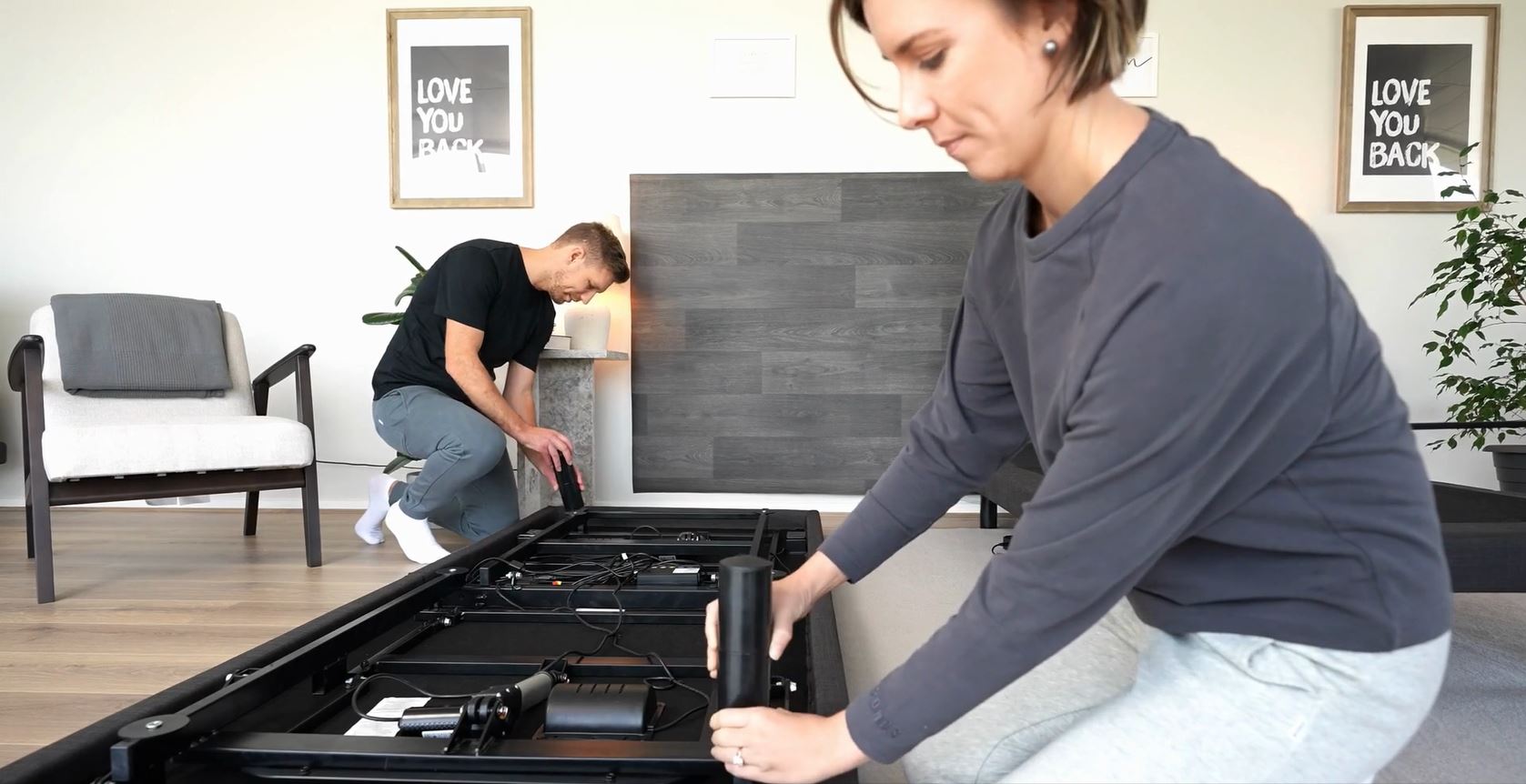
Two smaller mattresses are significantly easier to maneuver than one massive king. If you’ve ever tried to move a traditional king mattress up a narrow staircase or around tight corners, you know the struggle. Split king mattresses navigate these challenges far more easily.
Potential Drawbacks You Should Consider
The Middle Gap
There will be a seam between the two mattresses. For couples who sleep pressed together in the very centre of the bed, this can feel noticeable. Gap fillers and connector straps help minimise the issue, but they don’t eliminate it. If physical closeness in the centre of the bed is important to you, spend some time thinking about whether this trade-off is worth the other benefits.
Higher Initial Investment
Split king setups typically cost more than traditional king beds. You’re buying two mattresses instead of one, and if you want adjustable bases, you’ll need two of those as well. The price adds up quickly. However, many couples find that better sleep is worth the investment, especially when you consider how much time you spend in bed over the mattress’s lifespan.
Specialised Bedding Requirements
You can’t just grab any king sheet set off the shelf. You’ll need bedding designed for split configurations, which may be harder to find and potentially more expensive. Some people use two separate long single-sheet sets, which works functionally but can look less polished.
Weight and Appearance
Adjustable bases are heavier and bulkier than standard bed frames. Some people find them visually “clinical” unless styled thoughtfully. If bedroom aesthetics matter to you, plan how you’ll incorporate the setup into your room’s design.
Compatibility Considerations
Not every mattress works well with adjustable bases. Very thick or rigid innerspring mattresses often don’t flex properly. Foam and latex mattresses typically perform better because they can bend without damage. Motor noise can also be a factor, though modern adjustable bases have become quieter over time.
Who Should Actually Buy a Split King?
Couples With Vastly Different Sleep Needs
If one partner is a light sleeper and the other tosses and turns all night, a split king eliminates the disturbance. If one person runs hot while the other is always cold, separate mattresses mean separate temperature regulation. If your sleep schedules don’t align (shift workers paired with 9-to-5ers, for example), adjustable independence becomes invaluable.
Partners With Different Body Types or Firmness Preferences
Body weight significantly affects how a mattress feels. A heavier person might need more support, while a lighter partner might prefer more cushioning. When you’re sharing one mattress, someone always compromises. Split kings remove that equation entirely.
People Managing Specific Health Conditions
If you’re dealing with chronic pain, mobility challenges, or conditions that benefit from position changes, adjustable bases can provide genuine relief. Arthritis sufferers, for instance, often find that being able to adjust bed height and position helps them get in and out of bed more easily and sleep more comfortably. Adjustable beds are recognised as assistive technology when prescribed for mobility and independence needs.
Similarly, if one partner has sleep apnea, snoring issues, or acid reflux, elevating their side of the bed may help manage symptoms without disrupting their partner’s sleep. Always work with healthcare professionals to understand what positioning might help your specific situation.
Anyone Prioritising Long-Term Sleep Quality
Even if you don’t have pressing health concerns or dramatically different preferences, investing in better sleep quality pays dividends over time. Sleep affects everything from your immune function to your mood, cognitive performance, and relationship satisfaction. If you can afford the investment and value the customisation, a split king setup might simply be a smart long-term wellness decision.
Letto’s Approach to Split King Setups
When you’re building a split king configuration, mattress compatibility matters. The mattresses need to be flexible enough to work with adjustable bases without losing support or developing damage over time. Foam and latex constructions typically perform best because they can bend and move with the base adjustments while maintaining their structural integrity.
The Letto Mattress is designed with this flexibility in mind, providing consistent support and pressure relief whether flat or adjusted. For split king setups, you’d select two long single mattresses that can be paired with adjustable bases or used on standard frames.
Beyond the mattress itself, a complete sleep system includes the details that make daily use comfortable. Quality pillows that support your preferred sleep position, breathable linen sets in the right sizes, and protective mattress covers or protectors all contribute to a sleep environment that works seamlessly.
If you’re new to optimising your overall sleep habits, understanding how to build a good night routine can complement your investment in better sleep surfaces. Similarly, learning how to get more deep sleep helps you maximise the benefits of any sleep system you choose.
Making Sure Everything Works Together
Before committing to a split king setup, verify compatibility between all components. Adjustable bases have weight limits and thickness guidelines. Your mattresses need to be designed to flex properly without damage. Very thick or rigid mattresses may not bend as needed, while foam and latex options typically perform well.
Trial periods matter here. If possible, test your mattress on the actual adjustable base before finalising your purchase. Check that Australian sizing matches across all components (base, mattress, bedding). Small mismatches can create frustration down the line.
If you’re working with healthcare professionals on sleep positioning for medical reasons, involve them in the decision process. They can provide guidance on what adjustments might be most beneficial and whether an adjustable setup makes sense for your specific needs.
Is a Split King Right for You?
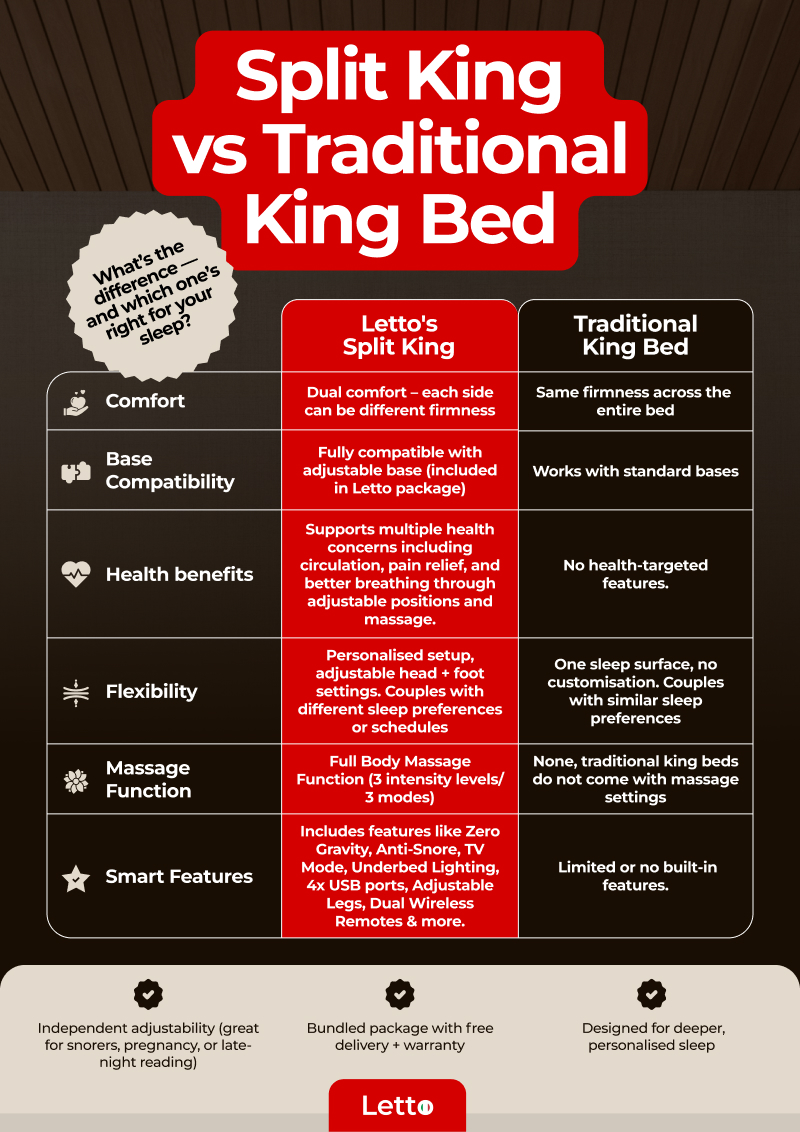
To help make the comparison crystal clear, we’ve put together a simple visual guide showing how a split king setup stacks up against a traditional king bed.
From comfort and flexibility to massage options and smart features, the differences are more than just structural.
A split king bed represents a genuine shift in how couples approach shared sleep. Instead of compromise, it offers customisation. Instead of disturbance, it provides independence. The trade-offs—cost, bedding complexity, the middle gap—are real, but for many couples, they’re worth it.
Consider your actual sleep patterns and needs. Do you wake up when your partner moves? Do you have different firmness preferences that leave one of you uncomfortable? Would independent adjustment help with health or lifestyle comfort? If you’re answering yes to these questions, a split king deserves serious consideration.
The investment is significant, but so is the potential return. Better sleep affects your entire life, from how you feel when you wake up to how you function throughout the day. Your relationship benefits when you’re both well-rested. Your health improves when sleep quality increases. These aren’t small things.
Take time to research your options, understand the components involved, and think honestly about what would improve your sleep. A split king isn’t the right solution for everyone, but for couples struggling with shared sleep disruption or compromise, it often transforms the bedroom from a source of frustration into a genuine sanctuary.
Ready to Build Your Perfect Sleep Setup?
If a split king sounds like the solution you’ve been looking for, start by exploring what a complete setup would look like. Package deals bundle the essentials together, making it easier to build a cohesive system without piecing together components separately.
Consider starting with a conversation about what each person needs from their sleep surface. What firmness feels best? What positions do you sleep in? Are there specific health considerations that would benefit from adjustability? These answers will guide your choices and help ensure the investment actually solves the problems you’re experiencing.
Quality sleep is personal. A split king bed is simply the most practical way to honour that principle while still sharing a bed with your partner. Stop compromising on rest. Design a setup that works for both of you, individually.
Good sleep hygiene involves consistent habits and environmental factors that support quality rest. The five most effective sleep hygiene tips include: maintaining a consistent sleep schedule (same bedtime and wake time daily), creating a wind-down routine (avoiding screens and bright light before bed), optimising your sleeping environment (keeping it dark, quiet, and cool at 17-19°C), being mindful of caffeine and heavy meals before bed, and investing in supportive mattress and pillows. Daytime habits also matter—regular exercise and morning bright light exposure help regulate your body clock. Improving your sleep isn’t about one quick fix but rather combining multiple evidence-based practices. With good sleep hygiene, you can achieve improved sleep quality, fall asleep faster, and wake up feeling refreshed. Start with one or two changes and build from there for lasting results.
You’ve been lying awake for what feels like hours, watching the clock tick closer to morning. Your mind races through tomorrow’s to-do list while you count down the dwindling hours until your alarm goes off. Sound familiar? You’re not alone, and the solution might be simpler than you think.
The secret to transforming your sleep isn’t found in a bottle or prescription. It’s called sleep hygiene: a set of habits and environmental factors that form the foundation for quality rest. Understanding and implementing good sleep hygiene supports everything from your immune function and physical recovery to your mood, focus, and stress management. Research from Healthdirect and the Australian Institute of Health and Welfare shows that consistent sleep problems affect both short-term wellbeing and long-term health outcomes.
Here’s the thing: improving your sleep isn’t just about having a comfortable mattress. It’s about creating an entire ecosystem that supports rest. Your daily routine, your evening habits, your sleeping environment, and the surface you sleep on all work together. Change one element and you might see some improvement. Change several and you’ll likely transform your sleep entirely.
If you’re new to the concept, sleep hygiene encompasses all the practices and environmental factors that contribute to quality sleep. Let’s explore five evidence-based habits that can help you wake up feeling refreshed and energised.
1. Stick to a consistent sleep schedule
Your body has an internal clock called your circadian rhythm, and it absolutely loves predictability. When you go to bed and wake up at roughly the same time every day (yes, even on weekends), you’re training your body to naturally feel sleepy and alert at the right times.
Think of it like catching a train. If the train arrives at a different time every day, you’d never know when to show up at the station. Your body faces the same confusion when your sleep schedule bounces around. One night you’re asleep by 10 pm, the next you’re up until midnight, and the weekend throws everything off again. Your body never knows when to release sleep hormones or when to wake you up naturally, so it’s constantly trying to adjust.
Why consistency matters
Consistency strengthens your body’s natural sleep–wake cycle, helping you fall asleep more easily and wake feeling refreshed. A steady routine allows your circadian rhythm to stay in sync, which supports everything from hormone balance and digestion to immune health. People who keep regular sleep schedules often notice better sleep quality, fewer nighttime awakenings, and more energy during the day.
To build this habit, start with a fixed wake-up time and stick to it, even on weekends. This is more important than your bedtime, since waking at different times can throw off your rhythm. Once you’ve chosen the best time to wake up, count backwards to allow for 7–9 hours of rest.
If you’re awake for more than 20–30 minutes, get up and do something calm like reading under dim light or listening to quiet music. Go back to bed when you feel sleepy again. This helps your brain connect your bed with ease and rest, not frustration or wakefulness. Avoid spending long periods in bed when you’re not sleeping. The clearer that connection becomes, the more naturally you’ll drift off each night.
Everyone’s rhythm is a little different. Some people are early risers, others feel better starting later. What matters most is staying consistent with what suits your body best.
2. Wind down properly before bed
Your brain doesn’t have an off switch. It needs time to transition from the busyness of the day to the calm of sleep. A consistent wind-down routine signals to your body that it’s time to power down, making it easier to drift off when your head hits the pillow.
Most of us spend our days in a state of mild to moderate stimulation. We’re working, problem-solving, responding to messages, making decisions, and staying alert. Then we expect to just flip a switch at bedtime and immediately fall asleep. That’s not how our nervous system works. We need a bridge between daytime alertness and nighttime rest.
The screen problem and how to wind down
Evening screen time can make it harder to fall asleep. The bright light from phones, tablets, or TVs reduces melatonin, the hormone that helps you feel sleepy. But it’s not just the light — the content itself keeps your mind alert. Work emails spark thoughts about tomorrow, news can stir emotions, and social media encourages comparison. Your brain needs a clear signal that the day is over and it’s safe to relax.
Try powering down screens 60–90 minutes before bed and dimming the lights around your home. Soft, warm light helps your body recognise that night is approaching. Use this time for calming activities that feel right for you — reading a physical book, gentle stretching, meditation, journaling, or listening to quiet music. A warm shower or bath about 90 minutes before bed can also help your body cool down naturally, which encourages sleep.
If worries tend to surface at night, set aside “worry time” earlier in the evening to write them down. Keep a notepad nearby so you can jot down any thoughts that pop up later and let them go until morning.
Remember, building a good night routine takes time and patience. Experiment with different habits and give yourself a few weeks to adjust. With practice, your evenings will start to feel calmer — and sleep will come more easily.
3. Turn your bedroom into a sleep sanctuary
Your bedroom should feel like a place designed specifically for rest. Creating an optimal sleeping environment makes falling asleep easier and helps you stay asleep through the night. Many people underestimate just how much their sleep environment affects their sleep quality.
Creating a restful sleep environment
Your bedroom plays a bigger role in sleep quality than you might think. A slightly cooler room helps your body settle into deep rest, as your core temperature naturally drops when you fall asleep. Research suggests that the ideal bedroom temperature sits around 17–19°C. If that feels a little chilly, try layering breathable bedding like cotton or linen so you can stay comfortable while your body cools down.
Darkness also matters. Even small amounts of light can signal to your brain that it’s time to be awake. Blackout curtains, covered LEDs, or a soft eye mask can make a big difference, especially if you live in a bright area or share a space with someone who keeps different hours.
Noise is another common disruptor. A fan or white noise machine can help mask sounds from traffic, neighbours, or snoring. If you’re sensitive to noise, comfortable earplugs are an easy option.
Finally, protect the purpose of your bed. Keep it for sleep and rest only, not for work or TV. This helps your brain associate bed with calm and comfort. Choose a supportive mattress and pillow that suit your sleep position, and keep your bedding fresh. Cleaning your mattress effectively helps maintain a healthier, more comfortable sleep environment.
Small adjustments to light, temperature, noise, and bedding can transform the way you sleep — creating a space that feels peaceful, inviting, and truly restorative.
4. Watch what you consume before bed
What you consume in the hours leading up to bedtime can either support or sabotage your sleep. Even seemingly innocent choices can disrupt your body’s ability to wind down naturally. Understanding how different substances affect your sleep helps you make better decisions about evening eating and drinking.
Evening habits that quietly steal your sleep
What you eat and drink in the hours before bed can have a bigger impact on your rest than you might expect. Caffeine stays active in your system for several hours, blocking the signals that help you feel sleepy. Try avoiding coffee, tea, and chocolate for at least 5–6 hours before bed, or switch to herbal or decaf options if you enjoy a warm drink in the evening.
Alcohol can seem relaxing at first, but it disrupts deep sleep later in the night. It acts as a sedative, not a true sleep aid, leading to more awakenings and lighter sleep. Allow a few hours between your last drink and bedtime to give your body time to process it fully.
Late or heavy meals can also keep you awake. Aim to finish dinner 2–3 hours before bed so your body isn’t working hard to digest while trying to rest. If you’re hungry before sleep, choose something light like a banana or a few nuts.
Hydration plays a role, too. Drink plenty of water throughout the day, but ease off just before bed to avoid multiple wake-ups during the night.
If you’ve been sleeping poorly for a while, you might be dealing with sleep debt — the accumulated effects of lost rest that can’t be fixed in a single night. Giving your body time and consistency is the best way to restore deep, natural sleep.
5. Invest in quality sleep surfaces
Here’s a sobering thought: you’ll spend roughly one-third of your life in bed. An uncomfortable, unsupportive, or worn-out mattress is one of the biggest barriers to good sleep hygiene, causing everything from back pain and pressure points to overheating and restless nights.
Why your mattress matters
Your mattress plays a major role in how well you sleep. It supports your spine, relieves pressure, and regulates temperature — all key factors in waking up feeling rested rather than sore. According to the Better Health Channel, comfortable, supportive bedding is essential for quality sleep. Yet many people keep sleeping on mattresses that have lost their structure, causing them to wake throughout the night without realising it.
When it’s time to replace your bed, think about your sleep position and comfort preferences. Side sleepers often need more cushioning for their shoulders and hips, while back and stomach sleepers need firmer support to keep the spine aligned. Breathable, cooling materials can also make a big difference, especially if you tend to overheat during the night. Understanding how to choose a mattress that suits your needs is one of the most effective ways to improve your overall well-being.
Don’t overlook your pillow or bedding. A supportive pillow keeps your neck aligned and should be replaced every couple of years. Natural-fibre sheets like linen or cotton help regulate temperature and create a more comfortable sleep surface. A breathable mattress protector adds hygiene and longevity without trapping heat.
A few thoughtful choices in your mattress and bedding can completely transform the way you rest — helping you sleep deeper, wake easier, and feel better each morning.
Build sleep pressure during the day
While most sleep hygiene focuses on what you do before bed, your daytime habits have a powerful influence on nighttime sleep quality. What you do when the sun is up directly affects how well you sleep when it goes down.
Movement matters
Physical activity helps build “sleep pressure” throughout the day, making you naturally tired by bedtime. It’s like your body accumulates a need for rest as you move and exert yourself. Research from the Sleep Health Foundation highlights exercise as a key factor for healthy sleep.
Aim for at least 30 minutes of moderate activity most days. Even a daily walk can significantly improve sleep quality. You don’t need to train for a marathon or spend hours at the gym. Consistent, moderate movement is what matters. Regular exercise helps you fall asleep faster, spend more time in deep sleep, and wake up feeling more refreshed.
Avoid intense exercise within 2-3 hours of bedtime, as it can be too stimulating. Morning or afternoon workouts are ideal because they give your body time to wind down before bed. However, gentle stretching or yoga in the evening can actually help you relax and prepare for sleep.
Get your light exposure right
Expose yourself to bright light within an hour of waking. This is one of the most powerful signals you can send to your circadian rhythm. Morning bright light tells your brain that it’s daytime, which triggers a cascade of hormonal and neurological responses that help you feel alert. More importantly, it sets a timer for when you’ll feel sleepy later, roughly 14-16 hours after that morning light exposure.
Spend time outdoors during the day when possible. Open curtains and blinds to let daylight into your home and workspace. If you work in a windowless office or live somewhere with limited winter sunlight, consider a light therapy box. These devices mimic natural sunlight and can help regulate your circadian rhythm when natural light is scarce.
Morning bright light is particularly powerful for regulating your body clock. Even 10-15 minutes outside can make a difference. Some people find that combining morning light exposure with exercise (like a morning walk) creates an especially strong signal for their circadian rhythm, leading to improved sleep at night.
Your sleep hygiene journey starts here
Transforming your sleep doesn’t require a complete lifestyle overhaul. Small, consistent changes compound over time. Let’s recap the five essential sleep hygiene tips:
Maintain consistent sleep and wake times to strengthen your circadian rhythm
Create a calming wind-down routine that signals your body it’s time to sleep
Optimise your sleeping environment by keeping it dark, quiet, and cool
Be mindful of caffeine, alcohol, and heavy meals in the hours before bed
Invest in supportive mattresses and pillows to create the perfect sleep surface
Remember, sleep hygiene is a journey rather than a destination. Start with one or two changes this week, then gradually incorporate more as they become habits. Your body and mind will thank you with deeper, more restorative rest.
Some changes you’ll notice immediately. Keeping your room cooler or avoiding afternoon coffee often produces noticeable results within a few days. Others take a week or two to show their full effects, especially the consistency in your sleep schedule. Be patient with yourself. You’re essentially retraining your body’s sleep system, and that takes time.
At Letto, we understand that quality sleep is built on a foundation of healthy habits and the right sleep environment. That’s why we’ve designed every product to support your sleep hygiene journey. The Letto Mattress provides proper spinal support and temperature regulation with adaptive layers that respond to your body. Our linen sets, made from natural fibres, help you stay comfortable all night by naturally regulating temperature and wicking moisture away from your skin.
Whether you’re starting fresh with a complete bedroom setup or upgrading one element at a time, we’re here to help. If you want everything in one go, our package deals bundle together a mattress, pillows, a protector, and linen for a complete bedroom refresh. Not ready for a full upgrade? The Letto Pillow maintains proper alignment for your neck and spine, making it a great starting point.
Protecting your investment matters too. Our mattress protectors guard against spills and allergens while remaining breathable, and mattress covers provide an additional layer of protection to extend the life of your mattress.
Ready to transform your sleep?
You’ve learned the habits. Now it’s time to create the environment where they can thrive. For more guidance on finding the perfect mattress for your body and sleep style, our guide on choosing the right mattress walks you through everything you need to know.
In this blog In this guide, we explore what makes the best mattress for a side sleeper, from the importance of pressure relief at the hips and shoulders to finding the right firmness levels. We break down the pros and cons of different mattress types like memory foam, latex, hybrids, and innerspring, and highlight common mistakes side sleepers should avoid. You’ll also discover insights from Australian sleep guides, practical advice on pillows and sleep accessories, and how climate and sizing influence your choice. Finally, we share Letto’s mattress recommendations, including sizes and adjustable options, along with a simple 7-night checklist to test comfort at home.
Picture yourself settling into bed tonight, chances are you’re already imagining that familiar curl onto your side. You’re definitely not alone in this preference. Side sleeping dominates as Australia’s most popular sleeping position, according to Bedbuyer’s national survey of over 1,000 people. But here’s what many side sleepers know all too well: that nagging shoulder pressure building through the night, hip soreness interrupting your deepest sleep phases, and that morning neck stiffness when your pillow height just doesn’t cooperate.
Studies published in the Sleep Foundation’s research show that sleeping on the side or back is considered more beneficial than sleeping on the stomach. In either of these positions, it’s easier to keep your spine supported and balanced, which relieves pressure and enables your muscles to relax and recover. The Better Health Channel recommends choosing a pillow height that matches the distance from neck to shoulder for side sleepers, a detail that makes all the difference when combined with the right mattress for side sleepers.
What side sleepers need in a mattress
Your body has very specific demands when you sleep on your side, and understanding these needs transforms your mattress shopping experience entirely. Those shoulders and hips? They’re doing the heavy lifting, bearing most of your body weight and creating pressure points that can turn a restful night into a series of uncomfortable wake-ups.
Pressure relief at these critical zones becomes your first line of defence against those 3 am wake-ups. When your shoulder and hip can sink slightly into the mattress surface, those uncomfortable pressure points that seem to intensify as the night wears on finally get the relief they desperately need. Consumer testing reveals something fascinating: softer feels don’t just feel better for side sleepers, they actually help contour your body’s natural curves, creating that perfect cradle effect that distributes your weight far more evenly than firmer surfaces ever could.
But here’s where things get interesting. Stable support isn’t just about firmness; it’s about creating the perfect balance that keeps your spine happy all night long. Biomedical engineering research reveals something crucial: your sleep system directly affects whether your spine maintains its natural alignment, and studies published in PLOS One demonstrate just how critical optimal spinal positioning becomes for side sleepers. The magic happens when your mattress allows those shoulders and hips to dip just enough while still supporting your midsection, maintaining that natural spinal curve that prevents morning aches. This delicate balance directly connects firmness choice to sleeping position, highlighting how different constructions support this comfort equation.
Breathable materials become especially important in Australian bedrooms where heat build-up can disrupt sleep quality. The difference in airflow between spring and foam mattresses can significantly impact your comfort, particularly during warmer months when temperature regulation matters most.
Don’t underestimate your pillow either, it’s working overtime to complete the comfort equation. When your pillow height matches that distance from neck to shoulder edge, something almost magical happens: your neck finally stays neutral instead of being bent at awkward angles for eight hours straight. Even the most carefully chosen mattress can’t rescue you from a pillow that throws your alignment completely off track.
Firmness levels explained for side sleepers
Mattress firmness feels like learning a new language, but once you crack the code, everything clicks into place. Here’s what changes the game for those who sleep on your side: while back sleepers might thrive on firmer surfaces, your body craves something entirely different. Consumer guides consistently point to a fascinating pattern: side sleepers naturally gravitate toward softer mattresses that work with their pressure points rather than fighting against them.
Australian mattress brands broadly agree on this guidance. Industry guides suggest a plush or soft feel specifically alleviates pressure at the hip and shoulder for side sleepers, while others recommend soft-to-medium options for the same reason. Think of it this way: those softer surfaces actually let your body’s natural curves nestle into the mattress instead of forcing you to fight against an unyielding surface all night. But here’s where many people get surprised, plenty still find their sweet spot in medium or medium-firm territory. Why? Because comfort isn’t one-size-fits-all, especially if you’re someone who shifts between side and back positions throughout the night. Your perfect firmness depends on far more than just sleeping position; your body weight, personal preferences, and movement patterns all play starring roles in this decision.
Type of mattresses for side sleepers: Pros and cons
Memory foam mattresses and foam hybrids
Memory foam mattress options have become synonymous with pressure relief, and for good reason. These foam mattresses excel at contouring to your shoulders and hips, creating that “hugged” feeling many side sleepers love. Quality memory foam adapts to your body’s unique shape, making it particularly suited to side sleepers who need targeted pressure point relief. Motion isolation is another major advantage; your partner’s movements won’t ripple across to your side of the bed.
The trade-off? Memory foam can feel warmer and more “encased” without proper cooling features or airflow channels. That classic memory foam “sink” that provides such excellent pressure relief can also trap heat around your body. Modern gel-infused and open-cell foams address these concerns, but it’s worth considering if you tend to sleep hot.
Latex
Natural latex offers a different feel that some side sleepers swear by. Known for exceptional durability and breathability, latex provides responsive contouring without the deep sink of memory foam. Material testing shows how latex bounces back quickly when you shift positions, making it easier to move during the night while still offering pressure relief.
However, latex can feel firmer or more “solid” compared to memory foam, even at similar firmness ratings. Some side sleepers find it doesn’t provide quite enough of that plush cradle they’re seeking for their shoulders. It’s a material that tends to push back slightly rather than fully conforming, which works wonderfully for some but not all side sleepers.
Hybrid with pocket springs
Hybrid mattresses aim to deliver the best of both worlds: the contouring comfort of foam layers with the support and airflow of springs. Quality hybrids use individually pocketed springs that move independently, allowing better contouring than traditional innerspring while maintaining that responsive support. Pocket springs improve airflow through the mattress core, addressing the heat retention issues common with all-foam designs.
Quality varies significantly in the hybrid category, though. Poor designs might skimp on comfort layers, reducing the contouring at the shoulder that side sleepers desperately need. Look for hybrids with substantial comfort layers (at least 5-7cm) above the spring unit to ensure adequate pressure relief.
Traditional innerspring
Traditional innerspring mattresses remain popular for their cooler feel and accessibility across price ranges. The interconnected coil systems provide consistent support and excellent airflow, making them a solid choice for hot sleepers on a budget.
The downside for side sleepers becomes apparent at pressure points. Interconnected coil systems contour less at the shoulder compared to pocket springs or foam, which many side sleepers feel as uncomfortable pressure. Unless topped with quality comfort layers, traditional innerspring mattresses often feel too firm for dedicated side sleepers.
Common mistakes side sleepers make
Even with all the right knowledge, certain pitfalls seem to catch side sleepers off guard every single time. The biggest culprit? Going too firm because it sounds “supportive.” Here’s the reality check: if your shoulder can’t nestle into the surface, you’re setting yourself up for shoulder and neck discomfort that builds throughout the night. Consumer guidance consistently highlights this crucial point: side sleepers need softer contouring specifically to accommodate pressure points and maintain healthy spinal alignment.
But swing too far toward the ultra-soft end, and different problems emerge. When your hips sink excessively deep, your spine curves unnaturally, creating that uncomfortable arch that translates directly into lower back pain. A fascinating cross-sectional study conducted at Curtin University discovered something telling: people experiencing cervical pain and morning stiffness actually spent significantly more time in problematic sleep postures during the night. The connection between poor alignment and sleep quality couldn’t be clearer. This misalignment often manifests as lower back pain that builds through the night. Finding that Goldilocks zone where you get pressure relief without sacrificing support takes some experimentation.
Wrong pillow height compounds any mattress issues. The advice about sizing pillow height to shoulder width seems simple, but many side sleepers overlook this crucial detail. A pillow that’s too high or too low forces your neck out of alignment for hours, undoing any benefits from your carefully chosen good mattress.
What Australian guides say and gaps we can fill
Scanning through Australian sleep resources reveals a clear consensus on several points. Side sleeping’s popularity appears consistently, with national surveys showing it as Australia’s most preferred position, aligning with anecdotal evidence from retailers and health professionals. Major brands suggest soft to medium firmness levels for side sleepers, emphasising pressure relief at the hip and shoulder. Everyone agrees buyers want both breathability and contouring, with detailed airflow differences across spring and foam types.
Yet several practical aspects often go unaddressed. Few articles discuss the pillow-mattress relationship with specific, clinical guidance on pillow height. Choosing the perfect mattress involves understanding how all these elements work together. Australian mattress sizing gets glossed over, particularly those long single and split sizes that matter for adjustable and shared beds. Standard sizing includes a long single at 92 x 203 cm and a king single at 106 x 203 cm, but many buyers don’t realise these options exist.
Most importantly, practical home trial checklists remain rare, despite the fact that trials and returns have become standard in the Australian market. Those few minutes in a showroom can’t replicate a full night’s sleep, making systematic home testing essential for finding your perfect match.
Sleep accessories that help side sleepers
Your mattress forms the foundation, but strategic accessories can fine-tune your comfort significantly. Start with that crucial pillow height matched to your shoulder width; this guidance can transform your neck comfort overnight. Consider measuring the distance from your neck to the edge of your shoulder while standing, then look for a pillow that maintains this height when compressed.
A soft but supportive topper offers another adjustment tool if your base mattress feels slightly too firm. Modern mattresses often include toppers and adjustable firmness approaches that let you modify the feel without replacing the entire mattress. Quality toppers can add 3-5cm of pressure-relieving comfort, perfect for side sleepers who need just a bit more cushioning at pressure points.
For those particularly sensitive at the shoulder, an adjustable base allows you to slightly vary your torso angle, redistributing pressure across different contact points. This isn’t about medical treatment, it’s about comfort optimisation. Just ensure any adjustable base setup aligns with your mattress warranty requirements, as some manufacturers have specific guidelines about base types. Your mattress choice directly affects posture throughout the day, making these accessories worth considering.
Australian climate, sizeing and testing
Australian mattress shopping comes with unique considerations. Our standard sizes differ from international measurements, with options like long single (92 x 203 cm) and king single (106 x 203 cm) offering solutions for taller individuals or narrower spaces. Queen beds measure 153 x 203 cm, while king beds span 183 x 203 cm. Split options in queen, king and super king sizes accommodate couples with different firmness preferences or those using adjustable bases.
Testing tips emphasise moving around and lying for longer periods when trying mattresses in store. Don’t feel rushed; proper testing means assuming your usual sleep position for at least 10-15 minutes. Many box brands now offer 100+ night trials with generous warranties, recognising that true comfort evaluation happens at home, not in a showroom.
Climate considerations matter more than many realise. Australian bedrooms face temperature extremes that affect mattress performance. That memory foam, perfect for Melbourne winters, might feel stifling during Brisbane summers. Consider your local climate and personal temperature preferences when weighing materials and construction types. The Sleep Health Foundation, Australia’s leading sleep advocacy organisation, emphasises how environmental factors like temperature significantly impact sleep quality.
Our recommendations for side sleepers
For side sleepers seeking adaptable comfort, the Letto gel memory foam mattress offers a unique solution with adjustable firmness you can change at home. Rather than committing to one feel, you can switch between medium-soft and medium-firm by simply flipping the internal foam layer. This flexibility proves invaluable for side sleepers still discovering their ideal pressure relief balance without purchasing multiple mattresses.
The cooling gel memory foam specifically addresses two critical needs for side sleepers: pressure relief and temperature regulation. The gel-infused foam cushions shoulders and hips while helping dissipate heat, a crucial feature for Australian bedrooms where temperature management can make or break a good night’s sleep quality.
Long single 92 x 203 cm for taller individuals in compact spaces
King single 107 x 203 cm offering extra width without full single bed length
Split queen 153 x 203 cm for couples wanting individual comfort
Split king 184 x 203 cm, providing maximum personal space
Split super king 214 x 203 cm for ultimate luxury and customisation
These split sizes particularly benefit side-sleeping couples, letting each partner personalise position and firmness feel. When paired with Letto’s adjustable bed bases, split configurations allow independent positioning adjustments, perfect when one partner needs slight elevation for shoulder comfort while the other prefers lying flat.
How to test your next mattress at home: The 7-night checklist
Night 1-2: Focus on shoulder and hip pressure while lying on your usual side. Note any building discomfort or numbness that develops after 20-30 minutes in position.
Night 3-4: Temperature check time. Monitor heat build-up, especially around your torso and hips. Does the mattress sleep noticeably warmer or cooler than expected?
Night 5-6: Test edge support if you sleep close to the side or share a smaller bed. Can you lie comfortably near the edge without feeling like you might roll off?
Morning check: Assess neck and lower back comfort immediately upon waking. How easily can you turn from side to back? Any stiffness or soreness that wasn’t there before bed?
This systematic approach recognises that quick in-store tests can’t replicate real sleep conditions. Getting better sleep quality involves multiple factors beyond just your mattress. Give yourself time to truly evaluate comfort across different sleep stages and positions.
Making your choice count
For side sleepers, finding that perfect mattress means balancing pressure relief with proper spinal alignment. Starting with soft to medium firmness gives you a solid foundation, then refining based on your body’s feedback ensures lasting comfort.
Findings from the Australasian Sleep Association confirm that proper sleep surface selection significantly impacts sleep quality and daily well-being. If adjustable comfort appeals to you, avoiding the hassle of shopping twice, consider exploring the Letto gel memory foam mattress with its two firmness options and comprehensive Australian size range, including split options for couples.
NREM sleep is the non-dreaming, deep-rest part of the sleep cycle that powers physical recovery, immune support, and memory. It runs through three stages, from light drift-off to slow-wave deep sleep, when heart rate and breathing slow, muscles relax, and the brain files new information into long-term storage. Strong NREM sleep means waking with more energy, clearer thinking, and a steadier mood. To get more of it, keep consistent bed and wake times, wind down without screens, and sleep in a cool, dark, quiet room. A supportive mattress and pillow that keep the spine neutral, or an adjustable base for easy positioning, can also help you stay in deep sleep longer.
Have you ever wondered what’s actually happening when you fall asleep? Your body doesn’t just switch off like a light; it goes through a process that’s essential for both your physical and mental wellbeing. NREM sleep is where the real magic happens, doing the heavy lifting for recovery, memory, and making sure you wake up feeling human again.
What is NREM sleep?
NREM sleep (that’s Non-Rapid Eye Movement sleep) is basically the quiet time when your body gets down to business. Unlike rapid eye movement REM sleep, where you’re busy dreaming, NREM is when your breathing slows down, your heart rate drops, and your body shifts into serious repair mode.
Your sleep cycle runs in chunks of about 90 to 120 minutes, and NREM sleep dominates the first half of the night. This timing isn’t random; your body knows to prioritise physical recovery early on, setting you up for the brain-boosting REM sleep that comes later. To get the full picture of how this all works together, check out our guide on the complete stages of sleep.
NREM stages break down into three parts, each doing something different for your body:
Stage 1 (N1): Just drifting off
This is that drowsy phase when you’re just starting to fall asleep. Your brain activity begins to slow down from the busy beta waves of being awake to the more relaxed alpha and theta waves. You’re still pretty easy to wake up at this point; it’s like your body is testing the waters before diving into deeper sleep.
Stage 2 (N2): Settling in
Now you’re properly asleep. Your brain activity continues to slow, your body temperature starts to drop, and something cool happens: your brain produces sleep spindles and K-complexes (fancy names for specific brain wave patterns that help keep you asleep even when there’s a bit of noise around you). This stage makes up most of your total sleep time.
Stage 3 (N3): Deep sleep territory
This is the gold standard of sleep, deep, slow-wave sleep. Your brain waves shift to slow, powerful delta waves, and this is where the real restoration happens. Stage 3 sleep is when your body releases growth hormone, repairs tissues, and strengthens your immune system. It’s also the hardest stage to wake up from, you know that groggy feeling when someone wakes you from a deep nap? That’s probably stage 3.
The Better Health Channel explains howbreathing and heart rate slow through N1 and N2, with deep, slow-wave activity in N3, and notes thatthese stages repeat across the night at roughly 90 to 120-minute cycles. Getting this rhythm right can help you determine the best time to wake up feeling refreshed rather than groggy.
Your brain takes this quiet time to do some serious housekeeping, moving important stuff from temporary storage into long-term memory. Those slow, rhythmic brain waves during deep sleep help coordinate this whole process, which is why getting enough quality NREM sleep is so important for learning and remembering things.
Why NREM sleep matters so much
Your body’s repair shop
Deep N3 helps the body restore energy and repair tissues, which is why you feel refreshed after a good night’s sleep. During deep sleep, your body is busy repairing muscles, boosting your immune system, and basically giving you a tune-up for the next day. The time spent in these deeper NREM stages directly affects how energetic and physically capable you feel.
If you’re still struggling with sleep disorders or persistent problems,check trusted Australian guidance and consider professional support.
Your sleep setup matters
Your mattress and pillows play a huge role in NREM sleep quality.A supportive surface that maintains neutral spinal alignment allows your muscles to fully relax during the deeper stages of sleep. When your body doesn’t have to work to stay comfortable, you can spend more time in that crucial stage 3 sleep.
Think about these things when checking your sleep setup:
Pressure relief: Your mattress should spread your weight evenly so you’re not waking up with sore spots
Spinal support: Good alignment means your back isn’t working overtime while you sleep
Motion isolation:If sharing a bed, reduce partner disturbance by choosing good motion isolation, which helps protect your sleep cycle from interruptions
Temperature control: Materials that breathe well help keep your body temperature at the right level for deep sleep
The foundation of good NREM sleep starts with your sleep surface, so understanding how to choose the perfect mattress for your needs can make a real difference.
Better sleep with the right setup
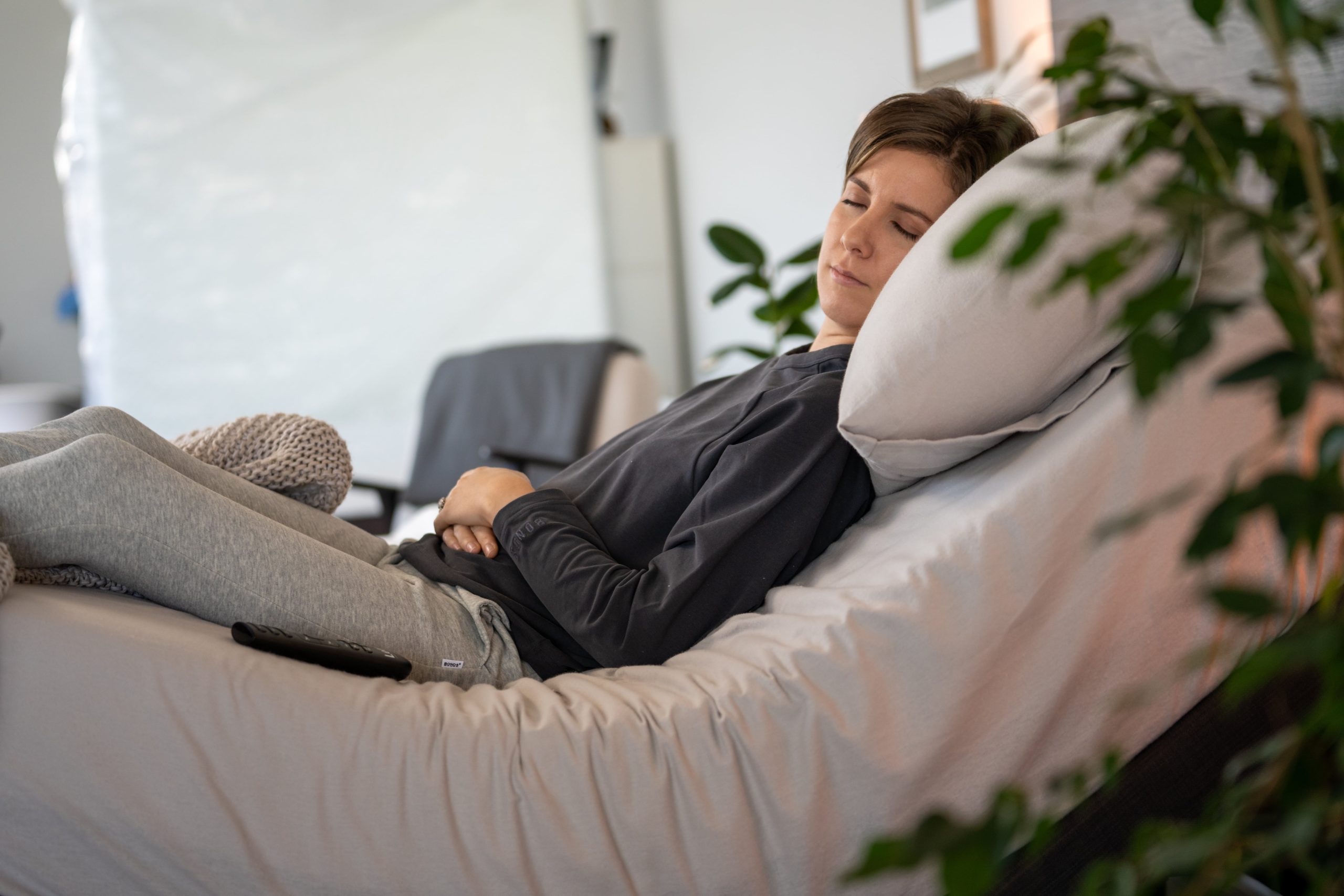
An adjustable bed can actually help your NREM sleep by letting you find that perfect position where everything feels just right. A slight elevation of your head or knees can improve blood flow, take pressure off certain areas, and help you stay in those deeper sleep stages longer.
When your sleep surface properly supports your body and minimises disturbances, you’re much more likely to get through complete sleep cycles and wake up feeling genuinely refreshed.
Letto’s adjustable beds and mattress bundles are designed for exactly this: comfortable alignment and easy position changes, with fast delivery from Sydney and Melbourne and free curbside delivery in QLD and NSW.
The bottom line
NREM sleep is basically your body’s nightly maintenance program, handling everything from physical repair to memory filing. By focusing on good sleep habits, creating a comfortable sleep environment, and investing in quality sleep products, you can improve both how much deep sleep you get and how well it works for you.
Start with consistent sleep timing, then gradually improve your sleep environment and bedtime routine. Remember, if sleep problems stick around despite these changes, it’s worth talking to a healthcare professional who can give you personalised advice.
Good sleep isn’t a luxury; it’s essential for staying healthy and feeling your best. By understanding and optimising your NREM sleep, you’re investing in better recovery, sharper thinking, and an overall better quality of life.
Best Mattress for Lower Back Pain in Australia: What to Look For
In this blog Lower back pain is common in Australia, and the wrong mattress can make nights feel much longer than they should. The right mattress setup can ease discomfort, improve alignment, and support more restful sleep. Learn what mattress firmness really means, how to keep your spine supported, and why pressure relief matters for different body types and sleep positions. Compare the main mattress types with their pros and cons, and see how Letto mattresses and adjustable bases are designed to encourage healthy alignment without the hard sell. You’ll also find simple tips on sleeping positions and bedtime habits to help you drift off more easily and wake up with less stiffness.
Let’s talk about that aching back (And those sleepless nights)
Here’s the reality: if you’re reading this at 2 am because your back is killing you, you’re definitely not alone. Lower back pain is practically an epidemic in Australia, and the Australian Institute of Health and Welfare says back problems are one of our most common health issues. Can you guess what makes it worse? Spending eight hours every night on the wrong mattress.
You’ve probably heard this before. “Get a better mattress,” they say. But what does that actually mean when you’re standing in a showroom feeling overwhelmed, or scrolling through endless online reviews at midnight?
Here’s the thing: your mattress isn’t just about comfort. When you have chronic back pain, it’s literally your medicine cabinet. A good mattress can be the difference between waking up ready to tackle the day versus hobbling to the bathroom like you’ve aged 20 years overnight.
The best part? You don’t need a degree in sleep science to figure this out. This guide will walk you through everything you actually need to know to find the best mattress for lower back pain.
What’s actually happening to your spine right now?
Picture your spine like a stack of building blocks. During the day, gravity and movement keep everything in line. But at night? That’s when things get interesting.
If your mattress is too soft, your hips sink down while your shoulders stay put. Your spine curves like you’re doing some weird yoga pose, except you’re stuck there for eight hours. Too firm? Your spine stays rigid while pressure builds up at your shoulder blades and tailbone. Either way, the muscles around your spine are working overtime, trying to hold everything together while you’re supposed to be resting.
This is where people with back pain get stuck in a vicious cycle. Poor sleep means more pain. More pain means worse sleep. And round and round it goes.
When your spine isn’t properly aligned, the surrounding muscles never fully relax. They’re in a constant state of micro-tension, which means they can’t repair and recover like they should. Your nervous system stays on high alert instead of shifting into that deep, restorative sleep mode your body desperately needs.
The NSW Agency for Clinical Innovation puts it perfectly: while sleep won’t cure your back problems, getting it wrong can absolutely make everything harder. But here’s the encouraging bit: get it right, and you might be surprised how much better you feel.
Quick reality check, though. If you’re dealing with severe pain, sudden changes, or anything that’s got you genuinely worried, skip the mattress shopping for now and have a chat with your GP. Trust your instincts on that one.
What your back actually needs
Forget everything you think you know about mattresses for a minute. Let’s start from scratch with what actually matters when you’re trying to support your spine properly.
Firmness isn’t a one-size-fits-all situation
You might think you need the firmest mattress possible. Wrong. Most people with lower back pain actually do best with medium to medium-firm support. Think of it like a supportive hug, not a plank of wood.
Your body has curves. Your spine has natural S-shaped curves that act like shock absorbers and distribute weight efficiently. A mattress that’s too firm won’t accommodate these curves, forcing your muscles to work all night. Too soft, and those curves get exaggerated, creating strain in different areas.
Your spine has curves; embrace them
When you lie down, your mattress should follow your body’s natural shape. Your ears, shoulders, and hips should form a roughly straight line, but your spine should still have those gentle S-curves it’s designed to have. It’s not about being perfectly flat; it’s about being naturally aligned.
Zone support is where the magic happens
Your hips are heavier than your shoulders. Your lower back needs more support than your legs. A good mattress recognises this and gives different parts of your body different levels of support. It’s like having a custom-fitted suit, but for sleeping.
Pressure relief that actually relieves pressure
If you wake up with numb arms or pins and needles, your mattress is cutting off circulation at pressure points. This is especially crucial if you’re a side sleeper, as your shoulders and hips take all the weight, so they need enough cushioning to keep blood flowing.
The sleep trial is your best friend
It can take 2-4 weeks for your body to adjust to a new mattress. Your muscles have muscle memory from your old sleep surface. That’s why Choice Australia recommends at least 30 nights, though 90+ nights is even better.
Quality matters more than marketing
Look for certifications like CertiPUR-US for foams, ask about foam density, and don’t get swayed by fancy names. A mattress that starts sagging after a year isn’t doing your back any favours.
Breaking down your options (Without the sales pitch)
Let’s be completely honest about mattress types: there’s no perfect option that works for everyone. But understanding what each type actually does can help you figure out what might work for your specific situation.
The body hugger
Memory foam moulds to your exact shape and holds it there. Fantastic for pressure relief, especially if you’re a side sleeper who needs your shoulders and hips cushioned. The benefits: excellent pressure point relief, good motion isolation, and that feeling of being gently supported everywhere.
The trade-offs? Some people feel like they’re sleeping “in” the mattress rather than “on” it. The foam can trap heat, and if you move around a lot at night, you might feel stuck. If you have chronic back pain but sleep hot, look for gel-infused or plant-based foams that breathe better.
The compromise that actually works
A Hybrid has pocket springs plus comfort layers. You get the support and bounce of springs with the pressure relief of foam. They sleep cooler than all-foam mattresses and many offer zoned support, firmer springs in the centre for your torso and softer springs at the head and foot for pressure relief.
The quality range is huge, though. Look for at least 2-3 inches of quality comfort layers and a substantial coil count (800+ for a queen-size mattress is generally recommended).
The natural wonder
Latex is bouncy, breathable, and lasts forever. It supports your spine while giving pressure relief, and responds quickly when you move around at night. Natural latex is also antimicrobial and dust mite resistant.
The downsides? Heavy, usually expensive upfront (though the longevity can make them cost-effective), and some people don’t like the bouncy feel. If you’re used to memory foam, latex might feel too “active.”
Traditional innerspring: The old faithful (With issues)
Springs give you great airflow and that classic “sleeping on top” feeling. But here’s the problem for people with back pain: most traditional innerspring mattresses don’t have enough pressure relief. Without quality comfort layers on top, you’ll likely feel pressure at your hips and shoulders.
The Australian Commission on Safety and Quality in Health Care makes an important point: sleep quality directly impacts how we experience and manage pain. Your mattress choice isn’t just about comfort; it’s about giving your body the best chance to heal and rest.
Your sleep position changes everything
How you sleep completely changes what kind of mattress will work for you, and understanding your sleeping position is crucial for finding the best mattress for lower back pain.
Back sleepers need medium-firm support that maintains their lower back’s natural curve. When you lie on your back, there should be a small gap between your lower back and the mattress; that’s your natural lumbar curve, and it needs to be supported, not flattened. Too soft, and your hips sink. Too firm and you’ll get pressure points.
Side sleepers (about 70% of the population) need enough give at their pressure points to keep their spine aligned. You need medium support plus good pressure relief. Your mattress needs to be soft enough that your shoulder and hip can sink in slightly, but supportive enough that your waist doesn’t sag.
Pro tip: If you wake up with a numb arm, your mattress is too firm. If you wake up with back pain, it might be too soft.
Stomach sleepers, sleeping on your stomach is tough on your back and neck. If you absolutely must sleep this way, you need a firmer mattress to prevent your hips from sinking. Use a thin pillow or no pillow at all.
Your weight matters too. Under 60kg? That “medium-firm” mattress might feel like concrete. Over 100kg? You typically need firmer support to prevent excessive sinking. This isn’t about right or wrong, it’s about physics.
Choice Australia’s buying guide nails it: test mattresses in your actual sleeping position. Spend at least 10-15 minutes lying down in your preferred position.
What your spine really needs
Your spine isn’t just one bone; it’s 33 individual vertebrae connected by discs, ligaments, and muscles. During the day, gravity compresses these discs. At night, when you’re lying down, the discs can rehydrate and expand again, but only if your spine is properly aligned.
When your spine is properly supported during sleep:
Disc rehydration: The discs between your vertebrae can rehydrate, maintaining their shock-absorbing function
Muscle recovery: The muscles supporting your spine can finally relax and recover
Nervous system reset: Your nervous system processes pain signals differently during deep sleep
Inflammation reduction: Deep sleep is when your body does the most cellular repair
Your mattress is crucial, but it’s not the only piece of the puzzle:
Pillows matter
Your pillow needs to work with your mattress to maintain spinal alignment. Back sleepers need a thinner pillow. Side sleepers need a thicker pillow to fill the gap between their neck and shoulder. Stomach sleepers should use the thinnest pillow possible.
Consider an adjustable base
Being able to elevate your upper body slightly can reduce pressure on your lower back. Some people find that sleeping in a slightly reclined position is the only way they can get pain-free sleep.
Temperature control is crucial
Heat can increase inflammation and make pain worse. Keep your bedroom cool (18-20°C) and consider breathable bedding materials.
Simple daily habits
Wind down properly, keep moving during the day (even a 10-minute walk helps), master pillow placement (between knees for side sleepers, under knees for back sleepers), and know when to get medical help.
Pain that radiates down your leg (especially below the knee)
Numbness or weakness in your legs or feet
Pain accompanied by fever
Loss of bladder or bowel control
Pain following an injury
These could be signs of more serious conditions that need medical treatment, not just a new mattress.
Making your decision
Here’s your step-by-step approach:
Assess your current situation: What specifically bothers you about your current sleep?
Identify your sleep position and body type: Be honest about how you actually sleep
Set a realistic budget: Calculate cost per night over 8-10 years
Research companies with good sleep trials: at least 90 nights is ideal
Test it properly: Spend real time lying in your actual sleep position
At Letto, the mattresses are designed around stable lumbar support, targeted pressure relief, and the flexibility to find your perfect position. They use zoned support technology, firmer where you need stability (your core and hips) and softer where you need pressure relief (shoulders and legs). Their sleep trials give you plenty of time to make sure it’s right for your body, with fast delivery from Sydney and Melbourne, plus free curbside delivery in Queensland and NSW.
Ready to transform your sleep and ease your back pain?
When you’ve been dealing with lower back pain for months or years, it’s easy to think this is just how things are now. But the right combination of mattress support, good sleep habits, and proper spinal alignment can genuinely transform how you feel every morning.
The best mattress for lower back pain is the one that supports your spine’s natural curves, relieves pressure where you need it, and lets you move comfortably throughout the night. Whether you’re a side sleeper who needs targeted hip and shoulder relief or a back sleeper looking for stable lumbar support, the right setup can help break that cycle of poor sleep and increased pain.
You don’t have to accept restless nights and morning stiffness as your new normal. Letto’s mattresses combine the science-backed principles we’ve discussed, zoned support for proper spinal alignment, targeted pressure relief where you need it most, and quality materials that won’t leave you back where you started in a year’s time.
With generous sleep trials, free delivery across Queensland and NSW, and no-fuss returns, there’s no reason to spend another night on a mattress that’s working against your body instead of with it.