
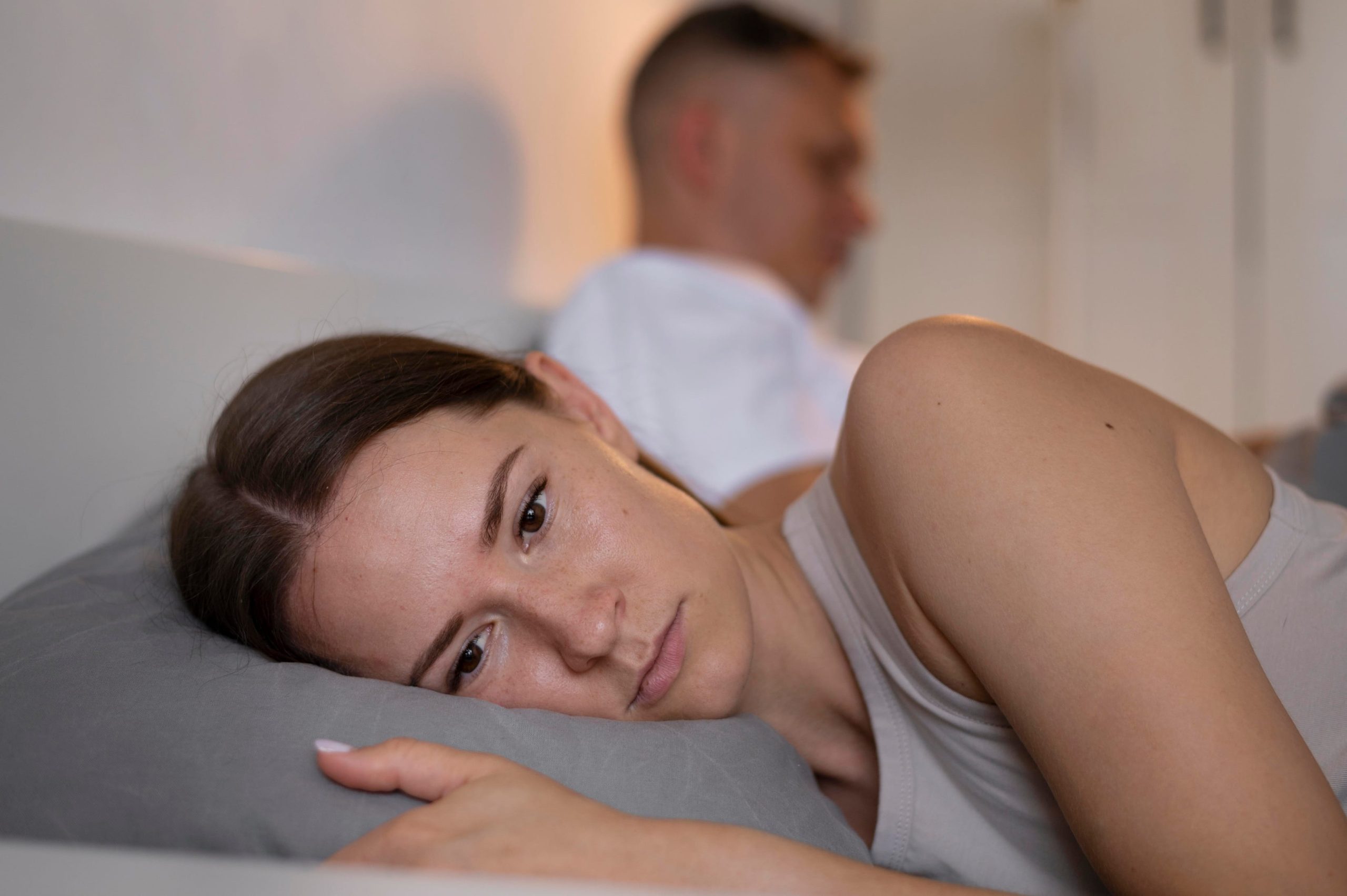
The Rise of the “Sleep Divorce”: How a Split King Adjustable Bed Can Save Your Relationship (and Your Sleep)
The Quick Version
- A sleep divorce is when couples choose to sleep separately to get better rest. The most recent American Academy of Sleep Medicine survey found that nearly one in three US adults have tried it, and Australian data suggests 17% of partnered Australians already sleep alone.
- Snoring is the most common trigger. Around 40% of Australian men and 30% of women snore on at least some nights, according to the Sleep Health Foundation.
- Poor sleep doesn’t just make you tired. Research from UC Berkeley found that even one bad night reduces empathy and increases conflict between partners the following day.
- Sharing a bed has measurable benefits, too. A peer-reviewed study in Frontiers in Psychiatry found couples who slept together had about 10% more REM sleep and more synchronised sleep cycles than when they slept alone.
- A Split King adjustable bed lets each partner control their own side independently, addressing the most common reasons couples end up in separate rooms without sacrificing the closeness of a shared bed.
Disclaimer: This article provides general information only and is not intended as medical advice. If you or your partner are experiencing persistent snoring, breathing pauses during sleep, or chronic sleep difficulties, please consult a qualified healthcare professional. In Australia, you can speak to your GP or call Healthdirect on 1800 022 222.
If you’ve spent the last few months sleeping on the edge of your own bed, one elbow wedged against the headboard, trying to get away from your partner’s snoring or restless legs, you already know what a sleep divorce feels like. You just might not have had a name for it.
Despite its dramatic name, a sleep divorce doesn’t signal the end of a relationship. The term describes a deliberate, mutual decision by partners to sleep in separate beds or separate rooms to get better rest. Many sleep experts and therapists actually prefer the term “sleep separation” or “sleep alliance”, arguing the word “divorce” attaches unnecessary stigma to what is, at its core, a practical health decision.
The practice has gained significant mainstream attention over the past few years, and the numbers are hard to ignore. The American Academy of Sleep Medicine’s 2025 survey of more than 2,000 US adults found that nearly one in three (31%) had opted for a sleep divorce to accommodate a partner. Adults aged 35 to 44 were the most likely to sleep apart (39%), while those 65 and older were least likely (18%). An earlier AASM survey also revealed a generational divide: 43% of Millennials reported sleeping apart, compared to 33% of Gen X and 22% of Baby Boomers.
Australian-specific data on separate sleeping arrangements is harder to pin down, but a Sleep Health Foundation survey found that 17% of partnered Australians currently sleep alone, while 22% said they would prefer to. A 2023 Real Insurance survey of around 1,200 Australians found that among those whose partner had sleeping issues, 38% had tried sleeping in separate rooms, and 40% described the disruption as a strain on the relationship.
The most comprehensive recent data comes from ResMed’s 2026 Global Sleep Survey, developed in partnership with the Sleep Health Foundation and sampling 1,500 Australians as part of a 30,000-person global study. It found that 80% of people in relationships said their sleep was disrupted by their partner, with snoring or loud breathing the leading cause. Globally, 18% of couples now permanently sleep apart. That’s nearly one in five couples who’ve decided separate rooms are the only way either of them can rest.
The trend isn’t uniquely Western, either. In Japan, sleeping separately has been culturally normalised for decades, often linked to futon culture, co-sleeping with children, and staggered work schedules. What’s changed isn’t the practice itself. What’s changed is that more couples in Australia, the US, and the UK are willing to talk about it openly rather than treating it as something to be embarrassed about.
Why Couples End Up in Separate Beds

Most couples don’t arrive at a sleep divorce overnight, instead it starts out small. A nudge at 2 am. A polite mention of the snoring. A slow migration toward opposite edges of the mattress. Then one night, someone grabs a pillow and heads for the couch, and what was supposed to be temporary becomes the new normal.
The frustrations that push couples apart tend to fall into a few predictable categories, and if you recognise yourself in any of them, you’re far from alone.
Snoring (and What It Might Be Hiding)
Snoring is the single most cited reason for separate sleeping arrangements, and in Australia, it’s extremely common. The Sleep Health Foundation estimates that about 40% of men and 30% of women snore on at least some nights, with around 15% snoring on most nights. The Sleep Health Foundation National Survey found that 24% of Australian men and 17% of women reported frequent, loud snoring. Among those loud snorers, 70% also reported daytime impairment or other sleep-related symptoms.
The ResMed 2026 survey puts the impact on partners into sharp focus: 43% of Australian women said their partner’s snoring or breathing disrupted their sleep, compared to 28% of men reporting the same. If you’re the one lying awake while your partner sleeps soundly beside you, that statistic probably doesn’t surprise you at all.
But snoring isn’t always harmless. Loud, frequent snoring can be a warning sign of obstructive sleep apnoea (OSA), a condition where the airway repeatedly narrows or collapses during sleep, cutting off normal breathing. Only about 8% of Australian adults report a diagnosed case of OSA, yet true prevalence is estimated at around 20%, suggesting the majority of cases remain undiagnosed. For a deeper understanding of how snoring relates to sleep quality and what to look for, it helps to know the warning signs. If your partner’s snoring includes gasping, choking, or long pauses in breathing, a conversation with a GP or sleep specialist should come before a conversation about separate beds.
Different Sleep Schedules
One partner is a natural early riser; the other doesn’t feel human until 10 pm. One works shifts; the other keeps standard hours. These differences in sleep schedules create a nightly negotiation that rarely ends well for either person. The partner who goes to bed first gets woken when the other climbs in. The early riser’s alarm disrupts the night owl’s last sleep cycle, often pulling them out of the deep sleep stages the body relies on for physical restoration.
Over time, these micro-disruptions add up to chronic poor sleep for both. Understanding how your circadian rhythm works can help explain why these schedule clashes feel so disruptive: your body’s internal clock governs when you feel alert and when you feel drowsy, and it’s not something you can easily override with willpower alone.
It’s nobody’s fault. But that doesn’t make the exhaustion any easier to live with.
Mattress Firmness Disagreements
This one sounds trivial until you’re living it. One partner needs firm support for a bad back; the other finds anything firmer than a cloud unbearable. On a traditional shared mattress, someone always compromises, and compromise in this context usually means neither person sleeps well.
Research published in The Lancet found that a medium-firm mattress significantly outperformed a firm mattress for people with chronic lower back pain over 90 days. The “right” firmness isn’t universal; it depends on body weight, sleeping position, and existing health conditions. When two people with different needs share one sleep surface, improved sleep quality for one often means worse sleep for the other. If your mattress is also past its best, the problem gets worse. Our guide on when to replace a mattress covers the signs worth watching for.
Movement Disturbance
Every time one partner rolls over, gets up for the bathroom, or shifts position, the other person’s sleep is disrupted. Sleep researchers call these micro-awakenings: brief disturbances that fragment your sleep architecture (the pattern of sleep stages your brain cycles through each night) without you necessarily remembering them the next morning. The cumulative effect is reduced time in the deep and REM stages where the body does its most important repair work.
For couples where one partner has restless legs syndrome or simply moves frequently, the impact on the other person’s sleep environment can be substantial. You might not remember waking up six times. But your body does.
What Poor Sleep Actually Does to a Relationship
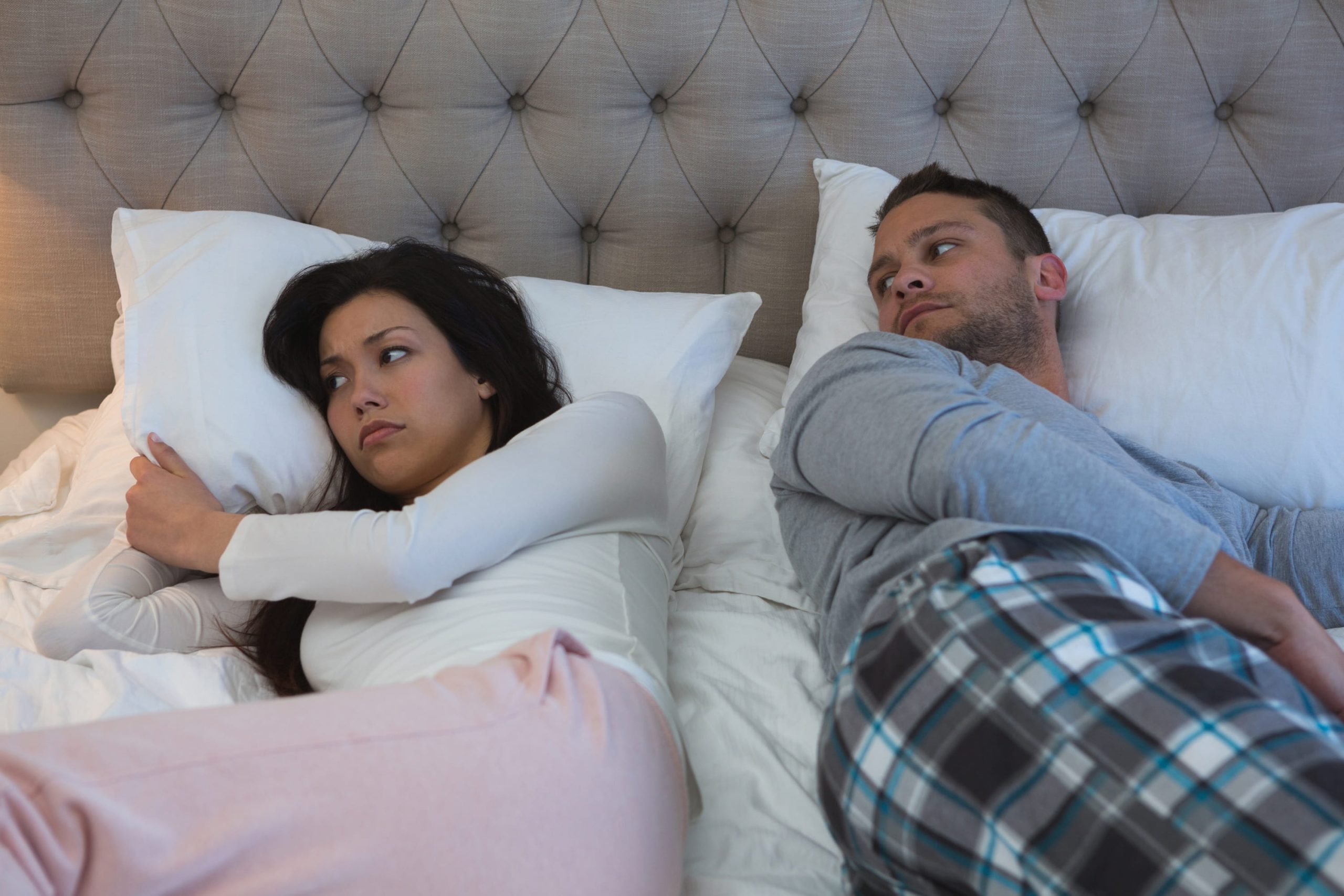
This is where things get harder to talk about, because the effects of sleeping badly go well beyond feeling tired. When you’re running on broken sleep, night after night, it changes who you are as a partner. Not because you’re a bad person, but instead because your brain is working against you.
Research published in Current Biology found that after a night of total sleep deprivation, participants showed a 60% increase in amygdala reactivity to negative emotional stimuli. The amygdala is the part of the brain that detects threats, and when it becomes hyperactive, neutral comments start sounding like attacks. A partner’s innocent question about the dishes becomes a provocation. Meanwhile, the prefrontal cortex, the part of the brain responsible for rational thinking and emotional control, loses its connection to the amygdala when you’re sleep-deprived. It’s like your emotional brakes stop working.
UC Berkeley psychologist Amie Gordon has studied the relationship between sleep and romantic partnerships extensively. Her research with Serena Chen, published in Social Psychological and Personality Science, found that participants reported more conflict following nights of poor sleep. In a lab setting, when even one partner slept badly, both showed reduced empathic accuracy (the ability to read and understand the other person’s emotions) during a recorded conflict discussion, a lower ratio of positive to negative emotions, and less successful conflict resolution. The effects weren’t explained by stress, depression, or general relationship dissatisfaction. Sleep itself was the variable.
A randomised study published in Affective Science went further, assigning 30 couples to either a night of total sleep deprivation or normal sleep. The sleep-deprived couples had higher cortisol (the body’s main stress hormone) levels during a conflict discussion and reported less positive emotions both before and after the disagreement. This was causal evidence, not just correlation: poor sleep directly worsened how couples handled conflict.
As Gordon herself put it: “Poor sleep may make us more selfish as we prioritise our own needs over our partner’s.”
If that resonates, it’s not a character flaw. It’s biology. And understanding that can actually help, because it means the problem has a solution that doesn’t require couples therapy. Over weeks and months, the pattern compounds. Chronic exhaustion makes partners less patient, less generous in their interpretations of each other’s behaviour, and less capable of the emotional repair work that keeps relationships healthy. Research consistently shows that sleep and mental health are deeply intertwined, and that includes the health of your closest relationships. Australian relationship counsellors at The Hart Centre describe sleep quality as “one of the strongest predictors of next-day relationship satisfaction.”
The arguments that feel like they came out of nowhere, the resentment that builds over small things, the feeling that your partner just doesn’t understand you anymore: sometimes, the root cause isn’t the relationship; it’s the sleep.
Why Sleeping Separately Isn’t Always the Answer
Given everything above, it might seem obvious: just sleep apart and fix the problem. And for some couples, separate sleeping arrangements do help. A Sleep Foundation survey found that people who maintained a sleep divorce reported sleeping an average of 37 extra minutes per night compared to when they shared a bed. That’s significant, especially when even small amounts of accumulated sleep debt can affect mood, focus, and health over time.
But there’s a cost, and it’s not just emotional.
A peer-reviewed study published in Frontiers in Psychiatry used dual simultaneous polysomnography (the gold standard for measuring sleep, where both partners are monitored at the same time) to compare couples’ sleep when sharing a bed versus sleeping apart. When sleeping together, couples showed about 10% more REM sleep, less fragmented REM periods, and significantly longer stretches of uninterrupted REM. REM sleep is the stage most closely linked to emotional regulation, memory, and creative problem-solving, so losing it isn’t trivial. Their sleep stages also synchronised more closely, and this synchronisation correlated positively with how deeply the partners rated their relationship. (The study was small, just 12 couples, so these findings are preliminary, but a larger follow-up analysis supported the REM finding.)
The researchers proposed a hypothesis they called a “positive feedback loop”: emotional closeness helps stabilise REM sleep, and better REM sleep in turn supports the emotional processing and social cognition that strengthen relationships. Sleeping apart may break that loop.
There’s also the practical reality that about one in four people who try a sleep divorce eventually go back to sharing a bed, most commonly because they missed the physical closeness. Meanwhile, the ResMed 2026 survey found that among couples who do sleep separately, 31% reported improved relationships but 30% felt theirs had worsened. It’s not a guaranteed fix.
Harvard Health notes that couples considering separate sleeping arrangements need to be deliberate about maintaining intimacy, recommending scheduled time together before separating for the night and ensuring both sleeping spaces are equally comfortable.
Sleep researcher Alix Mellor from Monash University’s Turner Institute suggests framing it as a flexible arrangement rather than a permanent one. Some of her clients use “visiting rights,” where one partner comes into the other’s bed for connection time before moving to sleep separately. The point is that choosing to sleep separately doesn’t have to mean abandoning closeness entirely, but it does require effort to maintain what sharing a bed provides naturally.
How a Split King Adjustable Bed Addresses the Real Problems
For most couples dealing with sleep conflicts, the choice isn’t binary. You don’t have to pick between suffering through disrupted nights and retreating to separate rooms. There’s a practical middle ground: a Split King adjustable bed.
A Split King configuration places two independent mattresses and two independent adjustable bases inside a single King-sized bed frame. From the outside, it looks and feels like a regular shared bed. Underneath, each side operates independently.
This matters because it directly addresses each of the common sleeping arrangement conflicts without requiring a sleep divorce.
Snoring and Breathing Issues
Head elevation is one of the most studied non-pharmaceutical approaches to reducing snoring severity. A peer-reviewed study published in Sleep and Breathing found that elevating the head of the bed by 7.5 degrees reduced the apnoea-hypopnoea index (a measure of how many times breathing is disrupted per hour) by approximately 32% in patients with obstructive sleep apnoea. Astudy in JMIR Formative Research found that sleeping at an incline reduced snoring duration and decreased nighttime awakenings. With a Split King, the snoring partner can elevate their head to open their airway while the other sleeps completely flat. No compromise required.
Different Schedules and Preferences
When one partner wants to read with the head raised at 11 pm and the other needs to be asleep by 9:30, a Split King makes both possible in the same bed. Each side adjusts independently, so different bedtimes and wake-up routines don’t have to mean different bedrooms. For couples looking to improve their wind-down habits, a solid bedtime routine can also help both partners fall asleep faster, even if they’re heading to bed at different times.
Firmness Disagreements
On a standard King mattress, the entire surface is one firmness level. With a Split King, each side can have its own mattress with its own firmness. There’s no negotiation, no compromise, and no resentment about whose back pain takes priority.
Movement Transfer
Because each side sits on its own base, movement on one side doesn’t transfer to the other. Rolling over, getting up, adjusting position: none of it disturbs the other partner. This is the same problem that drives couples to sleep in separate beds, solved without leaving the room.
How Letto Can Help
If anything in this article has resonated, or if you’ve recognised yourself or your relationship in these patterns, it’s worth knowing that meaningful change doesn’t have to be complicated.
At Letto, we designed our adjustable bed range specifically for Australians dealing with these exact problems. Our Split King,Split Queen, and Split Super King configurations give each partner full independent control of their side of the bed, including head and foot elevation, built-in massage functions, and one-touch zero gravity positioning.
The zero gravity position is based on NASA’s research into how the body naturally rests in a weightless environment. It distributes weight more evenly, reduces pressure points, and opens the upper airway, which can help with both snoring and the physical discomfort that keeps people tossing through the night. If you’re curious about whether the investment makes sense for your situation, our guide on whether adjustable bed bases are worth it covers the practical considerations. Our Anti-Snore preset gently elevates the head of the bed to encourage better airflow, a practical step backed by the head-elevation research referenced above.
Our Letto mattresses feature reversible firmness. By flipping the internal foam layer, each sleeper can switch between Medium-Soft and Medium-Firm without replacing the mattress. That means two partners can each choose the support level that suits their body, and change it as their needs shift over time.
Every Letto mattress is OEKO-TEX Certified and uses cooling gel-infused memory foam with a breathable cover, designed for Australian summers where heat can fragment sleep quality.
If you’re unsure where to start, our complete package deals pair mattresses with adjustable bases at a bundled price. We offer a 30 Night Comfort Guarantee, a 10-year warranty, and direct-to-door delivery across Australia from our Melbourne warehouse.
Want to understand why families across Australia trust Letto? Or prefer to talk it through? Get in touch with our team for a no-pressure conversation about what might work for you and your partner.
Better Sleep, Same Bed

The sleep divorce conversation isn’t really about beds. It’s about a tension most couples recognise: the desire to sleep next to the person you love versus the biological reality that their snoring, movement, or schedule is wrecking your rest.
For some couples, separate rooms will be the right call, at least for a while. For many others, the problem isn’t that they need to sleep apart. The problem is that their current sleeping arrangement doesn’t accommodate two different bodies with two different needs.
That’s not a relationship problem, it’s a logistics problem, and logistics problems have practical solutions.
Frequently Asked Questions
Is a sleep divorce bad for your relationship?
Not necessarily. Research shows that chronic poor sleep increases conflict and reduces empathy between partners, so sleeping separately to get better rest can actually improve relationship satisfaction. However, co-sleeping is associated with increased REM sleep and sleep-stage synchronisation in satisfied couples, and about one in four people who try sleeping apart return to sharing a bed because they miss the closeness. The ResMed 2026 survey found that among couples who sleep separately, 31% reported improved relationships but 30% felt theirs had worsened. The key is to address the underlying sleep problem rather than assuming separation is the only option.
How common is the sleep divorce trend in Australia?
Australian-specific research is limited, but a Sleep Health Foundation survey found 17% of partnered Australians sleep alone and 22% would prefer to. The ResMed 2026 Global Sleep Survey (which sampled 1,500 Australians) found 80% of people in relationships reported their sleep was disrupted by their partner, and 18% of couples globally now sleep apart permanently. In the US, the AASM’s 2025 survey found 31% of adults have tried some form of sleep divorce.
Can a Split King adjustable bed help with snoring?
Yes. Peer-reviewed research shows that head-of-bed elevation reduces the severity of snoring and breathing disruptions in people with obstructive sleep apnoea. A Split King configuration lets the snoring partner elevate their head independently while the other partner sleeps flat and undisturbed. This doesn’t replace medical evaluation for suspected sleep apnoea, but it is a practical step that can improve the sleep environment for both people.
What is the Scandinavian Sleep Method?
The Scandinavian Sleep Method involves sharing one bed but using two separate duvets instead of a single shared blanket. It’s a centuries-old practice standard throughout Sweden, Denmark, Norway, and Germany. It eliminates blanket-stealing and allows each partner to regulate their own temperature. The AASM’s 2024 survey found that about 10% of Americans had tried it. While there’s no peer-reviewed study comparing it directly to sharing a duvet, the principle is sound: reducing disruption at the points where partners’ needs diverge.