
Overview
Feeling tempted by an afternoon snooze? You’re not alone. Whether you’re catching a quick power nap on the weekend or feeling the afternoon slump pull you towards the couch, napping is something most of us have contemplated, or regularly indulge in. But is napping healthy, or could this habit be doing more harm than good?
The answer isn’t as simple as yes or no. For some Australians, particularly older adults dealing with disrupted nighttime sleep, napping can feel like a necessary part of the day. For others, it might be interfering with their ability to get quality rest when it matters most, at night.
In this guide, we’ll explore the science behind napping, unpack when short naps can be beneficial, and help you understand when daytime sleep might be a sign of something that needs attention. Most importantly, we’ll give you practical tips to make napping work for you, not against you.
Why that afternoon slump hits like a freight train
Picture this: it’s 2:30 PM on a Wednesday. You’ve had lunch, you’re sitting at your desk (or perhaps on the couch), and suddenly your eyelids feel like they weigh ten kilos each. Your brain has turned to fog, and all you can think about is finding somewhere, anywhere, to close your eyes for just a few minutes.
Sound familiar? You’re experiencing what scientists call the post-lunch dip, and it’s not just about what you had for lunch. Between work demands, family responsibilities, and the constant ping of notifications, many Australians simply aren’t getting enough quality sleep at night. When exhaustion hits mid-afternoon, a nap feels like the perfect solution, maybe even the only solution.
But here’s where it gets interesting. As The Sleep Foundation reveals, there’s a natural dip in alertness that occurs in the early to mid-afternoon, typically between 1:00 PM and 4:00 PM. So that irresistible urge to nap? It’s not laziness, it’s your body’s circadian rhythm at work.
The relationship between napping and health is complex, though. Brief daytime rests can sharpen your mind, lift your mood, and even help your heart. But long or poorly timed naps can leave you groggy, disrupt your nighttime sleep, and signal underlying health concerns. Understanding the when, why, and how long of napping can make all the difference between waking up refreshed and feeling worse than before you closed your eyes.
When short naps work wonders

Your brain actually gets bigger (Yes, really)
Here’s one of the most surprising benefits of napping: it doesn’t just help you feel better in the moment; it may even change your brain structure. For instance, a 2023 study published in Psychology Today found a causal link between regular daytime napping and larger total brain volume. We’re not talking about a tiny, insignificant difference either. Analysis from sleep experts at Cymbiotika suggests that increased brain size associated with habitual napping could potentially delay age-related cognitive decline by 3 to 6.5 years.
Think about that for a moment. A simple afternoon nap could buy you years of better cognitive function. That’s not just impressive, it’s life-changing.
But the benefits don’t stop at brain size. If you’ve ever felt sharper after a brief afternoon rest, you’re not imagining it; you’re experiencing real neurological benefits in real-time. Studies indicate that napping after learning something new leads to significantly better information retention. It’s like pressing the save button on your brain’s hard drive before something important gets deleted.
The performance benefits are well-documented. Research cited by Extracted highlights a famous NASA study which showed a short nap could improve task performance by 34% and alertness by 54%, numbers that would make any productivity guru jealous. And when you consider that a 2019 Australian study linked inadequate sleep to a higher incidence of workplace mistakes, the case for strategic napping becomes even stronger.
What’s actually happening when you nap
During those precious minutes of shut-eye, your brain is busy working through different stages of sleep. In Stage 1, as sleep health experts at Cymbiotika explain, you’re in light sleep, that transitional phase from wakefulness where your muscles relax and your heart rate slows. Move into Stage 2, and that’s where the magic happens for a power nap. Here, as Mattress Clarity explains, your body temperature drops slightly, and brainwave patterns called sleep spindles emerge. This stage is key for a power nap, as Sealy Australia points out that these sleep spindles are particularly effective for improving procedural motor skills and consolidating the memories you’ve formed throughout the day.
These learning benefits start young. Research featured in Parent magazine demonstrates that for infants, napping is essential for a high-level form of learning known as “abstraction”, basically, the ability to understand patterns and concepts. But adults benefit enormously too, especially when it comes to NREM sleep processes that help lock in new information. Studies indicate that naps involving deep sleep are particularly beneficial for declarative memory, recalling facts and events you’ve learned.
If you let yourself nap for 90 minutes, you’ll complete a full sleep cycle, including REM sleep, that stage associated with dreaming that’s vital for emotional processing, memory consolidation, and creativity. Sleep research confirms REM sleep is typically only reached in naps of 90 minutes or more, making it a rare but valuable component of longer daytime sleeps. But here’s the catch: longer naps come with trade-offs we’ll get to shortly.
The chemistry of feeling better
Ever notice how everything feels more manageable after a good rest? There’s solid science behind that feeling. Throughout your day, as research published in the National Center for Biotechnology Information explains, a byproduct of energy consumption called adenosine builds up in your brain, creating what researchers call “sleep pressure.” The more adenosine that accumulates, the groggier and more desperate for rest you feel. Napping helps clear that accumulated adenosine, reducing sleepiness and essentially giving your brain a fresh start for the afternoon.
At the same time, napping gets to work on your stress levels. Sleep experts at Cymbiotika demonstrate that napping can reduce levels of cortisol, the stress hormone that leaves us feeling frazzled and on edge. Lower cortisol means you feel calmer, less impulsive, and less prone to frustration. The Sleep Foundation notes that for those dealing with sleep deprivation, even a brief nap can relieve stress and bolster the immune system, and Psychology Today confirms that a daytime nap can actually help reset some of the immune alterations that occur due to a poor night’s sleep.
This is particularly relevant as we age. The Sleep Health Foundation Australia and National Seniors reveals your body’s production of melatonin, the sleep-promoting hormone, tends to decrease with age. This is one reason why many older Australians find their nighttime sleep becoming lighter and more fragmented. Between 20% and 60% of older Australians take a nap on most days, often to compensate for this shift. Understanding your body’s changing needs is part of learning how sleep works as you age.
Performance boosts you can actually feel
Australian authorities recommend short naps for drowsy drivers to restore alertness, and for good reason. The Sleep Health Foundation Australia, for instance, notes that a 15-20 minute rest when you’re feeling sleepy behind the wheel can quite literally save lives. They highlight this as a proven, life-saving measure, and it’s something every Australian driver should know.
The benefits extend well beyond driving safety. Further analysis from The Sleep Foundation and Sleep Health Foundation Australia demonstrates that naps enhance perception, attention, focus, and reaction time. This all adds up to you feeling more alert. Whether you’re operating machinery, making important decisions, or just trying to get through the afternoon without snapping at your family, that boost in alertness makes a real difference.
Here’s where napping gets particularly clever: research published in the National Library of Medicine found that very brief naps of just 5-15 minutes can produce almost immediate improvements in alertness that last for 1 to 3 hours. Scientists have proposed a biological model called “Process O,” which suggests that the simple act of sleep onset triggers a rapid reset of the brain’s “sleep-switch” mechanism. This is different from the slow clearance of adenosine during deep sleep; it’s more like hitting a quick reset button than doing a full system reboot.
The heart health connection (It’s complicated)
Sleep experts at the Sleep Foundation point to an observational study showing that napping once or twice a week was associated with a lower risk of cardiovascular events. That sounds great, right? Well, yes and no. Like most things in health, the relationship between napping and your heart isn’t straightforward.
The key word there is “once or twice a week.” Occasional, moderate napping seems protective. But, and this is crucial, frequent daily naps, especially long ones, tell a very different story. Which brings us to the other side of the coin.
When naps become your worst enemy

Waking up feeling like you’ve been hit by a bus
We’ve all been there: you wake up from a nap feeling worse than before you fell asleep. Disoriented, foggy, maybe even a bit cranky. Your mouth tastes like you’ve been chewing on cotton wool, and you can’t quite remember what day it is or why you thought napping was a good idea. Welcome to sleep inertia. Sleep experts at Sealy Australia and Mattress Clarity describe this as the physiological state of grogginess and disorientation immediately after waking that nobody wants.
This happens primarily when you wake up directly from Stage 3 deep sleep. Your body temperature has dropped, your muscles are fully relaxed, and your brain has entered its deepest state of unconsciousness. While this is the most physically restorative phase, where your body repairs tissues (as noted by Cymbiotika and Sealy Australia), waking from it is jarring. All brilliant things, unless you’re suddenly yanked out of it by an alarm or someone knocking at the door.
When you’re pulled out of deep sleep, your system hasn’t had time to transition back to wakefulness. This is why studies from Mattress Clarity and the Sleep Health Foundation Australia confirm that naps longer than 30 minutes carry a much higher risk of inducing this grogginess, which can impair your performance for 30 minutes or more after waking. For older Australians, this disorientation can be particularly concerning if you need to get up and move around quickly; the confusion can increase the risk of falls or poor decision-making in those first groggy moments.
Stealing sleep from tonight (The vicious cycle)
Here’s the catch-22 of napping that nobody warns you about: experts from Mattress Clarity, the Sleep Health Foundation Australia, and the Mayo Clinic reveal that daytime sleep can reduce the “sleep pressure” you need to fall asleep at night. If you’ve ever taken a long afternoon nap and then found yourself staring at the ceiling at midnight, frustrated and wide awake, you’ve experienced this firsthand.
Think of sleep pressure like hunger. If you eat a massive late lunch, you’re not going to be hungry for dinner. Similarly, if you take a substantial nap in the late afternoon, you’re essentially “eating into” your night-time sleep appetite. According to Sealy Australia, the Sleep Foundation, and the Sleep Health Foundation Australia, the effect is most pronounced with long naps over 30 minutes or naps taken late in the afternoon, particularly after 3:00 PM.
The Australian health service, Healthdirect, takes a particularly cautious stance on this, recommending “Don’t nap” as their primary advice. If you must nap, they suggest limiting it to 20 minutes and advise staying awake for at least 4 hours before bedtime. It’s strict guidance, but it reflects a genuine concern: poor nighttime sleep leads to more napping, which leads to even worse nighttime sleep. Before you know it, you’re caught in a cycle that’s hard to break.
Understanding what sleep latency is, basically, how long it takes you to fall asleep, can help you identify whether your napping habit is interfering with your ability to drift off at night. If you’re regularly taking more than 30 minutes to fall asleep at bedtime, your afternoon naps might be part of the problem.
When your “Nap habit” is actually a red flag
This is perhaps the most important section of this entire article: the need for long and frequent naps may be a symptom of an underlying condition rather than a harmless habit. This isn’t just a guess; research from Henry Ford Health and Psychology Today demonstrates that the need for long and frequent naps may be a symptom of an underlying condition.
Let’s be clear. If you occasionally enjoy a 20-minute afternoon rest on the weekend, you’re fine. But if you’re needing 60-90 minute naps every single day just to function, or falling asleep unintentionally throughout the day, that’s a different story. In fact, The University of Sydney’s Charles Perkins Centre and Project Sleep note these could be signs of sleep disorders like obstructive sleep apnea or narcolepsy. This was reflected in research from PLOS ONE studying Australian university students, which found that frequent nappers reported significantly more problems with motivation and concentration; their napping was treating the symptom, not the cause.
Here’s where the statistics get sobering. Studies from the Sleep Foundation and Psychology Today confirm daily naps longer than 60 minutes have been associated with an increased risk of type 2 diabetes. In addition, research from Sealy Australia and the Sleep Foundation links long or frequent napping to higher risks of cardiovascular disease, obesity, and high blood pressure. Most recently, new research from SLEEP 2025 found that longer nap durations and greater variability in napping were associated with an increased risk of all-cause mortality in middle-to-older aged adults.
Before you panic, remember: correlation doesn’t equal causation. These associations often reflect that people who are already unwell need more daytime rest. Their bodies are crying out for sleep because something else is wrong: heart disease, undiagnosed diabetes, or a sleep disorder preventing restorative rest at night.
If you’re experiencing chronic sleep deprivation, needing increasingly long or frequent naps, or excessive daytime sleepiness despite adequate nighttime sleep, it’s time to talk with your GP. Sleep apnea alone affects roughly 5% of Australian adults, and many don’t even know they have it.
Your practical guide to napping smart (Without sabotaging your sleep)
Timing is everything (And science proves it)
Remember that natural dip in alertness we talked about earlier? That’s your window. Both The Sleep Foundation and Psychology Today identify the optimal time for napping as the early to mid-afternoon, typically between 1:00 PM and 3:00 PM. This timing aligns perfectly with your circadian rhythm’s natural lull, making it the most biologically opportune moment to catch some rest without interfering too much with your nighttime sleep.
As a common rule of thumb, Sealy Australia and the Sleep Foundation suggest you finish your nap at least 8 hours before your regular bedtime. So if you typically turn in at 10:00 PM, you’d want to wrap up your afternoon nap by 2:00 PM at the latest. Slightly differently, Healthdirect Australia recommends being awake for at least 4 hours before going back to bed to ensure you’re building up enough sleep pressure for proper nighttime rest.
Think of it this way: napping is like having a snack. There’s a right time of day for it (mid-afternoon when you genuinely need energy), and a wrong time for it (too close to dinner, or in this case, bedtime). Get the timing right, and it enhances your day. Get it wrong, and it ruins your appetite for the main meal.
Duration matters more than you think
The power nap (10-30 minutes)
The experts agree: short is sweet when it comes to napping. The Australian Sleep Health Foundation recommends 15-30 minutes for a “power nap,” while Healthdirect Australia advises a limit of 20 minutes, and Sealy Australia suggests 10-25 minutes. The consensus? Short is sweet when it comes to napping.
This short timeframe is popular for a reason. Experts from Cymbiotika, Mattress Clarity, the Sleep Foundation, and the Sleep Health Foundation Australia confirm this duration provides a boost in alertness and mood while minimising the risk of sleep inertia. You’re getting the benefits of light and moderate sleep, where your heart rate slows and beneficial sleep spindles occur, without diving into the deeper stages that leave you groggy. Think of it as a quick system refresh: you’re clearing adenosine, pressing reset on your alertness, and giving your brain a chance to consolidate recent memories.
The 90-minute cycle
This is the “full reset” option. Sealy Australia and Mattress Clarity demonstrates this duration aligns with one complete sleep cycle, allowing you to progress through all stages of sleep, including REM sleep, brilliant for memory consolidation and creative problem-solving.
But here’s the trade-off: a 90-minute nap poses a much greater risk of interfering with your nighttime sleep. Research from Johns Hopkins Medicine, for example, found that for older adults specifically, naps between 30 and 90 minutes were associated with better cognitive outcomes, but this needs to be carefully balanced against nighttime sleep disruption. If you’re going to attempt a longer nap, make sure it ends by early afternoon and monitor how it affects your nighttime sleep.
The “Nappuccino” trick
Here’s an interesting bio-hack: drink a cup of coffee immediately before taking a 15-20 minute nap. Because caffeine takes about 20 minutes to kick in, you fall asleep before it hits your system, get the restorative benefits from your power nap, then wake up just as the caffeine starts working. This clever technique is what The Sleep Health Foundation Australia and Extracted call a “nappuccino.”
The key is keeping it brief; if you sleep longer than 20-25 minutes, you’ll enter deeper sleep stages and wake up groggy, defeating the entire purpose.
Creating your perfect nap environment
It’s no surprise that, as Mattress Clarity and the Sleep Foundation confirm, the ideal sleep environment is cool, dark, and quiet. This applies just as much to daytime naps as it does to nighttime sleep. Your body doesn’t really care what time of day it is; it responds to environmental cues.
Healthdirect Australia recommends using tools like blackout curtains, an eye mask, earplugs, or a white noise machine to minimise distractions. Even in the middle of the afternoon, creating a cave-like environment tells your brain it’s okay to let go and rest. Some people worry that making their napping environment too comfortable will make it harder to wake up or will turn a 20-minute power nap into a two-hour sleep session. If that’s a concern, try setting an alarm across the room so you have to physically get up to turn it off.
Mattress Clarity notes it’s generally recommended to lie down or recline to allow your muscles to fully relax. However, here’s a clever tip from Sealy Australia: napping in a location other than your primary bed, perhaps on a sofa, a recliner, or in a spare room, can reduce the temptation to oversleep and helps your brain maintain a strong association between your bedroom and nighttime sleep. You want your bed to mean “nighttime, proper sleep,” not “any old nap whenever I feel like it.”
When napping isn’t optional

Shift workers
If you work irregular hours, night shifts, rotating shifts, or extended hours, napping isn’t a luxury. Instead, sources like The Sleep Foundation, Sleep Health Foundation Australia, and Healthdirect Australia describe it as a vital countermeasure to improve alertness and reduce potentially dangerous errors. The Sleep Health Foundation specifically highlights “preparatory napping” before events like night shifts or long drives. If you’re a shift worker, napping isn’t something to feel guilty about; it’s a necessary tool for managing the health impacts of working against your natural circadian rhythm.
Navigating age-related changes
As we age, night-time sleep often becomes lighter and more fragmented. Don’t worry, Henry Ford Health and the Sleep Health Foundation Australia explain this is completely normal; your body’s melatonin production decreases, which is why many older Australians find themselves napping more frequently. To help, research from the Woolcock Institute of Medical Research suggests short naps of 15 to 45 minutes can help improve alertness and cognitive functions like memory.
However, if you’re needing increasingly long or frequent naps, or experiencing excessive daytime sleepiness that’s impacting your quality of life, don’t just accept it as normal ageing. It could indicate treatable conditions like sleep apnea that deserve proper attention rather than just managing symptoms with daytime naps.
Parents of young children
While naps are essential for infants and toddlers, research from Queensland University of Technology found that for children aged two and over, regular daytime napping was associated with poorer quality night-time sleep. Every family’s situation is different, but it’s helpful to understand these dynamics if you’re navigating the tricky transition away from daytime naps.
How Letto supports your rest

Here’s something most people don’t realise: the quality of your napping surface matters just as much as your bed. Whether you’re an occasional napper or someone who relies on a daily afternoon rest for health reasons, where and how you rest makes a genuine difference to whether you wake up refreshed or regretful.
Finding your perfect nap position (Without the grogginess)
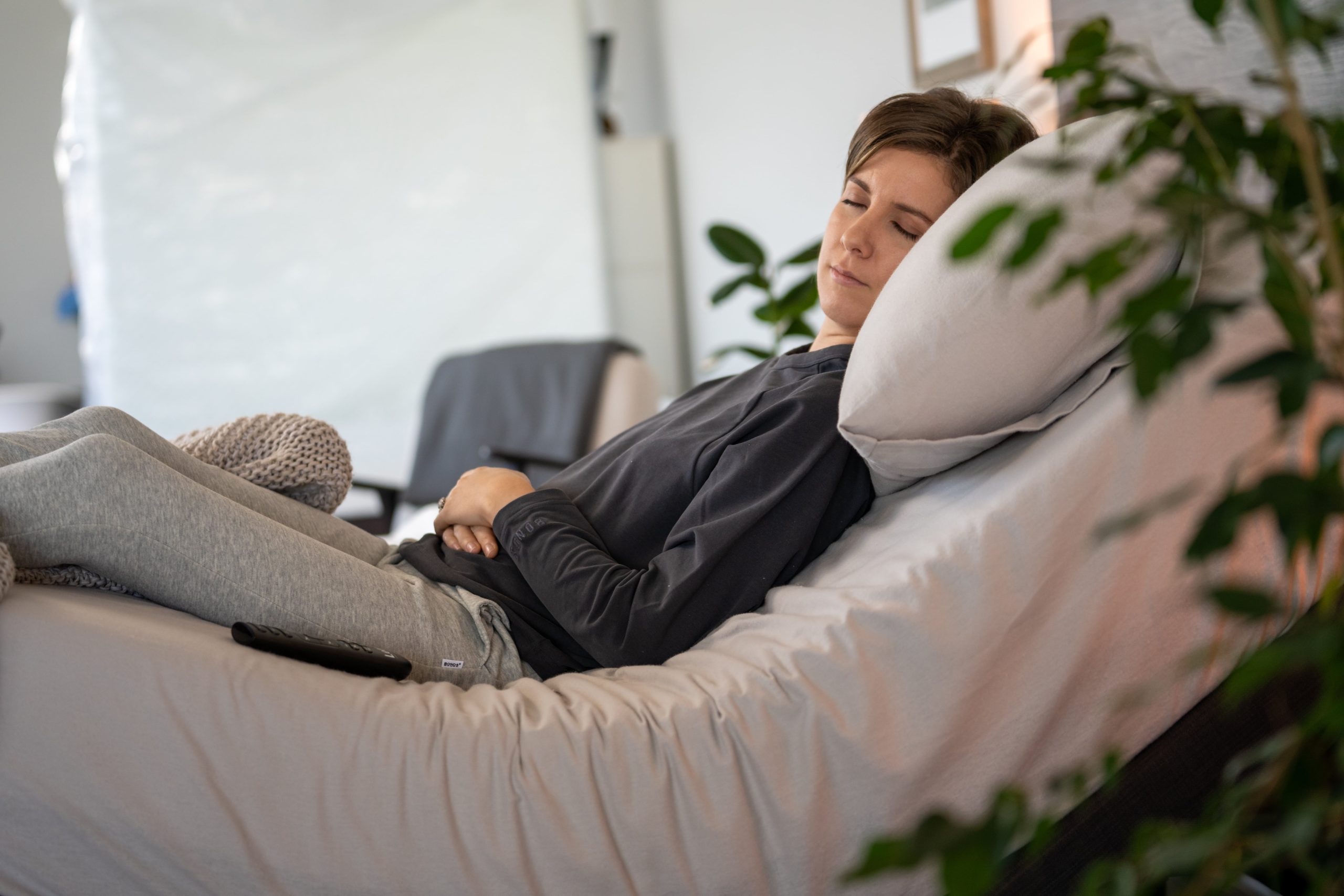
An adjustable bed base isn’t just for nighttime sleep; it can completely transform your daytime rest too. For instance, research from Zinus Australia and Dreamland demonstrates the “zero-gravity” position… elevates both your head and legs to distribute your body weight evenly, reducing pressure on your spine and joints.
Think about how you usually nap: on the couch with your neck at an awkward angle, or propped up on pillows that keep sliding out from under you. With an adjustable base, you can find the exact position that lets your body fully relax without straining anything.
Further research from Dreamland, Solace Sleep, and Blue Sky Healthcare reveals that elevating the head and upper body can help with breathing issues, snoring, and acid reflux, all common culprits behind poor nighttime sleep that force you into afternoon naps. By addressing these root causes, you might find you need those daytime sleeps less and less.
Better nighttime sleep, fewer necessary naps
Let’s be honest about something: the ultimate goal isn’t to become a better napper. The goal is to improve your overall sleep quality so napping becomes a choice rather than a necessity. If back pain, circulation issues, or sleep position discomfort are disrupting your night rest and forcing you to accumulate sleep debt during the week, an adjustable base can address these issues directly.
For example, research from Dreamland and Solace Sleep indicates that elevating your legs encourages blood flow back towards the heart, which can reduce swelling, particularly beneficial if you’re dealing with blood pressure issues or circulation problems that worsen when you’re lying flat. Better circulation means better sleep quality, which means less desperate need for those long afternoon naps that can backfire and disrupt your sleep even further.
Letto’s package deals offer complete sleep solutions that work for your unique needs, whether you sleep alone or with a partner who has different comfort preferences. When you’re both getting the support you need, you’re both more likely to wake up refreshed, and less likely to be sneaking off for those long, sleep-cycle-disrupting naps in the afternoon.
Making napping work for you, not against you

So, are naps good for you? After everything we’ve covered, the answer isn’t a simple yes or no; it depends on how, when, and why you’re napping.
Short naps of 15-30 minutes, taken in the early afternoon between 1:00 PM and 3:00 PM, can improve your task performance, sharpen your memory, regulate your emotions, and give you that afternoon energy boost without sabotaging your nighttime sleep. They’re particularly valuable for shift workers, drowsy drivers, and anyone dealing with temporary sleep deprivation.
However, long naps over 30 minutes, frequent daily naps, or naps taken late in the day can leave you groggy and disoriented, interfering with your night-time sleep quality. And if you’re needing increasingly long or frequent naps, it may be masking underlying health issues like sleep disorders, heart disease, or diabetes that won’t be solved by simply sleeping more during the day.
The key is being intentional about your napping habits. Ask yourself: Am I waking up refreshed or groggy? Is my napping affecting my nighttime sleep? Am I needing increasingly long or frequent naps just to get through the day?
If you’re experiencing excessive daytime sleepiness or needing long naps daily just to function, speak with your GP. Sleep apnea alone affects about 5% of Australian adults and is very treatable, but it requires proper diagnosis, not just more naps.
Time to rethink your rest (And maybe your bed)
Understanding how napping fits into the bigger picture of your overall sleep health empowers you to make better choices about your rest. Whether that means embracing strategic power naps at the right time of day, improving your nighttime sleep hygiene through a solid wind-down routine, addressing underlying issues that are fragmenting your sleep, or investing in a sleep surface that actually supports your body’s needs throughout the night, every positive change counts.
Quality rest, whether it happens during the day or at night, is foundational to your health, mood, and overall quality of life. You deserve to wake up feeling refreshed, clear-headed, and ready to enjoy your day. You deserve to reach early in the afternoon without feeling like you’ve been hit by a truck. And you definitely deserve to sleep through the night without waking up multiple times or struggling with discomfort.
If your current sleep situation isn’t giving you that, it’s time for a change.
Ready to transform your rest? Explore how Letto’s adjustable bed solutions can support better sleep quality at night, which might just mean you need fewer desperate naps during the day. Your future, well-rested self will thank you.