
Best Mattress for Lower Back Pain in Australia: What to Look For
In this blog
Lower back pain is common in Australia, and the wrong mattress can make nights feel much longer than they should. The right mattress setup can ease discomfort, improve alignment, and support more restful sleep. Learn what mattress firmness really means, how to keep your spine supported, and why pressure relief matters for different body types and sleep positions. Compare the main mattress types with their pros and cons, and see how Letto mattresses and adjustable bases are designed to encourage healthy alignment without the hard sell. You’ll also find simple tips on sleeping positions and bedtime habits to help you drift off more easily and wake up with less stiffness.
Let’s talk about that aching back (And those sleepless nights)
Here’s the reality: if you’re reading this at 2 am because your back is killing you, you’re definitely not alone. Lower back pain is practically an epidemic in Australia, and the Australian Institute of Health and Welfare says back problems are one of our most common health issues. Can you guess what makes it worse? Spending eight hours every night on the wrong mattress.
You’ve probably heard this before. “Get a better mattress,” they say. But what does that actually mean when you’re standing in a showroom feeling overwhelmed, or scrolling through endless online reviews at midnight?
Here’s the thing: your mattress isn’t just about comfort. When you have chronic back pain, it’s literally your medicine cabinet. A good mattress can be the difference between waking up ready to tackle the day versus hobbling to the bathroom like you’ve aged 20 years overnight.
The best part? You don’t need a degree in sleep science to figure this out. This guide will walk you through everything you actually need to know to find the best mattress for lower back pain.
What’s actually happening to your spine right now?

Picture your spine like a stack of building blocks. During the day, gravity and movement keep everything in line. But at night? That’s when things get interesting.
If your mattress is too soft, your hips sink down while your shoulders stay put. Your spine curves like you’re doing some weird yoga pose, except you’re stuck there for eight hours. Too firm? Your spine stays rigid while pressure builds up at your shoulder blades and tailbone. Either way, the muscles around your spine are working overtime, trying to hold everything together while you’re supposed to be resting.
This is where people with back pain get stuck in a vicious cycle. Poor sleep means more pain. More pain means worse sleep. And round and round it goes.
When your spine isn’t properly aligned, the surrounding muscles never fully relax. They’re in a constant state of micro-tension, which means they can’t repair and recover like they should. Your nervous system stays on high alert instead of shifting into that deep, restorative sleep mode your body desperately needs.
The NSW Agency for Clinical Innovation puts it perfectly: while sleep won’t cure your back problems, getting it wrong can absolutely make everything harder. But here’s the encouraging bit: get it right, and you might be surprised how much better you feel.
Quick reality check, though. If you’re dealing with severe pain, sudden changes, or anything that’s got you genuinely worried, skip the mattress shopping for now and have a chat with your GP. Trust your instincts on that one.
What your back actually needs

Forget everything you think you know about mattresses for a minute. Let’s start from scratch with what actually matters when you’re trying to support your spine properly.
Firmness isn’t a one-size-fits-all situation
You might think you need the firmest mattress possible. Wrong. Most people with lower back pain actually do best with medium to medium-firm support. Think of it like a supportive hug, not a plank of wood.
Your body has curves. Your spine has natural S-shaped curves that act like shock absorbers and distribute weight efficiently. A mattress that’s too firm won’t accommodate these curves, forcing your muscles to work all night. Too soft, and those curves get exaggerated, creating strain in different areas.
Your spine has curves; embrace them
When you lie down, your mattress should follow your body’s natural shape. Your ears, shoulders, and hips should form a roughly straight line, but your spine should still have those gentle S-curves it’s designed to have. It’s not about being perfectly flat; it’s about being naturally aligned.
Zone support is where the magic happens
Your hips are heavier than your shoulders. Your lower back needs more support than your legs. A good mattress recognises this and gives different parts of your body different levels of support. It’s like having a custom-fitted suit, but for sleeping.
Pressure relief that actually relieves pressure
If you wake up with numb arms or pins and needles, your mattress is cutting off circulation at pressure points. This is especially crucial if you’re a side sleeper, as your shoulders and hips take all the weight, so they need enough cushioning to keep blood flowing.
The sleep trial is your best friend
It can take 2-4 weeks for your body to adjust to a new mattress. Your muscles have muscle memory from your old sleep surface. That’s why Choice Australia recommends at least 30 nights, though 90+ nights is even better.
Quality matters more than marketing
Look for certifications like CertiPUR-US for foams, ask about foam density, and don’t get swayed by fancy names. A mattress that starts sagging after a year isn’t doing your back any favours.
Breaking down your options (Without the sales pitch)
Let’s be completely honest about mattress types: there’s no perfect option that works for everyone. But understanding what each type actually does can help you figure out what might work for your specific situation.
The body hugger
Memory foam moulds to your exact shape and holds it there. Fantastic for pressure relief, especially if you’re a side sleeper who needs your shoulders and hips cushioned. The benefits: excellent pressure point relief, good motion isolation, and that feeling of being gently supported everywhere.
The trade-offs? Some people feel like they’re sleeping “in” the mattress rather than “on” it. The foam can trap heat, and if you move around a lot at night, you might feel stuck. If you have chronic back pain but sleep hot, look for gel-infused or plant-based foams that breathe better.
The compromise that actually works
A Hybrid has pocket springs plus comfort layers. You get the support and bounce of springs with the pressure relief of foam. They sleep cooler than all-foam mattresses and many offer zoned support, firmer springs in the centre for your torso and softer springs at the head and foot for pressure relief.
The quality range is huge, though. Look for at least 2-3 inches of quality comfort layers and a substantial coil count (800+ for a queen-size mattress is generally recommended).
The natural wonder
Latex is bouncy, breathable, and lasts forever. It supports your spine while giving pressure relief, and responds quickly when you move around at night. Natural latex is also antimicrobial and dust mite resistant.
The downsides? Heavy, usually expensive upfront (though the longevity can make them cost-effective), and some people don’t like the bouncy feel. If you’re used to memory foam, latex might feel too “active.”
Traditional innerspring: The old faithful (With issues)
Springs give you great airflow and that classic “sleeping on top” feeling. But here’s the problem for people with back pain: most traditional innerspring mattresses don’t have enough pressure relief. Without quality comfort layers on top, you’ll likely feel pressure at your hips and shoulders.
The Australian Commission on Safety and Quality in Health Care makes an important point: sleep quality directly impacts how we experience and manage pain. Your mattress choice isn’t just about comfort; it’s about giving your body the best chance to heal and rest.
Your sleep position changes everything

How you sleep completely changes what kind of mattress will work for you, and understanding your sleeping position is crucial for finding the best mattress for lower back pain.
Back sleepers need medium-firm support that maintains their lower back’s natural curve. When you lie on your back, there should be a small gap between your lower back and the mattress; that’s your natural lumbar curve, and it needs to be supported, not flattened. Too soft, and your hips sink. Too firm and you’ll get pressure points.
Side sleepers (about 70% of the population) need enough give at their pressure points to keep their spine aligned. You need medium support plus good pressure relief. Your mattress needs to be soft enough that your shoulder and hip can sink in slightly, but supportive enough that your waist doesn’t sag.
Pro tip: If you wake up with a numb arm, your mattress is too firm. If you wake up with back pain, it might be too soft.
Stomach sleepers, sleeping on your stomach is tough on your back and neck. If you absolutely must sleep this way, you need a firmer mattress to prevent your hips from sinking. Use a thin pillow or no pillow at all.
Your weight matters too. Under 60kg? That “medium-firm” mattress might feel like concrete. Over 100kg? You typically need firmer support to prevent excessive sinking. This isn’t about right or wrong, it’s about physics.
Choice Australia’s buying guide nails it: test mattresses in your actual sleeping position. Spend at least 10-15 minutes lying down in your preferred position.
What your spine really needs
Your spine isn’t just one bone; it’s 33 individual vertebrae connected by discs, ligaments, and muscles. During the day, gravity compresses these discs. At night, when you’re lying down, the discs can rehydrate and expand again, but only if your spine is properly aligned.
When your spine is properly supported during sleep:
- Disc rehydration: The discs between your vertebrae can rehydrate, maintaining their shock-absorbing function
- Muscle recovery: The muscles supporting your spine can finally relax and recover
- Nervous system reset: Your nervous system processes pain signals differently during deep sleep
- Inflammation reduction: Deep sleep is when your body does the most cellular repair
This is why the NSW Agency for Clinical Innovation emphasises sleep quality as part of comprehensive pain management.
Beyond the mattress
Your mattress is crucial, but it’s not the only piece of the puzzle:
Pillows matter
Your pillow needs to work with your mattress to maintain spinal alignment. Back sleepers need a thinner pillow. Side sleepers need a thicker pillow to fill the gap between their neck and shoulder. Stomach sleepers should use the thinnest pillow possible.
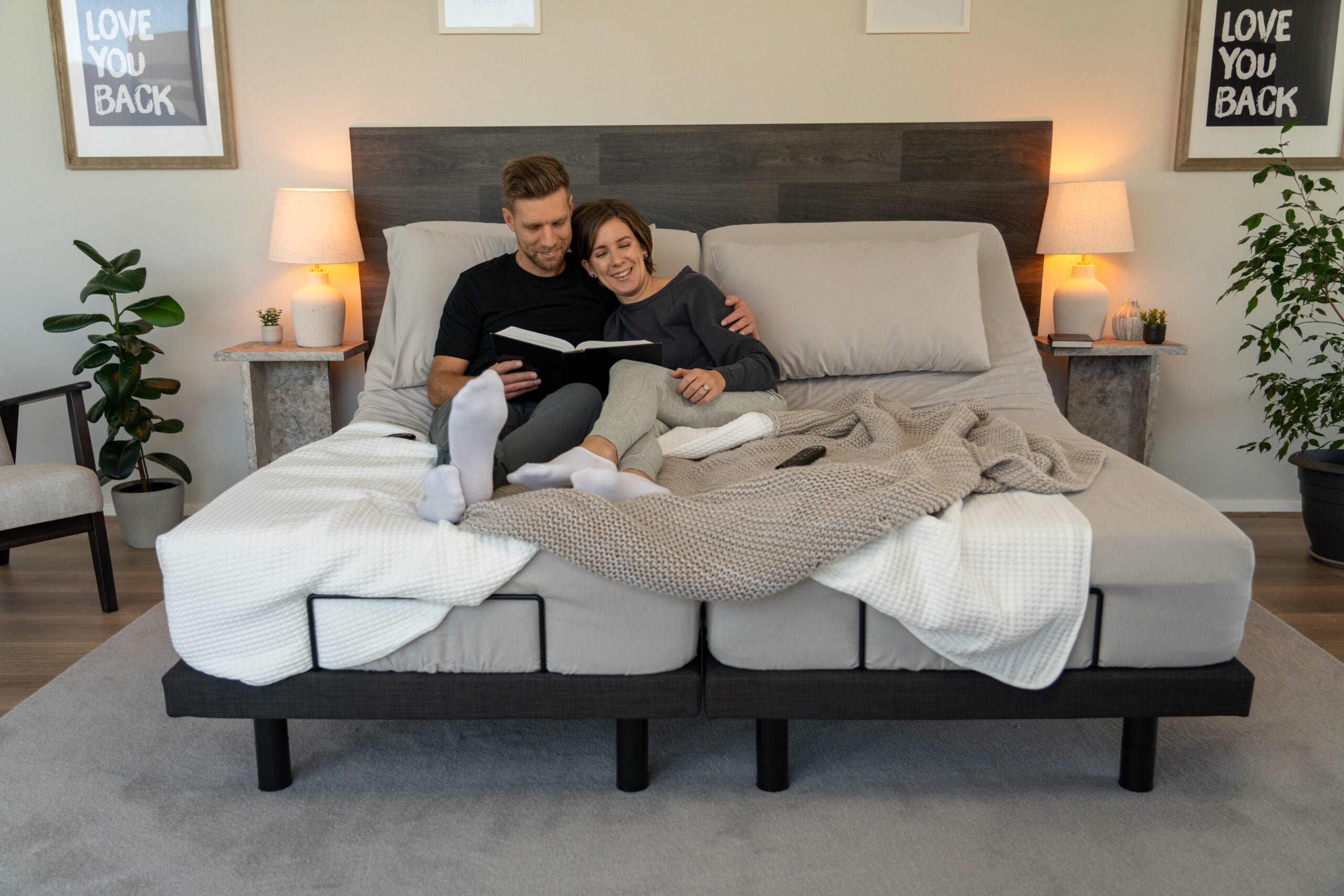
Consider an adjustable base
Being able to elevate your upper body slightly can reduce pressure on your lower back. Some people find that sleeping in a slightly reclined position is the only way they can get pain-free sleep.
Temperature control is crucial
Heat can increase inflammation and make pain worse. Keep your bedroom cool (18-20°C) and consider breathable bedding materials.
Simple daily habits
Wind down properly, keep moving during the day (even a 10-minute walk helps), master pillow placement (between knees for side sleepers, under knees for back sleepers), and know when to get medical help.
Better Health Victoria has excellent resources on managing back pain beyond just sleep.
When it’s not just your mattress
See a healthcare professional if you experience:
- Pain that’s getting progressively worse
- Pain that radiates down your leg (especially below the knee)
- Numbness or weakness in your legs or feet
- Pain accompanied by fever
- Loss of bladder or bowel control
- Pain following an injury
These could be signs of more serious conditions that need medical treatment, not just a new mattress.
Making your decision
Here’s your step-by-step approach:
- Assess your current situation: What specifically bothers you about your current sleep?
- Identify your sleep position and body type: Be honest about how you actually sleep
- Set a realistic budget: Calculate cost per night over 8-10 years
- Research companies with good sleep trials: at least 90 nights is ideal
- Test it properly: Spend real time lying in your actual sleep position
At Letto, the mattresses are designed around stable lumbar support, targeted pressure relief, and the flexibility to find your perfect position. They use zoned support technology, firmer where you need stability (your core and hips) and softer where you need pressure relief (shoulders and legs). Their sleep trials give you plenty of time to make sure it’s right for your body, with fast delivery from Sydney and Melbourne, plus free curbside delivery in Queensland and NSW.
Ready to transform your sleep and ease your back pain?

When you’ve been dealing with lower back pain for months or years, it’s easy to think this is just how things are now. But the right combination of mattress support, good sleep habits, and proper spinal alignment can genuinely transform how you feel every morning.
The best mattress for lower back pain is the one that supports your spine’s natural curves, relieves pressure where you need it, and lets you move comfortably throughout the night. Whether you’re a side sleeper who needs targeted hip and shoulder relief or a back sleeper looking for stable lumbar support, the right setup can help break that cycle of poor sleep and increased pain.
You don’t have to accept restless nights and morning stiffness as your new normal. Letto’s mattresses combine the science-backed principles we’ve discussed, zoned support for proper spinal alignment, targeted pressure relief where you need it most, and quality materials that won’t leave you back where you started in a year’s time.
With generous sleep trials, free delivery across Queensland and NSW, and no-fuss returns, there’s no reason to spend another night on a mattress that’s working against your body instead of with it.
Your spine supports you all day long, isn’t it time you returned the favour at night? Shop Letto package deals and start sleeping pain-free today.
Keep Reading: